
Business Security Guidelines: A Layered Approach to Workplace Security
Relying on a single security control—an alarm panel, a locked door, or a camera feed—leaves other parts of a business exposed. A visitor with an unrevoked credential, an unattended network port on an IP camera, or a security incident that is never investigated can each undermine protection that looks complete on paper. Effective workplace security instead combines physical, technological, digital, human, emergency, and procedural controls so that no single point of failure determines the outcome of a security event. Within this layered structure, smart alarm systems function as one important component—not the entire security solution.
1. The Layered Business Security Framework
Business security is best understood as a layered framework: physical, technological, digital, human, emergency, and procedural controls operating together, each covering exposure that the others do not. No single control—including a smart alarm—is designed to address every category of risk on its own.
This matters because unauthorized physical access, uncontrolled visitor activity, network exposure of connected security devices, security-data compromise, poorly managed incidents, and unreviewed controls are distinct problems. A single technology can reduce one of these exposures while leaving the others unchanged.
1.1 Why Security Cannot Depend on a Single Control
An alarm system can detect an intrusion after entry has already occurred, but it does not verify who is entering through the front door during business hours, and it does not protect visitor records or surveillance footage once they exist. A locked entry point can slow unauthorized entry, but it does not detect a network intrusion into an IP-connected camera. A camera can record an incident, but it does not, by itself, ensure that the incident is reported, investigated, and used to improve future policy.
Because each control category addresses a different exposure area, layered coverage—rather than dependence on one dominant control—is the practical basis for reducing overall business security risk.
1.2 The Ten-Guideline Framework
The underlying security framework this article is based on specifies a required set of ten business security guidelines. The source material available for this article confirms that this ten-guideline structure exists and must be substantively covered, but it does not preserve an exact one-to-one list of the original ten guideline titles. To respect that limitation, this article does not invent ten labels; instead, it organizes its coverage around ten corresponding security categories that are explicitly supported by the underlying technical material.
| # | Security Category | Where It Is Covered |
|---|---|---|
| 1 | Physical access and credential control | Section 2.1 |
| 2 | Visitor management and temporary access | Section 2.2 |
| 3 | Smart alarm systems and their role in the framework | Section 3.1 |
| 4 | Alarm, CCTV, and access-control coordination | Section 3.2 |
| 5 | Alarm communication and monitoring | Section 3.3 |
| 6 | Video surveillance | Section 3.4 |
| 7 | Network security for IP-connected devices | Section 4.1 |
| 8 | Security-data protection | Section 5 |
| 9 | Employee security practices and emergency preparedness | Section 6 |
| 10 | Incident management and periodic review | Sections 7–8 |
This table reflects substantive coverage of the confirmed ten-category structure; it does not represent a reconstruction of the original guideline wording.
2. Control Unauthorized Physical Access
Unauthorized physical access is reduced through a combination of credential management, physical entry protection, and periodic review—not through any single lock or badge system alone.
2.1 Strengthen Physical Entry and Credential Control
Physical entry protection in this framework includes serialized key tracking, digital access logs, smart locks, and biometric or RFID-based access. These controls are supported by periodic audits, reinforced entry points, and periodic access reviews that confirm credentials remain appropriate over time. Together, these measures address the risk created by lost keys, unrevoked credentials, and weak entry points.
2.2 Control Visitors and Temporary Access
Visitor management extends physical access control to people who need temporary access rather than standing credentials. The framework includes pre-registration, identity verification, time-bound badges, and escorted access. These controls limit and track visitor presence, reducing the exposure created by uncontrolled visitor activity without requiring a separate, unrelated system—visitor management is an extension of the same access-security control category.
3. Coordinate Alarms, Video Surveillance and Access Control
3.1 The Role of Smart Alarms Within Layered Security
A smart alarm system functions as one detection and communication layer within the broader security framework—not as the complete security solution. Within the frameworks referenced here, the alarm layer includes audible sirens, silent monitored alarms, integration with CCTV and access control, IP and cellular communication, and 24/7 monitoring. Treating an alarm as the entire security solution creates an incomplete model, because an alarm’s function is detection and notification, not physical entry control, data protection, or incident investigation.
3.2 How Alarms, CCTV and Access Control Complement Each Other
Alarm systems, video surveillance, and access control are explicitly connected in this framework at a functional level: alarms provide detection, cameras provide observation and evidence, and access control restricts and logs entry. Coordinated in this way, the three controls support a more complete understanding of a security event than any one of them would provide alone—an alarm signals that something occurred, surveillance can show what occurred, and access control indicates who was authorized to be present. This relationship is described here at a functional level; it does not extend to specific integration protocols, APIs, or system architecture.
3.3 Alarm Communication and Monitoring
The alarm layer described in this framework includes both IP and cellular communication, referred to together as IP + cellular dual-path transmission, along with 24/7 monitoring. Where relevant, notification may also occur through channels such as SMS or PA/mobile-app alerts. Businesses need security events to be communicated to a monitoring function and to responsible personnel, rather than relying only on a local audible alert.
The dual-path characteristic itself is confirmed as part of this alarm discussion; however, the detailed technical implementation—including specific failover behavior, sabotage resistance, or uptime performance—is not established here and should not be assumed.
3.4 The Role of Video Surveillance
Video surveillance supports observation, detection, deterrence, and post-incident investigation. In this framework, coverage is associated with entrances, cash-handling areas, and blind spots, along with stated capabilities such as night vision, analytics, motion-triggered recording, and cloud storage. Surveillance is one layer among the multiple controls discussed here; it does not replace access control or alarm monitoring, and this discussion does not extend into camera engineering or analytics-performance claims.
4. Protect Connected Security Infrastructure From Network Exposure
4.1 Why IP-Connected Security Devices Create a Cybersecurity Dependency
IP-based alarms and cameras operate within network infrastructure, which creates a direct relationship between physical-security equipment and network security. Because these devices communicate over IP networks, weak network protection can expose the connected security infrastructure itself to compromise. The stated protective measures in this framework include VPNs, firewalls, intrusion detection, zero-trust access, and patching of IoT devices.
This relationship establishes why network security is relevant to physical-security decision-making, even though the underlying material does not define a comprehensive cybersecurity architecture, network topology, or specific attack methodology.
5. Protect Security Data as Part of Workplace Security
Direct answer: surveillance footage and visitor information should be treated as security data in their own right, protected through encryption, multi-factor authentication (MFA), role-based permissions, and data loss prevention (DLP)—not simply stored as a byproduct of physical-security operations.
5.1 Protect Visitor and Surveillance Information
Visitor records and surveillance footage are themselves a source of security and data-exposure risk. If this information is accessed without authorization or exposed improperly, the business faces a security-data compromise in addition to any physical-security risk. This makes security-data protection a necessary extension of physical and technological security controls, not a separate concern.
5.2 Core Security-Data Protection Controls
| Control | Function |
|---|---|
| Encryption | Protects visitor information and surveillance footage from unauthorized access to the underlying data. |
| Multi-factor authentication (MFA) | Limits account-level access to security systems and stored security data. |
| Role-based permissions | Restricts who can view, export, or manage visitor and surveillance data based on role. |
| Data loss prevention (DLP) | Helps prevent unauthorized exposure or transfer of security-related data. |
These four controls are the protection measures identified in the underlying framework. This discussion does not extend into a comprehensive privacy, legal, or regulatory-compliance architecture.
6. Include Employees and Emergency Preparedness in the Security Layer
6.1 Employee Security Awareness and Practices
Technology cannot fully replace appropriate employee behavior. The human layer of this framework includes training, reporting of suspicious activity, and adherence to access procedures. Employees who understand and follow these practices support—rather than undermine—the physical, technological, and procedural controls already in place.
6.2 Emergency Response and Business Continuity
Security extends beyond prevention and detection into how a business responds when an incident occurs. This framework includes an Emergency Action Plan covering evacuation routes, assigned response roles, mass notification, and continuity measures. These elements connect security planning to operational recovery, ensuring that a security incident does not become an unmanaged disruption to the business itself.
7. Turn Security Incidents Into Security Improvements
7.1 Report and Investigate Security Incidents
Direct answer: after a security incident, the immediate steps are reporting, investigation, and documentation. These steps capture what happened while the information is still available and create the basis for understanding why the incident occurred.
7.2 Use Root-Cause Analysis to Improve Security Policies
Investigation findings feed into root-cause analysis, which in turn informs updates to security policy. This feedback loop is what distinguishes ongoing security management from a one-time response: without converting findings into policy improvement, the same exposure can recur. This discussion does not extend into forensic methodology or law-enforcement procedure.
8. Review and Update Security Controls Over Time
8.1 Review Access Rights and Security Controls
Direct answer: security controls require periodic review because access rights, connected-device vulnerabilities, and procedures change over time. The framework referenced here includes quarterly access reviews, at-least-quarterly review of security policies and alarm systems, and ongoing patching of IoT devices. Static controls that are never revisited can become progressively less effective even if nothing about their initial configuration was wrong.
8.2 Preserve the Stated Review Cadence Without Overgeneralizing It
The quarterly review cadence described above is a stated practice within the source framework, not an independently validated universal regulatory requirement. Businesses referencing this cadence should treat it as a documented practice rather than a guaranteed compliance standard, since the underlying material does not establish jurisdiction-specific regulatory requirements.
9. FAQ
Q1: What are the most important security measures for a business or workplace?
There is no single most important measure. Business security depends on layered physical, technological, digital, human, emergency, and procedural controls working together, with smart alarms as one component among them. Treating any single control as sufficient leaves other exposure areas unaddressed.
Q2: What role does a smart alarm system play in business security?
A smart alarm functions as a detection and communication layer—covering audible and monitored alerts, integration with CCTV and access control, dual-path communication, and 24/7 monitoring. It is not designed to serve as the entire security solution.
Q3: How do access control and visitor management reduce workplace security risk?
They reduce unauthorized-access risk through credential and key management, smart locks, biometric or RFID access, reinforced entry points, and periodic access review, combined with visitor pre-registration, identity verification, time-bound badges, and escorted access for temporary visitors.
Q4: Why is network security relevant to IP-based alarms and cameras?
Because IP-based alarms and cameras operate within network infrastructure, weak network protection can expose the connected security devices themselves to compromise. This creates a direct relationship between physical security and cybersecurity that does not exist with non-connected equipment.
Q5: What should businesses do after a security incident?
Report and investigate the incident, document findings, and apply root-cause analysis to identify what allowed the incident to occur. That analysis should then inform updates to security policy so the same exposure is less likely to recur.
Q6: How often should business security controls be reviewed?
The framework referenced here describes quarterly access reviews and at-least-quarterly review of security policies and alarm systems, along with ongoing IoT patching. This is a stated operational practice rather than an independently validated universal requirement, and businesses should treat it accordingly.
10. System Component Checklist Appendix
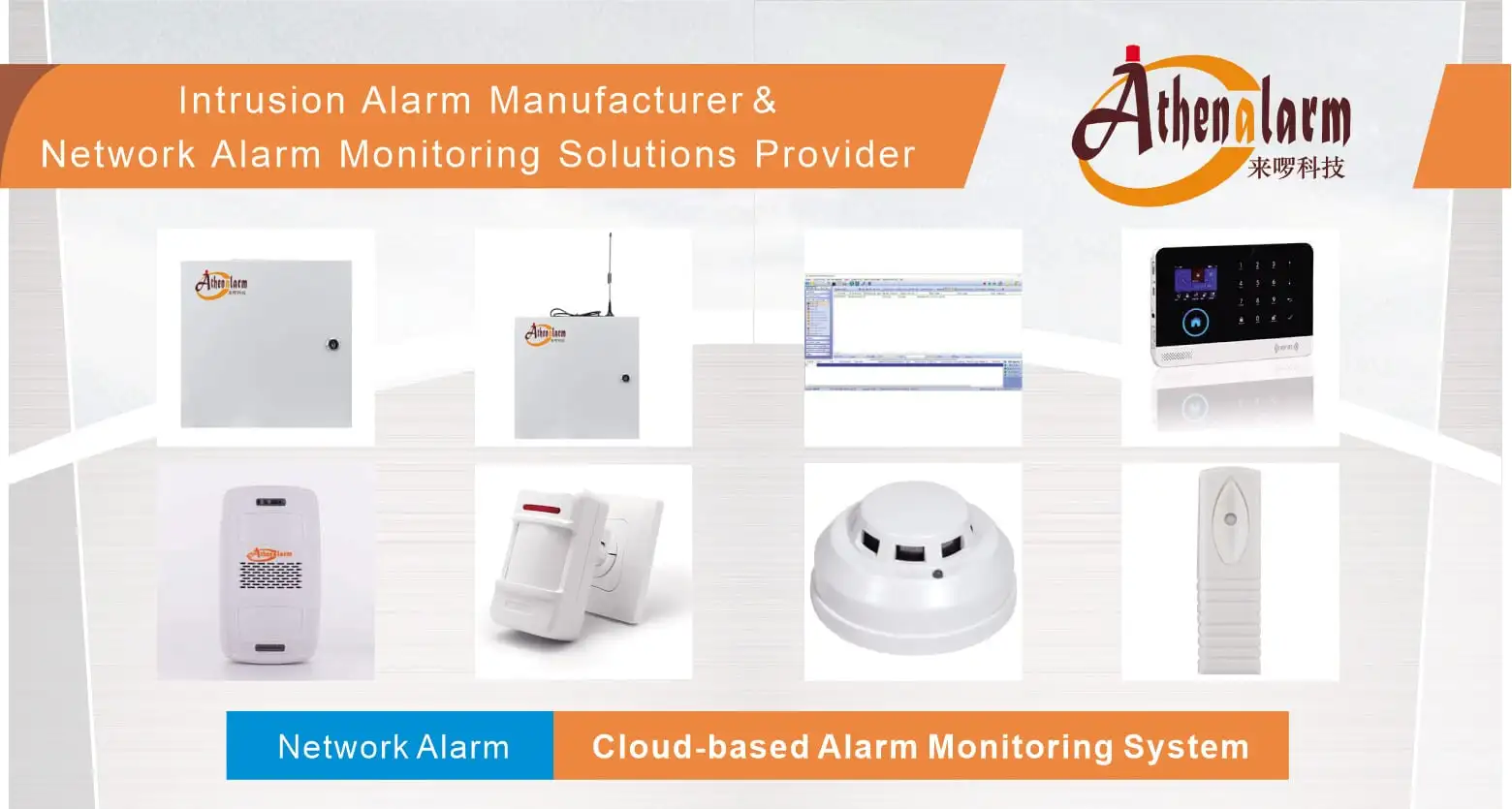
For security architects and operations teams implementing multi-layered physical security frameworks, the following hardware endpoints and industry-specific deployment platforms offer turnkey integration points:
- Enterprise & OEM Manufacturing: Burglar Alarm Manufacturer & Burglar Alarm Systems Platform
- Central Management Software: Network Alarm Center Management Software
- Enterprise Application Scenarios: Network Alarm Monitoring System Applications
- Specialized Vertical Solutions:
- Financial Infrastructure: Network Bank Alarm Monitoring System Solution, Bank Vault Alarm Monitoring System Solution, and Bank ATM Alarm Monitoring System Solution
- Enterprise Perimeter Defense: Network Perimeter Alarm System Solution
- Commercial & Hospitality: Network Hotel Alarm System Solution and Network Store Alarm System Solution
- Residential & Community Infrastructure: Network Community Alarm System Solution, Network House Alarm System Solution, and GSM WiFi Alarm System
- Edge Detection & Sensing Hardware:
- Spatial & Motion Intrusion: PIR Motion Sensor and Wide Angle PIR Motion Sensor
- Environmental Safety Sensors: Photoelectric Smoke Detector and Gas Detector
- Structural Physical Entry Sensors: Digital Vibration Detector and Door Contact Sensor
- Duress & Emergency Initiating Devices: Hardwired Panic Button and Wireless Panic Button
- Local Annunciation Units: Visual Warning Light and Motion Sensor Audio Player
