
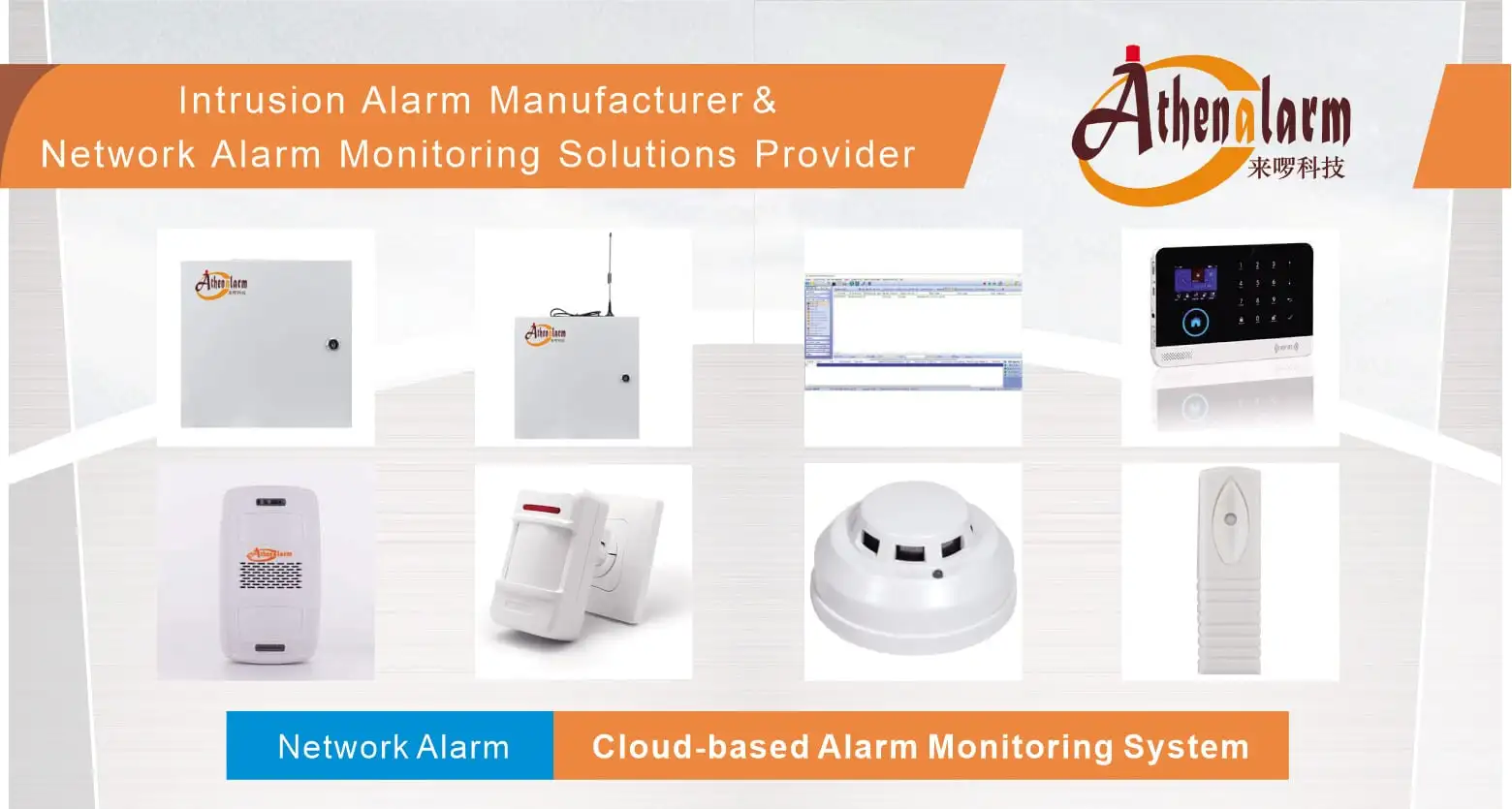
Network Enterprise Alarm Monitoring System Solution
1. The Growing Need for Modern Enterprise Alarm Systems
As the economy continues to develop, there has been a significant increase in both the number and scale of enterprises. In these organizations, incidents such as fires, explosions, and thefts are frequent, resulting in substantial casualties and property damage. The implementation of a modern networked enterprise alarm monitoring system can effectively reduce the occurrence of these accidents, thereby enabling proactive risk management.
2. Current Status of Enterprise Security System Development
A recent survey conducted by a research organization across various sectors, including traditional manufacturing, IT manufacturing, and mining, found that the majority of enterprise security systems are relatively basic, with only a few large corporations possessing more sophisticated systems. In general, existing enterprise security systems exhibit the following characteristics:
2.1 Limited Application Scope
Most enterprises have established fundamental video surveillance and intrusion alarm systems. However, some still rely on analog cameras, which offer lower image clarity and effectiveness. These cameras are typically installed in high-priority areas such as finance rooms, warehouses, perimeters, plant entrances, workshops, and production lines. The intrusion alarm sensors are mainly located in sensitive zones like financial rooms and warehouses. However, there are few instances where intrusion alarms are integrated with video surveillance. Additionally, perimeter security systems using infrared beams are often prone to false alarms caused by obstructions such as growing trees, weather conditions like rain or snow, significantly reducing their effectiveness.
2.2 Varying Levels of System Application
While some enterprises boast relatively complete security system setups with advanced features, others have only basic systems. A few businesses have even invested in security doors and X-ray machines. On the other hand, some enterprises initiated security system construction at a later stage, invested less in these systems, and suffer from inadequate maintenance.
2.3 Distinct Demand Patterns
Security requirements vary greatly across industries. For instance, power plant monitoring systems need cameras that are dustproof, explosion-proof, and resistant to strong electromagnetic interference. Steel plant monitoring systems, on the other hand, require cameras capable of withstanding high temperatures and harsh industrial conditions. As such, different industries call for tailored designs and specific equipment choices, as well as integrated security systems that meet the unique demands of each environment. This ensures efficient and scientifically managed operations.
2.4 Increased Security Demands with Enterprise Expansion
As the scale of enterprises grows, so does their security demand. In some cases, security system construction has lagged, creating additional safety risks. As businesses expand, there is a growing focus on security management, leading to increased demand for advanced intrusion alarm, smart audio notification, and video surveillance systems.
3. The Importance of an Enterprise Alarm System
An enterprise alarm system is not just about protecting physical assets; it’s about safeguarding the continuity and reputation of your business. With growing concerns about security threats—ranging from theft, vandalism, industrial espionage, to workplace violence—having a robust and integrated alarm system is critical. An Enterprise Alarm ensures that your business operates without disruption and your employees and assets are protected. Additionally, it helps reduce insurance premiums by demonstrating your proactive approach to security.
4. The Purpose of Building an Enterprise Security System
Implementing a robust enterprise security system serves several critical purposes, including:
- Enhanced Personnel Supervision: The system strengthens the monitoring of personnel entering and exiting the premises, ensuring that all movements are accounted for.
- Timely Detection of Intruders: By utilizing perimeter defense and intrusion alarm systems, potential intruders can be detected quickly, preventing or minimizing theft incidents.
- Real-Time Production Monitoring: Video surveillance of workshops and production lines enables managers to monitor production activities in real-time, offering both immediate insights and operational oversight.
- Prevention of Workplace Accidents: Video surveillance and automated voice safety reminders in high-risk areas help to reduce the likelihood of personal injury incidents by ensuring safety protocols are followed.
5. Key Features of an Enterprise Alarm Monitoring System
- Remote Monitoring: One of the key advantages of an enterprise alarm system is the ability to monitor your business in real-time, from anywhere. Whether you are at the office or working remotely, the system provides continuous alerts, video feeds, and status updates, ensuring that security personnel or management can respond quickly to potential threats.
- 24/7 Protection: An enterprise alarm system operates around the clock, offering constant surveillance and monitoring. This feature is crucial for businesses with irregular operating hours or those located in areas that are prone to criminal activity during the night.
- Scalability: As your business grows, so will your security needs. A well-designed enterprise alarm system is scalable, meaning you can expand your coverage by adding more sensors, cameras, voice notification modules, and integrated systems without disrupting existing security infrastructure.
- Customizable Alerts & Audio Announcements: Enterprise alarm systems allow you to set custom alerts based on specific triggers such as motion detection, unauthorized access, or tampering with security equipment. These alerts can be configured to reach appropriate personnel through SMS, email, phone notifications, or localized customized audio playback, ensuring a timely and targeted response.
- Integration with Other Systems: Enterprise alarm systems can be integrated with other business management systems, such as access control systems, video surveillance systems, smart automation platforms, and building management systems (BMS). This integration ensures that all security functions work in sync, providing comprehensive protection.
6. How an Enterprise Alarm System Works
Enterprise alarm systems typically include several components that work together to provide full coverage:
- Alarm Sensors & Voice Notification Modules: These detect unauthorized movements, safety compliance issues, environmental changes, or physical breaches like door or window openings. Advanced sensors can also distinguish directional movement and output dry-contact trigger signals.
- Video Surveillance: Cameras are installed in key areas of the premises to provide real-time monitoring and video footage for verification of events. With advanced systems, live video feeds can be accessed remotely, providing visual confirmation of alarms triggered by sensors.
- Central Monitoring Station: All the data from the alarm sensors, voice modules, and video surveillance is transmitted to a central monitoring station, either on-site or off-site. This is where alarm events are analyzed and verified before triggering a response. A monitoring center can coordinate emergency responses and dispatch security teams or law enforcement when necessary.
- Alarm Activation and Response: When an alarm is triggered, the system notifies security staff and initiates a response plan, such as locking doors, notifying law enforcement, or activating sirens, voice warnings, and lights to deter intruders.
7. Components of an Enterprise Security System
A comprehensive enterprise security system should align with modern management requirements, effectively safeguarding the perimeter, and providing 24/7 video surveillance of key areas. In addition to these, it must include intrusion alarms, access control systems, electronic patrol systems, and advanced audio-visual notification modules that integrate both civil and technical defense measures. A typical enterprise security system includes the following core components:
7.1 Intrusion Alarm System
The intrusion alarm system serves as the first line of defense, alerting security personnel to unauthorized access. Alarm detectors are strategically placed around the perimeter and in critical areas within the facility to detect any illegal entry. When an intrusion is detected, the system immediately sends an alert to the monitoring center, ensuring a quick response.
The system is designed to detect unauthorized access to the premises, including motion detectors, smart motion-activated voice reminders, door/window contact sensors, and glass break detectors. The intruder alarm system is often integrated with other systems such as CCTV, access control, and lighting.
7.2 Fire and Smoke Alarm Systems
Critical for protecting life and property, these systems are designed to detect smoke, heat, or fire. They are often integrated into the enterprise alarm system for real-time notification of fire hazards, ensuring a swift evacuation and emergency response.
7.3 Environmental Monitoring Systems
These systems monitor for risks such as flooding, gas leaks, or temperature fluctuations that could damage sensitive equipment or inventory. Integrated with the alarm system, they provide an early warning of potential environmental risks.
7.4 Video Surveillance System
The video surveillance system is responsible for continuous online monitoring of key areas, such as entrances, exits, warehouses, finance rooms, workshops, and production lines. These areas are under 24-hour surveillance to deter accidents and incidents. Additionally, video footage can be analyzed afterward to determine the causes of events and provide evidence if needed.
7.5 Access Control System
Access control system is an essential part of an enterprise alarm setup, controlling who can enter specific areas. Card readers, biometric systems, and keypads restrict unauthorized access to sensitive areas such as server rooms, warehouses, and executive offices.
7.6 Electronic Patrol System
The electronic patrol system involves setting up patrol points in key areas, including high-traffic routes, computer rooms, warehouses, and finance rooms. Security personnel follow predefined patrol routes within specific time frames, ensuring both civil defense and technical defense.
7.7 Parking Management System
The parking management system ensures organized vehicle access and parking, both for internal company vehicles and external visitor vehicles, managing entries, exits, recording, access control, and timing.
7.8 Smart Motion-Activated Voice Reminder & Integration Module
The Athenalarm Smart Motion-Activated Voice Reminder functions as a dual-purpose commercial interaction and professional security integration module:
- Bidirectional Entry and Exit Recognition: Detects movement direction and provides customized audio announcements for entry (e.g., visitor guidance or welcoming messages) and exit scenarios.
- Custom MP3 Voice Message Upload: Easily updated via USB connection, allowing enterprises to play tailored instructions, brand messaging, or safety reminders (e.g., “Safety equipment is required in this area” in factory zones).
- Alarm System Integration & Dry Contact Output: Features external trigger output interfaces to connect seamlessly with alarm control panels. Movement detection events can be transmitted as dry-contact trigger signals to alert the main security system workflow.
- Silent Active Notification Mode: Designed for high-security internal environments (such as finance rooms, server hubs, or executive offices) where audible alerts must be avoided. When motion is detected, the device operates in Discreet Signal Mode, sending a silent real-time security signal to the monitoring center or alarm control panel without generating any local sound or voice output.
8. Configuration of a Network Enterprise Alarm Monitoring System
For larger enterprises, especially multinational or regionally dispersed companies, managing security across both headquarters and production sites can be complex. This challenge is further compounded by the physical separation of headquarters and production areas, which increases the difficulty of coordinating security efforts.
8.1 Establishing a Network Enterprise Alarm Monitoring Center
(1) Creating a Centralized Management Platform It is vital for enterprises to establish a centralized network alarm monitoring center utilizing network management software to oversee security operations, intrusion alarms, video surveillance, and smart voice notification modules across the entire organization.
(2) Key Components of the Network Enterprise Alarm Monitoring System
- Network Alarm Center Management Software
- Intrusion Alarm System & Smart Voice Notification Units
- Video Surveillance System
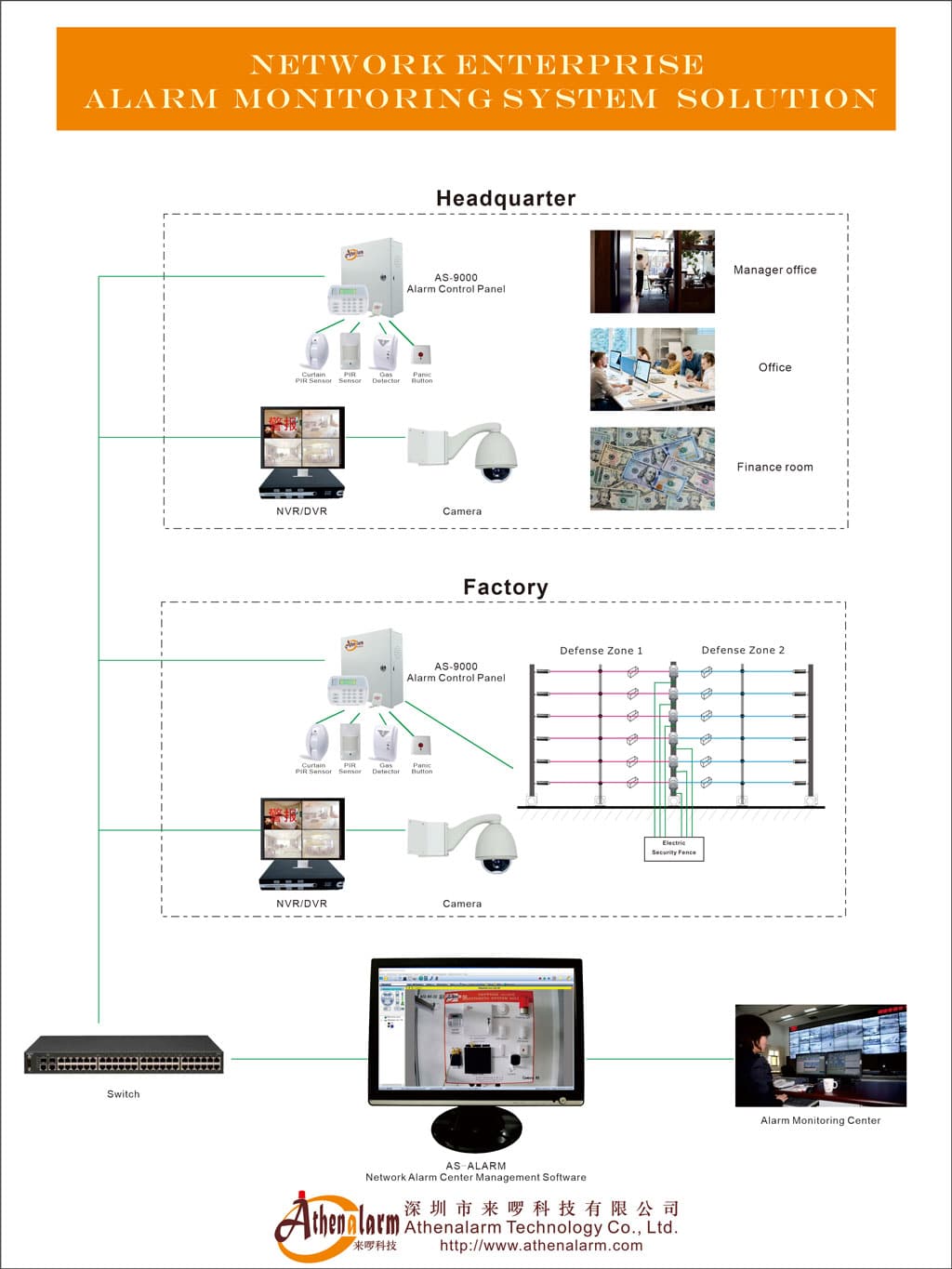
Network enterprise alarm monitoring system diagram showing communication between headquarters, factories, intrusion alarm systems, smart voice modules, video surveillance, and central monitoring software.
8.2 Establishing an Enterprise Alarm Monitoring Center
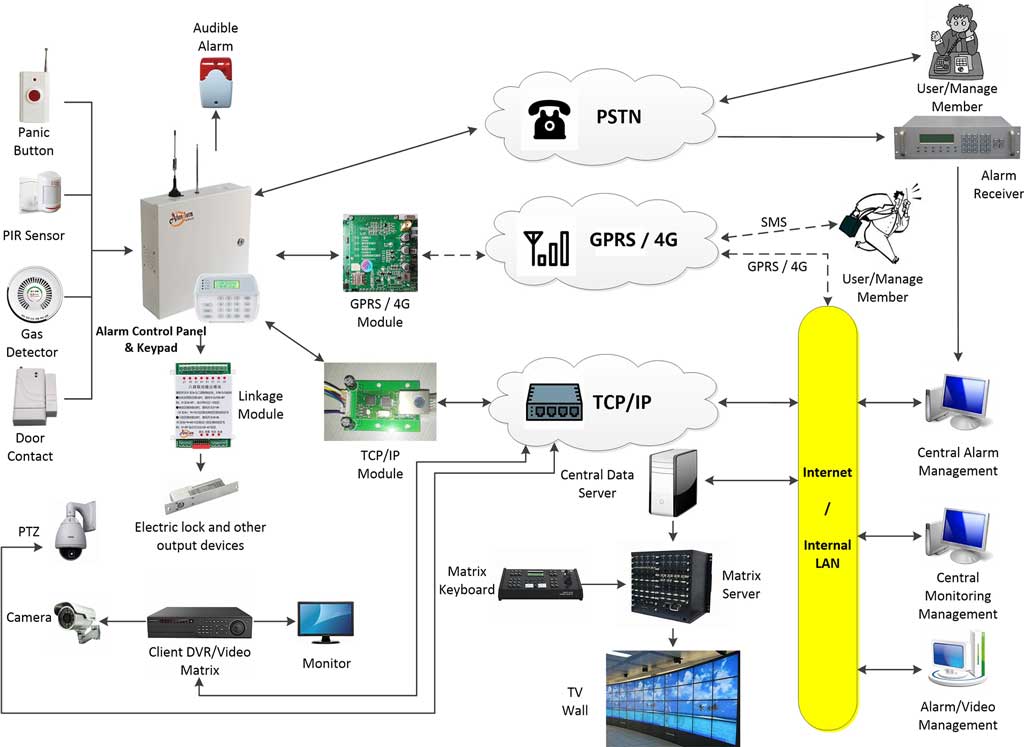
(1) Connecting Alarm Monitoring Systems The enterprise alarm monitoring center connects to the alarm systems and smart voice reminder modules across various departments and factories through the company’s internal network or the internet.
(2) Emergency Response Coordination In the event of an emergency, the enterprise alarm monitoring center can quickly assess the situation via linked video feeds and voice trigger signals, deploying security personnel accordingly.
(3) Security Management Oversight Each factory area should establish its own localized monitoring center to manage local tasks, working in conjunction with the central enterprise monitoring hub.
Enterprise alarm monitoring center diagram illustrating centralized security management, alarm event processing, video verification, and emergency response coordination.
8.3 Setting Up Alarm Monitoring Centers in Each Factory Area
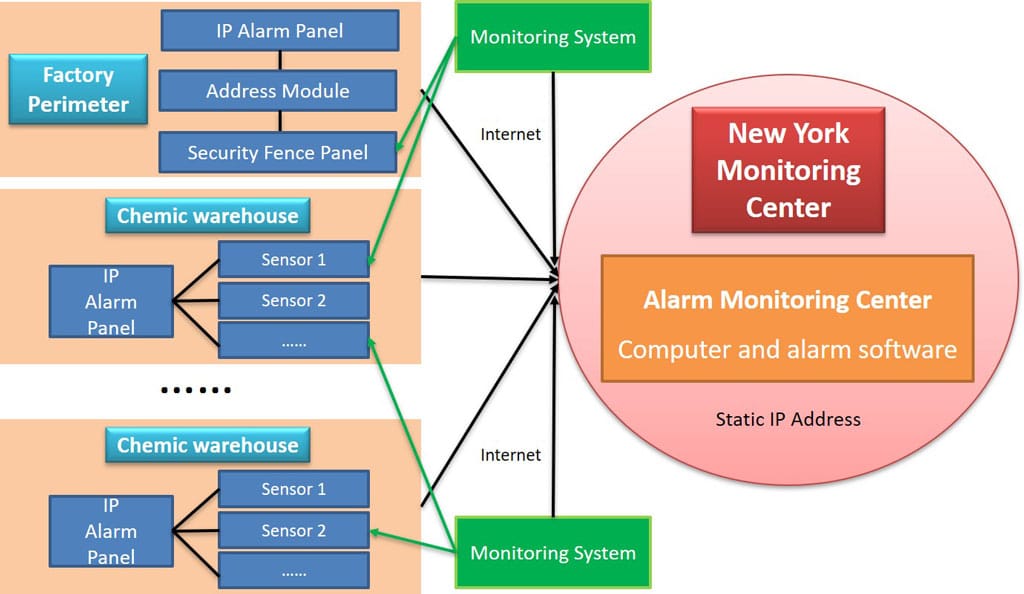
(1) Perimeter Security with Electric Fences and Beam Sensors Install electric security fences or beam sensors along the factory perimeter, integrated with video surveillance via the network alarm center management software.
(2) Internal Security with Alarm Detectors, Smart Voice Reminders, and Surveillance Place alarm detectors and Smart Motion-Activated Voice Reminders at strategic points within the factory (entrances, exits, corridors, and production zones). In production zones, the voice reminder can broadcast safety compliance messages, while in restricted internal corridors, it can double as an intrusion trigger module.
(3) Panic Buttons and Surveillance for Emergency Situations Install panic buttons and video surveillance at key locations (finance departments, main exits). Staff can trigger panic alerts for immediate central monitoring response.
(4) Sirens and Audio Warnings for Immediate Alert and Deterrence Install sirens and voice warning announcers in key areas to produce loud deterrent sounds and immediate audio notifications for monitoring staff during breaches.
(5) Alarm Control Panel for Centralized Monitoring Install an alarm control panel within the factory’s alarm monitoring center to process real-time zone signals and dry-contact triggers from connected smart modules.
(6) Real-Time Video Surveillance in Critical Areas Deploy video surveillance systems in key operational areas (workshops, production lines, and warehouses) to ensure 24-hour visual oversight.
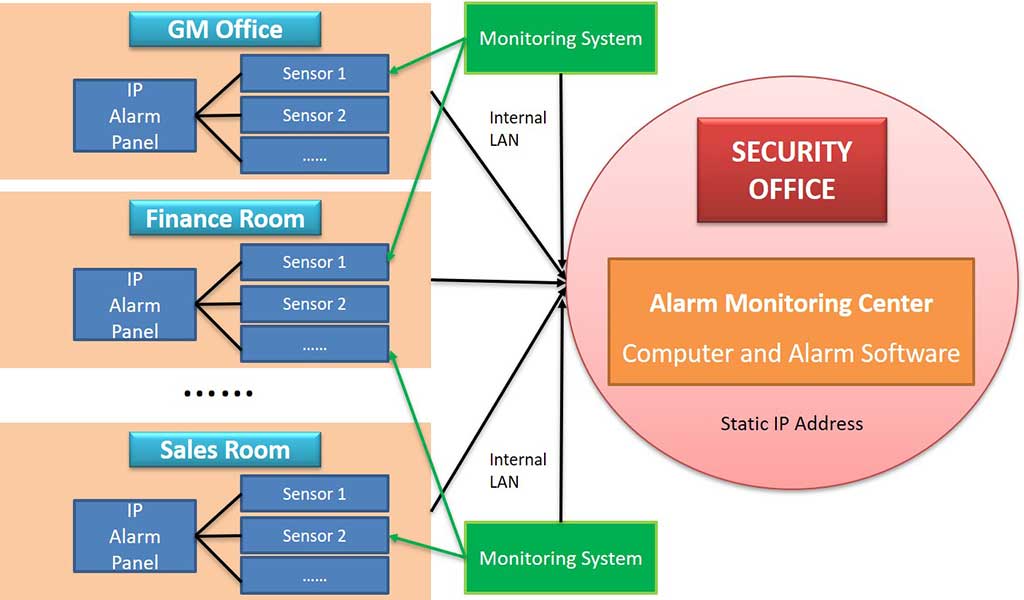
Alarm monitoring centers in each factory area connected to the enterprise network, integrating perimeter protection, intrusion alarms, smart voice reminders, CCTV, and centralized security management.
9. Benefits of an Integrated Enterprise Alarm System
- Enhanced Security: An integrated enterprise alarm system provides better overall security by linking intrusion alarms, smart voice modules, video surveillance, access control, and other systems into one cohesive platform.
- Reduced Risk: By implementing a robust security system, businesses mitigate the risks of theft, safety accidents, and unauthorized access, protecting physical assets and ensuring operational continuity.
- Cost Savings: The system optimizes resource allocation, reduces the heavy reliance on round-the-clock physical security patrols, and lowers the risk of insurance claims.
- Peace of Mind: Real-time visibility and automated 24/7 monitoring give management complete confidence in enterprise safety.
10. Choosing the Right Enterprise Alarm System
- Risk Assessment: Conduct a thorough risk assessment to identify high-risk areas, safety compliance bottlenecks, and potential vulnerabilities.
- Scalability and Flexibility: Ensure the system can grow with your business, allowing the addition of extra sensors, cameras, and smart voice modules without replacing core infrastructure.
- Reliability and Support: Choose a reputable provider offering dependable maintenance, robust hardware, and technical support.
- Integration with Existing Infrastructure: Verify seamless integration capabilities with current security assets like CCTV, access control, and BMS platforms.
11. Conclusion: Safeguard Your Business with a Comprehensive Enterprise Alarm System
In today’s fast-paced business world, protecting your enterprise from security threats and ensuring safety compliance is more important than ever. A comprehensive enterprise alarm system—augmented by smart motion-activated voice reminders, video surveillance, and centralized monitoring—provides the robust protection your business needs.
Contact us today to discuss how our tailored enterprise alarm solutions can enhance the security and operational safety of your business. Leave your details, and our experts will help you design a customized security plan that meets your specific requirements.
