
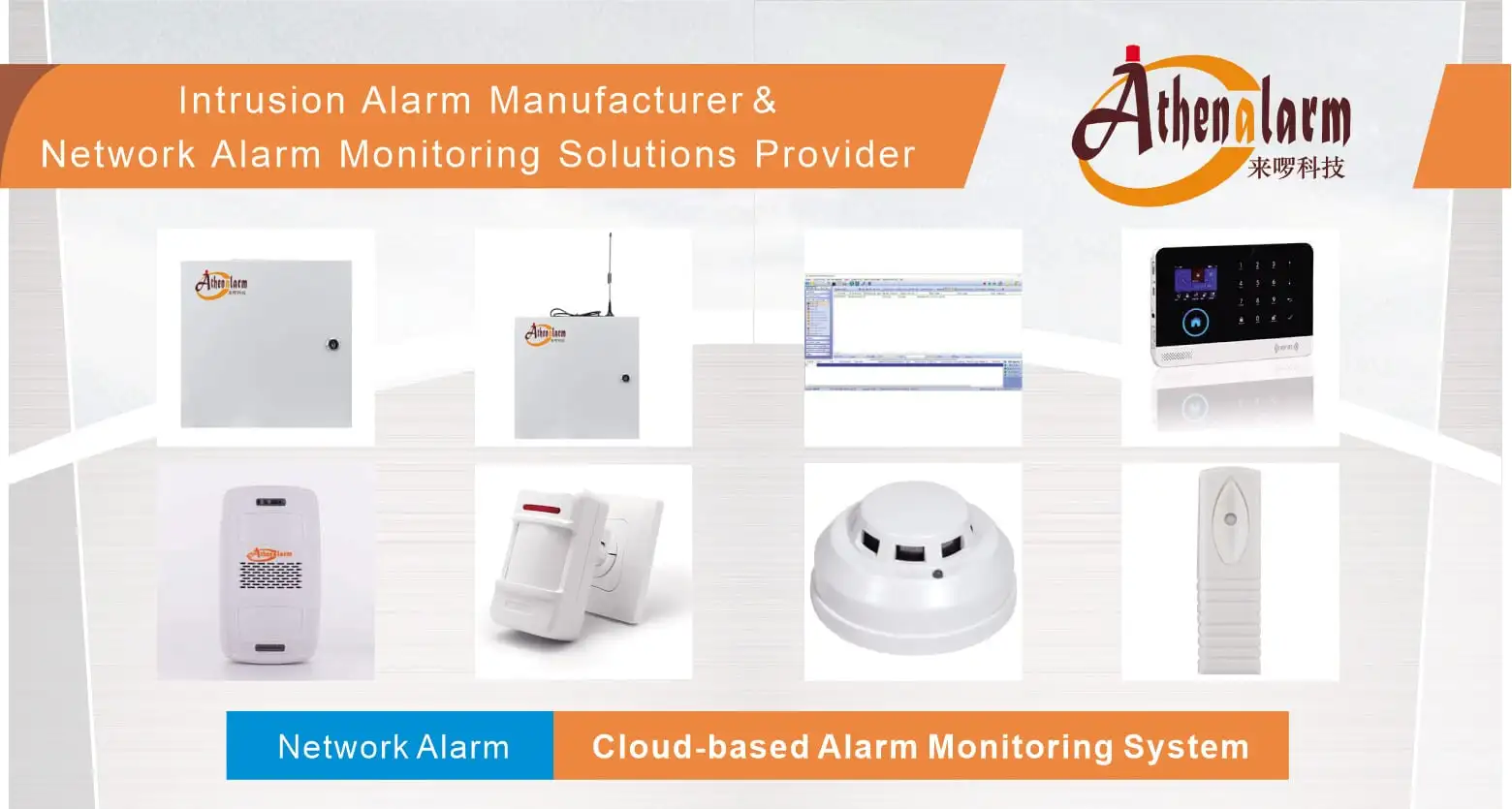
Architectural Advantages and Operational Impact of Wireless Network Alarm Systems in Enterprise Security
Enterprise security architecture is being redrawn around a single structural question: how does an intrusion detection network keep reporting when its primary communication path is physically or electronically compromised? A Wireless Network Alarm System sits at the center of this question. It connects sensors, embedded control panels, and monitoring centers through IP, cellular, RF, or mesh channels, replacing the single fixed-line dependency that defined PSTN-based alarm infrastructure for decades.
The operational problem this solves is concrete. A legacy wired alarm panel reports through one physical line. If that line is cut, jammed, or disconnected at the port, the site loses monitoring visibility with no automatic recovery path. For a single retail branch, a distribution hub, or a healthcare facility, this is not a theoretical risk — it is a documented failure mode tied to cable sabotage, construction damage, and carrier-side outages. As organizations scale across multiple sites, this single point of failure multiplies across every location that still depends on a fixed line without a wireless backup. Transitioning to an integrated enterprise alarm monitoring system ensures cross-site telemetry synchronization and eliminates single-line dependency across dispersed operational facilities.
This is why the architectural shift matters for deployment, procurement, and long-term operations. A Wireless Network Alarm System does not simply remove cabling; it introduces a layered communication model — primary IP or PSTN transport, automatic failover to 4G/5G or RF/mesh, standardized data formatting for third-party integration, and cloud-based lifecycle management. Each layer changes how integrators design redundancy, how IT teams plan multi-site oversight, and how facilities teams budget for maintenance.
The sections below walk through this architecture in the order it must be evaluated: structural differences from legacy systems, failover mechanics under line-cut or interference conditions, protocol-level interoperability with third-party platforms, and the operational/TCO consequences of cloud-based lifecycle management.
1. Architectural Evolution: Shifting from Legacy PSTN/Wired Lines to Multi-Path Wireless Platforms
A Legacy PSTN alarm system depends on a fixed copper or IP line running between the control panel and the monitoring center. That line is both the detection reporting path and the single point of failure. A Wireless Network Alarm System restructures this relationship: the embedded control panel becomes a multi-path node capable of routing alarm traffic over IP, cellular (4G/5G), RF, or mesh networks, with the Cloud Management Platform acting as the coordination layer for configuration, status synchronization, and remote access.
This is not a cosmetic difference. It changes what the control panel is responsible for. In a PSTN model, the panel’s job ends at transmitting a signal down a wire. In a wireless network model, the panel evaluates transport health, executes failover logic, formats data into standardized payloads, and maintains a live session state with the cloud platform — functions that did not previously exist at the edge.
1.1 Unidirectional vs. Bidirectional Data Flows in Security Monitoring
Legacy alarm architecture transmits in one direction only: from the control panel to the monitoring station. The monitoring center receives an alert but cannot query the panel, verify sensor state, or issue commands back to the site without a separate communication channel. This constraint directly affects response quality — an operator receiving a bare signal has no way to confirm whether a triggered zone reflects an actual intrusion or a false activation.
A Wireless Network Alarm System replaces this with continuous bidirectional telemetry between the embedded control panel and the Central Monitoring Station (CMS) or Cloud Management Platform. The panel reports battery level, tamper state, and signal strength on an ongoing basis, not only at the moment of an event. Operators can remotely arm or disarm the system, and — critically for dispatch economics — can query live sensor status before authorizing a response. This directly reduces the operational cost driver identified in false alarm dispatch fees and regulatory fines: instead of dispatching on every triggered signal, the operator has the telemetry needed to filter non-threat activations before committing resources.
1.2 Consolidation of Hardware: Embedded Controller Architecture
Traditional alarm infrastructure typically separates detection, control logic, and transmission into distinct hardware units, each requiring independent wiring, power, and maintenance. To streamline this deployment complexity, adopting an embedded network alarm control panel centralizes edge analytics, multi-path routing, and cryptographic session management into a single hardened chassis. A Wireless Network Alarm System consolidates these functions into a single embedded control panel that houses local processing, wireless transmission modules, and multi-protocol formatting logic.
This consolidation has three direct engineering consequences. First, the embedded microcontroller executes edge analytics locally, reducing dependence on continuous cloud round-trips for basic event validation and lowering network bandwidth load. Second, fewer discrete hardware units mean fewer SKUs for distributors and integrators to stock, quote, and support. Third, commissioning time drops because a single unit replaces what previously required multiple interconnected devices and their associated wiring runs.
2. Communication Resilience and Failover Redundancy Mechanisms
The core reliability question for any enterprise deploying a Wireless Network Alarm System is what happens when the primary transport path fails — whether from physical sabotage, carrier outage, or deliberate jamming. This section addresses the mechanics of that failure and recovery process, not as a marketing claim, but as a defined sequence of transport-layer events.
2.1 Multi-Path Auto-Failover Protocol Execution (IP/PSTN to 4G/5G/RF)
When a primary IP or PSTN line is severed — whether by a cut cable at a retail distribution center, a damaged conduit during construction, or a local ISP port failure — the embedded control panel does not wait for a scheduled health check to notice. It detects the loss of the primary transport session and executes an automatic handoff sequence to a secondary path.
The failover sequence follows a consistent four-step logic:
- Primary path monitoring – The embedded control panel continuously monitors the IP/PSTN connection through periodic heartbeat or session-keepalive checks.
- Loss detection – A missed heartbeat or abrupt line disconnection triggers the panel’s failover logic without requiring operator intervention.
- Secondary path activation – The panel switches transmission to the 4G/5G cellular module or RF/mesh network, re-establishing a session with the Cloud Management Platform or CMS.
- State resynchronization – Once the secondary path is active, the panel resynchronizes pending event data, tamper status, and health telemetry so the monitoring center receives a continuous, unbroken record rather than a gap in reporting.
This sequence is what distinguishes a wireless network alarm system from a wired system with a cellular “backup dialer” bolted on — the failover is a native transport-layer function of the embedded panel, not an afterthought.
2.1.1 Dual-SIM Redundancy and Carrier Switching Dynamics
A single cellular module introduces its own single point of failure if the carrier network itself experiences an outage or local congestion. Dual-SIM configurations address this by allowing the embedded control panel to switch between two independent carrier networks. If the primary SIM’s carrier experiences a service interruption, the panel switches to the secondary SIM without requiring the IP/PSTN path to be involved at all.
This matters specifically for geographically dispersed enterprises — retail chains and energy infrastructure operators cannot control carrier-level outages, but they can control whether their alarm architecture has a second independent cellular path available when one carrier fails locally.
2.2 Mitigating Wireless Vulnerabilities: Encryption and RF Interference Controls
Removing physical cabling introduces a different category of engineering risk: RF interference, signal jamming, and spoofing attempts. Dense industrial facilities with reinforced concrete walls or metal enclosures around energy infrastructure equipment can create localized RF shadows that weaken wireless signal strength between sensors and the embedded control panel. In these environments, integrators must account for repeater placement or mesh node distribution rather than assuming uniform coverage.
On the transmission side, encrypted digital transport (secured protocols over TCP/IP) is used to resist spoofing and unauthorized signal injection. Combined with live signal health monitoring — where the panel continuously reports signal strength back to the CMS — this allows operators to distinguish between a genuine communication outage and a degrading signal condition before it becomes a full loss of monitoring. This is a trade-off, not a guarantee: multi-path routing and encryption reduce exposure to interference and spoofing, but they do not eliminate the underlying physical reality that wireless transport is more susceptible to environmental interference than a shielded cable run.
3. Interoperability and Ecosystem Integration via Standardized Protocols
A Wireless Network Alarm System is only as useful as its ability to exchange data with the monitoring center and adjacent security platforms without requiring proprietary, single-vendor infrastructure. Standardized alarm communication formats are what make this possible.
3.1 Standardized Alarm Data Payloads (SIA DC-09 & Contact ID)
| Protocol | Transport Layer | Data Structure | Primary Use Case | Integration Target |
|---|---|---|---|---|
| SIA DC-09 | IP / Cellular | Structured, encrypted event codes with extended metadata | Enterprise-grade event reporting with rich status data | Central Monitoring Station (CMS) software |
| Contact ID | PSTN / IP / Cellular | Numeric event and zone codes (DTMF-derived format) | Legacy-compatible zone and event identification | Third-party monitoring receivers |
| Proprietary XML | IP / Cellular | Custom-defined tags for extended telemetry | Vendor-specific extended data (battery, diagnostics) | Cloud Management Platform / API integrations |
Each format carries a different balance of interoperability and data richness. SIA DC-09 supports encrypted, structured event data suited to enterprise CMS integration. Contact ID remains widely supported across legacy and modern receivers, making it a practical baseline for mixed-vendor environments. Proprietary XML formats can carry richer telemetry but risk locking data exchange to a specific platform if not paired with an open API layer. The engineering decision here is not which format is “best,” but which combination avoids forcing a full hardware replacement when a monitoring provider or integration partner changes.
3.2 Cross-Platform Integration Architecture (CCTV, Access Control, Fire)
Standardized payloads are the mechanism by which a Wireless Network Alarm System triggers workflows in adjacent security platforms. When an intrusion event is generated, the embedded control panel formats the event using SIA or Contact ID and transmits it not only to the CMS but, where configured, to middleware or API layers that relay the event to video management systems, access control platforms, or fire detection panels.
This is where system boundaries matter for procurement planning. The wireless network alarm system’s native function is intrusion detection, transmission, and event formatting — it does not replace a dedicated video management system or access control platform. Its integration role is to deliver a standardized, time-stamped event trigger that those platforms can act on, such as pulling recorded video from the moment of a triggered zone or locking down access points tied to a specific alarm partition.
4. Operational Efficiency, Cloud Lifecycle Management, and TCO Optimization
Deployment speed and ongoing maintenance burden are the two operational variables most directly affected by the shift to wireless network alarm architecture, and both carry measurable impact on Total Cost of Ownership (TCO).
4.1 Rapid Deployment Dynamics and Structural Non-Invasiveness
Cable-free installation removes the largest labor and disruption cost associated with traditional alarm deployment. Because sensors and the embedded control panel do not require conduit runs or wall penetrations, documented installation time reductions of 50–70% compared to wired systems are achievable in typical commercial deployments.
This has a specific structural consequence beyond labor savings: it makes deployment viable in environments where cabling is not merely inconvenient but contractually or legally restricted. Leased high-rise offices frequently prohibit wall drilling or structural modification under tenancy agreements. Historical or heritage-designated buildings often carry preservation restrictions that forbid cable trays or wall penetrations entirely. In both cases, a wireless network alarm system is not simply the faster option — it is often the only compliant option.
4.2 Shift from Physical Inspection to Centralized Cloud Health Auditing
Maintenance under a legacy wired model typically requires a physical technician visit — a “truck roll” — to inspect wiring continuity, check panel status, or diagnose a fault. This model does not scale efficiently once an enterprise manages sensor fleets across dozens or hundreds of sites.
A Wireless Network Alarm System shifts this workflow to the Cloud Management Platform. Battery levels, tamper states, and signal strength across an entire sensor fleet are tracked centrally, allowing operations teams to identify degrading batteries or weakening signal conditions before they cause a monitoring gap. Firmware Over-the-Air (FOTA) updates push patches and feature updates directly to embedded control panels without requiring a site visit. The operational shift this produces is measurable: instead of reactive emergency dispatches when a panel goes offline, maintenance becomes scheduled and preventive, based on battery degradation curves and signal trend data visible in the cloud dashboard.
The combined effect of reduced installation labor and reduced maintenance dispatch frequency is the primary driver behind lower TCO for multi-site enterprises evaluating wireless network alarm architecture against continued investment in wired infrastructure.
5. Enterprise Deployment Scenarios and Application Frameworks
The architectural characteristics described above determine where wireless network alarm systems provide the clearest operational advantage. Retail chains with centralized security operations use cloud-integrated architecture to maintain a single monitoring view across geographically dispersed stores, where cable-cut resilience and remote diagnostics reduce the operational burden of managing dozens or hundreds of individual sites. Deploying a dedicated network store alarm system solution allows commercial chains to standardize multi-branch threat verification and automate after-hours intrusion escalation. Critical infrastructure environments — data centers, distribution hubs, and healthcare facilities — depend on multi-path failover and encrypted transmission specifically because a monitoring gap in these environments carries disproportionate operational or safety risk. In high-consequence financial facilities, implementing a specialized network bank vault alarm monitoring system solution guarantees continuous zone telemetry, physical delay verification, and anti-sabotage monitoring during non-operational windows. Educational campuses benefit from the scalability of cloud-managed sensor fleets across multiple buildings without requiring a dedicated on-site monitoring team at each location. Similarly, enterprise hospitality operators leverage structured network hotel alarm system solutions to consolidate multi-zone guest safety alerting and automated emergency signaling. Public infrastructure and smart city deployments extend the same architecture into environmental and transportation monitoring contexts, where wireless connectivity is often the only practical option given the geographic spread of endpoints. When securing extensive physical perimeters, deploying an automated network perimeter alarm system solution provides early physical deterrence and anti-climb verification prior to facility boundary compromise.
Across each of these scenarios, the deployment decision is governed by the same variables addressed throughout this architecture: failover redundancy for uninterrupted reporting, standardized protocols for integration with existing monitoring infrastructure, and reduced installation and maintenance overhead for organizations managing security across multiple physical locations.
6. FAQ
How does a wireless network alarm system maintain communication if a site’s primary landline or internet connection is cut?
The embedded control panel automatically shifts transmission to a 4G/5G cellular backup or RF/mesh channel within the failover sequence, without requiring operator intervention. This works because the panel continuously monitors the primary IP/PSTN session through heartbeat checks; a missed heartbeat triggers immediate secondary-path activation, and Dual-SIM configurations provide a further layer of redundancy if the primary cellular carrier itself is unavailable.
Why are open communication protocols like SIA and Contact ID essential for enterprise wireless alarm systems?
They prevent proprietary vendor lock-in and allow the alarm event data to be consumed by any compliant Central Monitoring Station (CMS) or third-party platform. Because SIA DC-09 and Contact ID are widely supported industry formats, an enterprise can change monitoring providers or integrate new CCTV, access control, or fire systems without replacing the underlying alarm hardware.
How do wireless network alarm systems reduce installation labor and total cost of ownership (TCO)?
Cable-free deployment cuts installation time by 50–70% by removing the need for conduit runs and wall penetrations, and it eliminates the risk of structural damage in occupied or historically protected buildings. On the maintenance side, remote diagnostics and Firmware Over-the-Air (FOTA) updates replace many physical technician dispatches with centralized cloud health audits, reducing recurring service costs across multi-site fleets.
Can wireless network alarm systems effectively resist signal jamming and electromagnetic interference in enterprise settings?
They mitigate — rather than eliminate — this risk through encrypted digital transmission, multi-path routing across 4G/5G, RF, and mesh channels, and continuous signal health monitoring reported back to the CMS. In environments with significant RF attenuation, such as reinforced concrete structures or metal-enclosed industrial equipment, integrators typically address remaining exposure through repeater placement or additional mesh nodes rather than relying on wireless transport alone.
7. System Component Checklist & Hardware Integration Appendix
When designing a resilient enterprise alarm topology, system architects must select verified field endpoints and application-specific solutions to complement the central wireless alarm panel. The following hardware components and specialized deployment frameworks are certified for multi-path network integration:
- Enterprise OEM & Platform Architecture:
- Manufacturer Overview: Enterprise Intrusion Alarm System Manufacturer
- Official Platform Portal: Athenalarm System Portal
- General Hardware Category: Commercial Burglar Alarm Hardware Directory
- Targeted Vertical Solution Frameworks:
- Centralized Monitoring Architecture: Integrated Network Alarm Monitoring System Solution
- Deployment & Field Application Scenarios: Enterprise Network Alarm System Application Framework
- Financial Branch Infrastructure: Commercial Bank Security & Alarm Monitoring Solution
- Self-Service Banking Terminals: Bank ATM Remote Alarm Monitoring System Solution
- Multi-Tenant & Estate Infrastructure: Multi-Tenant Community Alarm System Solution
- Residential & Small Office Endpoints: Residential & Small Office Network Alarm Solution
- Perimeter & Motion Detection Endpoints:
- Volumetric Intrusion Detection: Industrial PIR Motion Sensor Endpoint
- High-Coverage Volumetric Detection: High-Coverage Wide-Angle PIR Motion Sensor
- Perimeter Entry Verification: Perimeter-Secure Magnetic Door Contact
- Environmental & Structural Hazard Detectors:
- Structural Integrity & Sabotage Detection: Vault & Surface Digital Vibration Detector
- Early-Warning Fire Protection: Early-Warning Photoelectric Smoke Detector
- Hazardous Gas Leakage Monitoring: Hazardous Gas Leak Detector Endpoint
- Duress, Audible Signaling & Terminal Hardware:
- Hardwired Emergency Signaling: Duress Panic Button Endpoint
- Mobile Emergency Signaling: RF Wireless Duress Panic Button
- Visual Annunciators: Industrial-Grade Strobe Warning Light Module
- Voice Deterrence Annunciators: Audible Motion-Triggered Sound Player
- Standalone/Small Branch Terminals: Dual-Path GSM/WiFi Enterprise Alarm Terminal
