
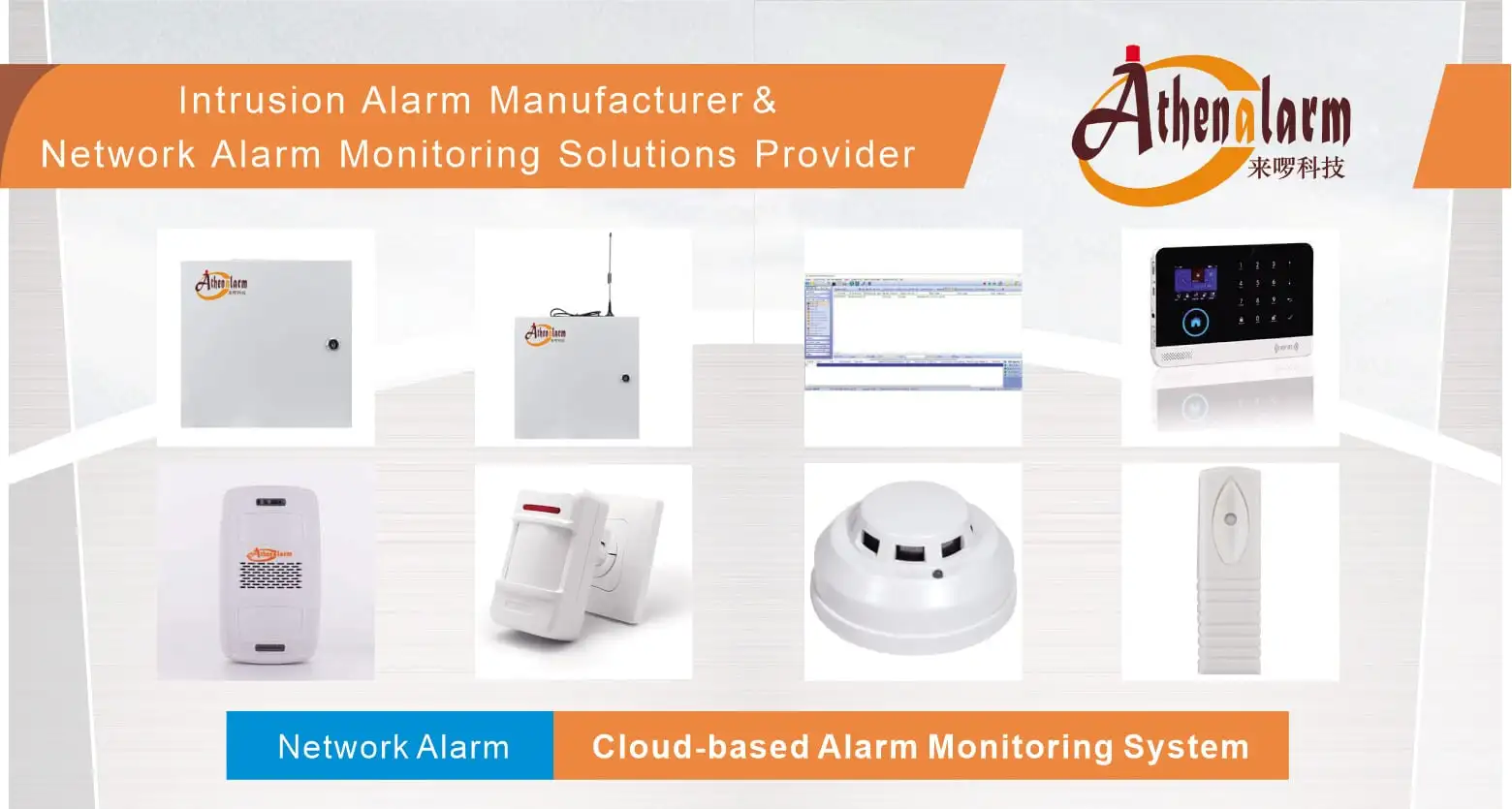
Burglar Alarm System Deployment: Strategic Evaluation for Enterprise Facility Security
Introduction
A regional facilities director evaluating three competing security proposals will typically find the same list of features repeated across all three: sensors, a control panel, mobile notifications, and a monitoring contract. What differentiates one burglar alarm system proposal from another is not the presence of these components but whether the architecture converts a detected intrusion into a verified, communicated, and actionable event under the facility’s actual operating conditions.
This is the procurement problem that security decision-makers and facility managers face when evaluating a burglar alarm system as capital or operating expenditure. The system is rarely rejected because it lacks sensors or sirens. It underperforms — or fails to justify its cost — when detection is not matched by reliable communication, credible verification, integration with the rest of the security environment, and a maintenance model that keeps all of it working over years of operation.
The purpose of this article is not to list the benefits of a burglar alarm system, but to establish the evaluation criteria that determine whether a specific deployment or upgrade is justified: does it reduce intrusion risk, convert detection into response, hold up under communication and power disruption, fit the existing security and building architecture, scale across multiple sites, and produce a defensible financial and operational return. Each of these questions is addressed in turn, followed by a consolidated procurement decision framework.
1. What Must an Enterprise Burglar Alarm System Deliver Beyond Basic Intrusion Detection?
A burglar alarm system is commonly described as a set of sensors, a control panel, and communication modules. That description is accurate but incomplete for procurement purposes. The relevant question for a decision-maker is not which components exist, but how those components combine into an operational chain that produces a usable security outcome.
1.1 The Security Value Chain
The burglar alarm system depends on a defined sequence of functions rather than any single device. Detection devices identify a condition consistent with unauthorized entry. The alarm control panel processes that input and coordinates the response, which may include local alarm output, remote communication, or both. Communication paths carry that information to mobile applications, monitoring centers, or cloud interfaces. Verification methods, where present, assess whether the event reflects an actual threat. Only after these stages does a human or organizational response occur.
1.1.1 Detection → Control → Notification → Verification → Response
This sequence is the core structural model for evaluating a burglar alarm system:
- Detection — motion detectors, shock sensors, and glass-break detectors identify a potential intrusion condition.
- Control — the alarm control panel coordinates local alarm output and initiates external communication.
- Notification — the event is transmitted through mobile applications, SMS, voice calls, or a monitoring center.
- Verification — where available, video verification or monitoring-center review assesses the credibility of the event.
- Response — a person, monitoring center, or automated workflow takes action based on the verified event.
A weakness at any stage limits the value produced by the entire chain, regardless of how capable the detection hardware is.
1.2 Why Detection Alone Does Not Equal Security Value
A system that reliably detects intrusion events but does not reliably communicate, verify, or prompt a response produces limited operational value. Detection is a necessary condition for security value, not a sufficient one.
1.2.1 The Response Dependency
An alarm event only produces a security outcome if it reaches an appropriate recipient, is assessed with sufficient confidence, and results in an action — whether that action is a monitoring-center escalation, an internal security team dispatch, or an automated building response. Procurement evaluation should therefore examine the complete chain from detection to response, not the detection hardware in isolation.
2. How Alarm Deployment Reduces Intrusion Risk and Supports Immediate Intervention
2.1 Behavioral Deterrence and Visible Security Presence
Visible security infrastructure — signage, sensors, cameras, and indicator lighting — can influence intrusion behavior before an event occurs. A visible burglar alarm system signals to a potential intruder that the property is monitored, which can reduce the likelihood that the property is selected as a target of opportunity.
2.1.1 Evidence Boundary for the Reported Deterrence Statistic
Industry sources, including figures attributed to the Electronic Security Association, report that properties with visible alarm systems may be up to 60% less likely to be burglarized. This figure originates from third-party industry reporting rather than from independently verified data specific to any individual deployment, and it should be treated as a directional industry claim rather than a guaranteed outcome for a specific facility. Deterrence effectiveness depends on visibility, signage placement, and the surrounding threat environment, none of which are uniform across facility types.
2.2 Immediate Local Intervention After Detection
Once an intrusion is detected, local alarm outputs — sirens and strobe lights — are intended to disrupt the intrusion in progress. This local response occurs independently of remote communication and does not require an external monitoring relationship to function.
2.2.1 Reducing the Time Between Detection and Human Awareness
The operational purpose of immediate local alarming is to shorten the interval between detection and awareness — either by the intruder recognizing exposure or by occupants and nearby personnel becoming aware of the event. This interval has direct bearing on the scope of loss or damage during a breach, independent of whether a remote monitoring center is also engaged.
2.3 From Early Detection to Loss Exposure
For procurement purposes, deterrence and local alarming matter primarily because they affect loss exposure — the probability and magnitude of asset loss, operational disruption, or liability associated with an intrusion event. A facility with higher-value assets, regulated data, or life-safety considerations carries a different loss-exposure profile than a low-value storage facility, and this profile should inform how much weight deterrence and local intervention carry in the overall evaluation.
3. How Remote Notification, Verification, and Monitoring Turn an Alarm Into an Actionable Event
3.1 Remote Notification and Security Visibility
Cloud-connected control panels can extend awareness of an alarm event beyond the facility itself, allowing designated personnel to receive event information regardless of physical location. This capability is relevant where security or facilities staff are not present on-site around the clock.
3.1.1 Mobile, SMS, Voice, and Cloud-Based Notification
Systems described in this category support notification through mobile application push alerts, SMS messages, voice calls, and monitoring-center dispatch. These channels serve different purposes: mobile and SMS notification support individual awareness, while monitoring-center dispatch supports formal escalation procedures. The availability of these channels depends on the specific system and monitoring arrangement selected, and should not be assumed to be present in every deployment.
3.2 Video Verification and False-Alarm Control
Video-based verification allows a recorded clip or live feed associated with an alarm event to be reviewed before further action is taken. This capability is intended to distinguish between events that warrant escalation and events caused by non-threatening activity.
3.2.1 Distinguishing Potential Threats From Harmless Activity
Common sources of nuisance triggering include pet movement, weather conditions such as wind or precipitation affecting sensors, and HVAC-related air movement. Video verification can help an operator or automated system assess whether a triggering event corresponds to an actual intrusion attempt before escalating to dispatch. This reduces — but does not eliminate — the likelihood of unnecessary escalation, since verification quality depends on camera placement, lighting conditions, and the specific detection logic in use.
3.3 Professional Monitoring and Escalation
Third-party monitoring centers add a layer of human or automated review between event detection and any decision to escalate to law enforcement or another response service. Monitoring arrangements typically include multi-channel connectivity, audio or video verification support, and incident documentation for audit or insurance purposes.
The relationship between a monitoring center and law enforcement response is conditional. It depends on the specific monitoring contract, the verification process used, jurisdictional dispatch policy, and the response procedures agreed upon between the facility and the monitoring provider. A monitoring relationship should be evaluated as a service capability rather than as a guarantee of a specific response outcome.
3.4 Why False Alarms Are a Business Issue
False alarms are not solely a technical inconvenience. Each nuisance event consumes staff attention, may trigger unnecessary dispatch costs, and can reduce the credibility of subsequent alerts from the same facility with both internal staff and, where applicable, monitoring or law enforcement contacts. For procurement purposes, false-alarm performance should be treated as an operational cost variable alongside hardware and monitoring costs, not as a secondary technical detail.
4. How Integration Capability Determines Enterprise Security Fit
4.1 Integration With Physical Security Systems
A burglar alarm system operating in isolation from other facility systems provides less coordinated value than one that can interact with access control, smart locks, and lighting. Where integration exists, an alarm event can inform related actions — for example, restricting access through a controlled door or adjusting lighting in the affected area — as part of a broader security workflow.
4.1.1 Access Control, Smart Locks, and Lighting
Integration in this category typically supports coordinated responses such as automation rules tied to detected events, rather than independent operation of each system. The specific automation logic available depends on the platforms involved and is not standardized across all alarm and access-control combinations.
4.2 Integration With VMS and Other Facility Systems
At an enterprise level, a burglar alarm system may also need to coordinate with video management systems (VMS), fire panels, and broader IoT or automation platforms. This positions the alarm system as one node within a larger facility technology environment rather than as a standalone product.
4.2.1 Open APIs and Standards-Based Interoperability
Interoperability in this category is generally supported through open APIs and industry-standard interfaces referenced at a general level rather than through a specific named protocol. The existence of an open API indicates a capability for integration; it does not by itself establish that a given alarm system will interoperate seamlessly with every VMS, access-control platform, or fire panel a facility already uses. Compatibility should be confirmed against the specific systems involved before procurement.
4.3 Integration Capability Versus System Complexity
| Consideration | Effect of Greater Integration |
|---|---|
| Coordination scope | Wider, connecting alarm events to access control, lighting, VMS, and fire systems |
| Implementation effort | Higher, due to configuration and compatibility verification across platforms |
| Operational dependency | Increased, since alarm performance becomes linked to connected systems |
| Value delivered | Higher only when the connected systems are already part of the facility’s operating environment |
Integration capability should be evaluated against the facility’s existing systems rather than treated as a generic advantage. A facility without access control or VMS in place gains limited immediate value from an alarm system’s integration capability, even if that capability is technically available.
5. How Communication and Power Resilience Affect Security Continuity
5.1 Communication Dependency in Remote Alarm Architecture
Remote notification, cloud visibility, and monitoring-center communication all depend on an active communication path between the facility and the receiving party. When that path is unavailable, remote awareness of alarm events is affected, even if local alarm outputs continue to function.
5.1.1 Broadband, Cellular/GSM, and Other Communication Paths
Systems in this category commonly rely on broadband internet, cellular/GSM connections, or satellite links to transmit event data. Each path carries its own dependency: broadband is affected by internet or power outages at the facility, cellular connectivity depends on network coverage and service availability, and satellite links depend on their own service conditions. No single path should be assumed to be unaffected by all failure conditions.
5.2 Dual-Path Communication and Failover
Systems described as supporting dual-path communication use two independent communication channels so that failure of one path does not necessarily eliminate remote communication entirely.
5.2.1 Redundancy Is a Resilience Mechanism, Not an Uptime Guarantee
Dual-path communication reduces the likelihood that a single point of communication failure eliminates remote visibility, but it does not guarantee uninterrupted operation under all conditions. Both paths could be affected by an event that disrupts communications infrastructure broadly, such as a wide-area network outage. Procurement evaluation should treat dual-path communication as a risk-reduction measure rather than an absolute continuity guarantee.
5.3 Power Loss and Battery Continuity
Loss of primary power affects the alarm control panel, sensors, and any locally powered communication equipment. Battery backup and battery-monitoring functions are intended to maintain system operation during a power interruption. The duration and reliability of that continuity depend on battery condition, load, and the length of the outage, which is why battery monitoring — rather than the mere presence of a battery — is the relevant operational safeguard.
6. What Enterprise Scale Changes About Burglar Alarm Deployment
6.1 Organizing Security Across Multiple Zones
A single-facility deployment can typically be managed as one security area. As facilities grow in size or complexity, multi-zone configuration — organizing detection and alarm behavior by room, floor, or tenant — becomes relevant to avoid treating an entire building as a single undifferentiated security zone.
6.2 Centralized Management Across Multiple Properties
Enterprise or multi-site operators require visibility across more than one facility. Centralized or cloud-based management interfaces are intended to consolidate monitoring and configuration across multiple properties rather than requiring separate administration for each site.
6.2.1 Unified Visibility and Administration
A unified dashboard, where available, allows security or facilities personnel to review status and events across multiple properties from a single interface. This is an administrative capability rather than a change to the underlying detection or communication mechanisms at each site.
6.3 Centralized Management Versus Administrative Complexity
As the number of managed sites increases, centralized visibility improves, but so does the importance of consistent configuration, update management, and access control across the platform. A larger deployment does not automatically reduce administrative burden; it shifts that burden from per-site management to centralized configuration governance, which requires its own operational ownership.
7. What Operational Dependencies Can Reduce the Real-World Value of an Alarm System?
Beyond the specific mechanisms already described, several dependencies determine whether a technically capable burglar alarm system produces its intended value under actual operating conditions.
7.1 False-Alarm Dependency
Excessive nuisance alarms, discussed in Section 3, reduce confidence in the system over time and can lead to alert fatigue among personnel or monitoring staff, independent of whether the underlying detection hardware is functioning correctly.
7.2 Communication and Power Dependencies
The communication and power dependencies discussed in Section 5 have a direct operational consequence: during an outage affecting either communication or power, the facility’s effective security posture reverts to whatever local, non-dependent capabilities remain — typically local alarm output alone, absent battery-supported communication.
7.3 Maintenance Dependency
A burglar alarm system is not a one-time installation. Its continued reliability depends on ongoing operational tasks.
7.3.1 Maintenance as a Lifecycle Requirement
Routine inspection, battery checks, and firmware updates are identified as recommended maintenance activities, generally on a semi-annual basis. Neglecting these tasks can result in undetected battery degradation, outdated firmware, or unnoticed sensor faults — conditions that reduce system reliability without necessarily producing an immediate, visible failure.
7.4 Response Dependency
7.4.1 Detection Without Effective Response
A correctly functioning detection and notification chain still requires a defined response process. If notifications are not monitored, if escalation procedures are unclear, or if no party is responsible for acting on an alert, detection does not translate into intervention. This dependency should be addressed at the organizational level, independent of the technical capability of the alarm system itself.
7.5 Tamper and Sabotage Considerations
Tamper detection functions are intended to identify physical interference with alarm equipment. This provides a mechanism for flagging attempted sabotage but does not by itself prevent equipment interference; it shifts the relevant question to whether tamper alerts are monitored and acted upon in the same way as intrusion alerts.
8. Which Engineering Trade-Offs Should Buyers Evaluate Before Procurement?
Each capability discussed above introduces a corresponding dependency or complexity. Procurement evaluation should treat these as trade-offs to be judged against the facility’s requirements, not as unconditional benefits.
| Trade-Off | Capability Gained | Dependency Introduced | When Justified |
|---|---|---|---|
| Detection sensitivity vs. false-alarm control | Faster, more sensitive intrusion detection | Higher risk of nuisance triggering from pets, weather, HVAC | When paired with verification capability adequate to the facility’s traffic and environmental conditions |
| Integration capability vs. architecture complexity | Coordinated response across access control, lighting, VMS, fire systems | Greater implementation effort and cross-system compatibility requirements | When the facility already operates the systems being integrated |
| Remote connectivity vs. communication dependency | Off-site visibility and control | Dependence on broadband, cellular, or satellite availability | When remote visibility materially changes response capability for the facility’s staffing model |
| Redundancy vs. infrastructure complexity | Reduced risk from single-path communication failure | Additional communication infrastructure and configuration | When the facility’s risk profile cannot tolerate a communication gap during outages |
| Centralized management vs. administrative complexity | Unified visibility across multiple sites | Greater importance of consistent configuration governance | When the organization can dedicate ownership to centralized administration |
| Advanced verification vs. technical dependency | Improved confidence before escalation | Dependence on video quality, processing, and integration | When false-alarm cost or dispatch-priority concerns justify the added dependency |
None of these trade-offs has a universally correct answer. Each should be resolved against the specific facility’s risk profile, existing systems, staffing model, and operating environment.
9. How Should Enterprise Buyers Evaluate Burglar Alarm ROI and Lifecycle Value?
9.1 Direct Financial Value
Financial value from a burglar alarm system deployment typically comes from a combination of reduced loss from theft or unauthorized access, potential effects on insurance costs, and operational continuity benefits from earlier detection.
9.1.1 Insurance Savings Claims and Evidence Boundaries
Some sources report potential commercial insurance premium reductions of up to 20% associated with certified alarm system deployment. This figure originates from industry reporting rather than a guaranteed contractual outcome, and actual insurance impact depends on the insurer, policy terms, certification requirements, and the specific facility’s risk profile. It should be evaluated with the insurer directly rather than assumed as a fixed benefit.
9.2 Operational Value and Loss Avoidance
Beyond direct loss reduction, earlier detection and faster response can reduce operational disruption — for example, limiting the duration of an intrusion event or reducing downstream cleanup, investigation, or business-interruption costs associated with a breach.
9.3 Lifecycle Value
9.3.1 Component Lifespan and Maintenance Planning
Source material for this category reports sensor lifespans in the range of 5–10 years and control-panel service life of 10 or more years with proper maintenance. These figures should be treated as source-reported ranges rather than universal specifications applicable to every product or installation condition. Lifecycle planning should account for maintenance costs — inspection, battery replacement, and firmware updates — as part of total cost of ownership, not solely the initial hardware and installation cost.
9.4 Energy and Sustainability Considerations
9.4.1 Energy-Efficient and Solar-Powered Components
Some system components are described as incorporating long-life batteries, solar-powered sensors for remote installations, and energy-efficient control panels. These characteristics may be relevant to organizations tracking energy usage or pursuing sustainability objectives. However, the presence of energy-efficient components does not by itself establish eligibility for a specific certification program such as LEED; certification eligibility depends on the certifying body’s criteria and should be confirmed independently rather than assumed from component specifications alone.
9.5 ROI Should Be Evaluated as a Value Model, Not a Guaranteed Payback
The financial case for a burglar alarm system is better represented as a chain of contributing factors than as a single return figure:
Investment → Risk Reduction → Loss Avoidance → Operational Continuity → Potential Financial Benefits → Lifecycle Assessment
Each stage depends on facility-specific conditions. A buyer should evaluate this chain against their own risk exposure, insurance arrangement, and operating model rather than treating the system as one that automatically “pays for itself.”
10. Procurement Decision Framework: When Does a Burglar Alarm System Make Strategic Sense?
The preceding sections establish the capabilities, dependencies, and trade-offs relevant to a burglar alarm system deployment. This section consolidates them into a decision sequence.
10.1 Evaluate Security Risk
Does the facility’s asset value, occupancy pattern, or regulatory exposure justify an additional detection and deterrence layer beyond existing physical security measures?
10.2 Evaluate Response Requirements
Who receives alarm notifications, who verifies them, and who is responsible for escalation and action? A capable detection system without a defined response owner produces limited value.
10.3 Evaluate Integration Requirements
Which existing systems — access control, VMS, lighting, fire panels — must the alarm system coordinate with, and has compatibility with those specific systems been confirmed rather than assumed from general integration claims?
10.4 Evaluate Reliability Requirements
What communication and power failure conditions is the facility exposed to, and does the deployment need dual-path communication and battery backup to meet an acceptable continuity standard?
10.5 Evaluate Scale and Administration
Will the deployment remain single-site, or does it require multi-zone configuration and centralized multi-property management, along with the administrative ownership that centralized management requires?
10.6 Evaluate Lifecycle and Financial Value
Considering risk reduction, loss avoidance, potential insurance effects, and lifecycle maintenance costs together, does the projected value justify the capital and operating expenditure?
10.7 Evaluate Operational Dependencies
Can the organization sustain the dependencies the system introduces — verification review, monitoring-center coordination, maintenance scheduling, communication continuity, and response procedures — over the system’s operating life?
10.7.1 The Final Procurement Test
The relevant procurement question is not whether a burglar alarm system offers a long list of features, but whether its specific architecture can produce sufficient risk reduction and operational value for the facility’s actual requirements, given the dependencies and trade-offs the deployment introduces. Where the facility’s response capacity, communication infrastructure, or maintenance capability cannot support the dependencies described above, the appropriate outcome may be further evaluation or a phased deployment rather than immediate full-scale procurement.
11. FAQ
Q1: How does alarm communication reliability affect monitoring performance?
Communication reliability determines whether an alarm event actually reaches a mobile application, monitoring center, or cloud interface after detection occurs. If the communication path — broadband, cellular, or satellite — is unavailable, remote notification and monitoring-center awareness are affected even though local alarm outputs may still function. This is why communication resilience, including dual-path failover where available, should be evaluated as part of monitoring performance rather than treated as a separate technical detail.
Q2: What measurable financial ROI does an enterprise burglar alarm system deliver?
There is no single guaranteed ROI figure; the financial case should be built from several contributing factors rather than one number. These include potential loss reduction from earlier detection, possible insurance premium effects (reported by some sources at up to 20%, subject to insurer-specific terms), reduced operational disruption from faster response, and lifecycle costs including maintenance. Buyers should evaluate this as a value chain — investment, risk reduction, loss avoidance, operational continuity, and lifecycle assessment — rather than assuming a fixed payback period.
Q3: How does AI video verification reduce false alarm operational costs?
Video verification allows a recorded clip or live feed associated with a triggering event to be reviewed before escalation, helping distinguish genuine intrusion attempts from harmless activity such as pet movement, weather effects, or HVAC-related air movement. This reduces the likelihood of unnecessary dispatch and preserves confidence in the system’s alerts, though verification quality depends on camera placement and the specific detection logic used, so it reduces rather than eliminates nuisance events.
Q4: Can modern burglar alarm systems maintain uptime during major power or network outages?
Systems that support dual-path communication and battery backup are designed to reduce, but not eliminate, the risk of losing alarm functionality during a power or communication outage. Dual-path communication provides an alternative channel if the primary path fails, and battery monitoring is intended to maintain operation during power loss for a limited duration. Neither mechanism guarantees uninterrupted operation under all failure conditions, particularly wide-area outages that could affect multiple communication paths simultaneously.
Q5: How do intrusion alarms interoperate with enterprise VMS and access control platforms?
Interoperability is generally supported through open APIs and standard integration interfaces that allow the alarm system to exchange event data with VMS, access control platforms, and other building systems. This enables coordinated workflows, such as triggering camera review or restricting access following a detected event. The existence of an open API indicates integration capability but does not guarantee compatibility with every specific VMS or access-control platform; compatibility should be verified against the facility’s existing systems before procurement.
Q6: What maintenance does an enterprise burglar alarm system require?
Recommended maintenance activities include routine inspections, battery checks, and firmware updates, typically on a semi-annual basis. These tasks address battery degradation, outdated firmware, and undetected sensor faults that can otherwise reduce system reliability over time. Maintenance should be treated as an ongoing operational requirement and included in lifecycle cost planning rather than viewed as a one-time installation task.
Q7: Are burglar alarm systems suitable for multi-site enterprise facilities?
Multi-site suitability depends on whether the system supports multi-zone configuration within a facility and centralized management across multiple properties, typically through a unified dashboard or cloud interface. This allows consolidated visibility and administration rather than separate management for each site. As the number of sites increases, the administrative importance of consistent configuration and access governance increases correspondingly, so multi-site suitability should be evaluated alongside the organization’s capacity to manage centralized administration.
12. System Component Checklist Appendix
For technical specifications and system integration referenced across enterprise facility security frameworks, refer to the following architecture deployment checklist:
- Perimeter Intrusion Defense: Network Perimeter Alarm System Solution
- Motion Intrusion Sensing: Passive Infrared (PIR) Motion Sensors and Wide-Angle PIR Motion Sensors
- Boundary & Contact Detection: Industrial Magnetic Door Contacts
- Physical Structural Protection: Digital Vibration Detectors
- Life Safety & Environmental Hazards: Photoelectric Smoke Detectors and Combustible Gas Detectors
- Duress & Manual Escalation: Hardwired Emergency Panic Buttons and Wireless Panic Buttons
- Local Deterrence & Visual Annunciation: Visual Warning Strobe Lights and Motion Sensor Sound Players
- Wireless Terminal Controllers: GSM/WiFi Alarm System Terminals
- High-Value Financial Asset Protection: Bank Alarm Monitoring Systems, ATM Alarm Monitoring Solutions, and Bank Vault Monitoring Solutions
- Commercial & Industry Applications: Hotel Alarm System Solutions, Retail Store Alarm Solutions, Residential Community Alarm Systems, and Residential House Alarm Systems
