
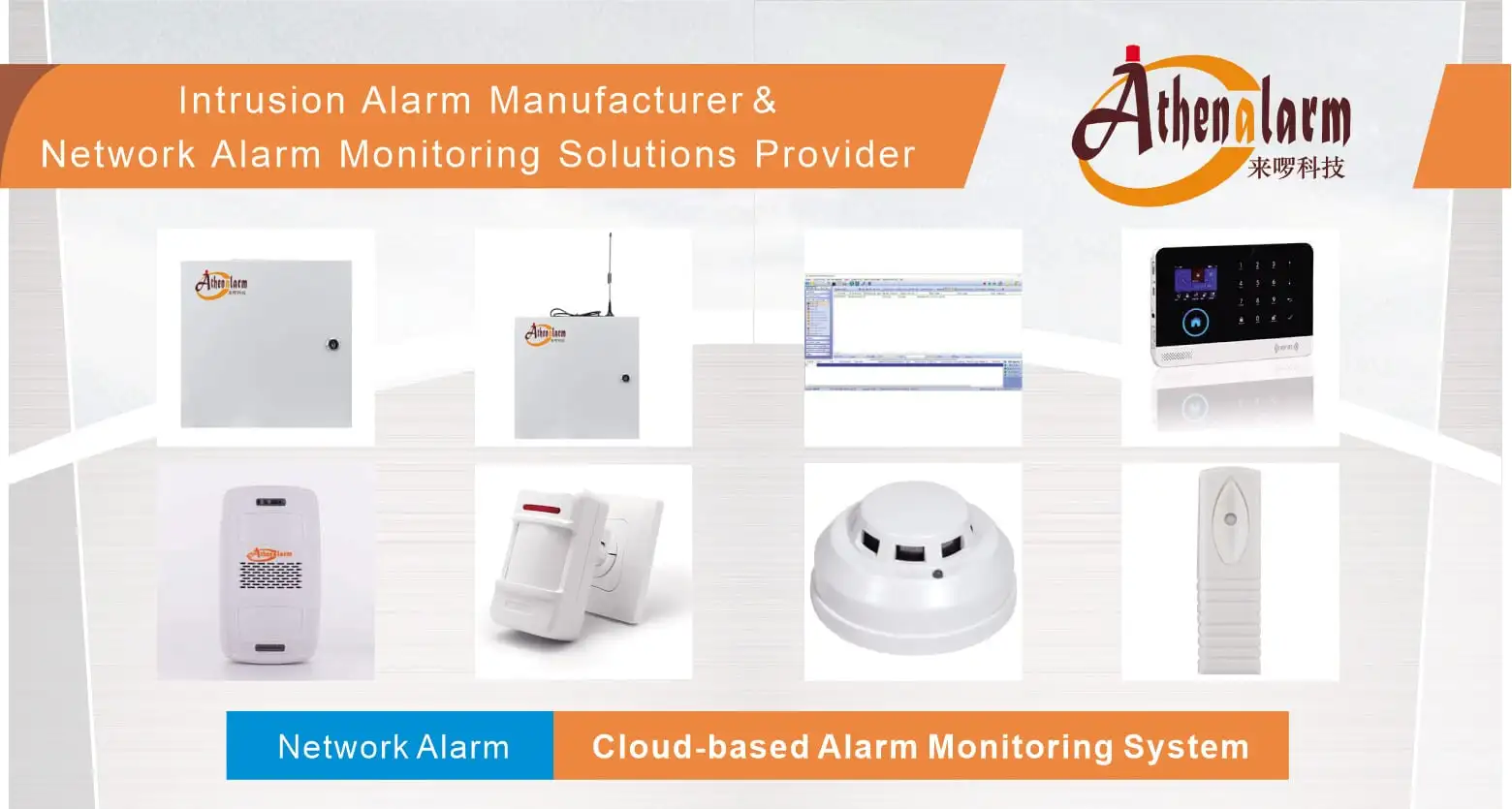
Operational Deployment Tactics for Commercial SMS Security Alarm Systems
Commercial security operations increasingly route critical alerts through Wi-Fi routers, cloud dashboards, and mobile applications. This dependency creates a specific operational exposure: when the local IP path fails — through a power interruption, an internet service outage, or a network-layer disruption — alarm notifications built entirely on that path can fail at the same moment the facility needs them most.
A commercial SMS Security Alarm System addresses this exposure by routing event notifications through the GSM cellular network rather than the site’s local internet connection. This does not make the system immune to failure. It changes which infrastructure the notification depends on, moving the dependency from local Wi-Fi/IP availability to cellular network availability and local device power. For security managers, facility managers, and technical engineers evaluating alarm communication architecture, the practical question is not whether SMS “works,” but where SMS should sit inside the broader detection-to-response chain, what conditions must be validated before relying on it, and how it compares to IP- and app-based alerting for a specific deployment.
This article works through nine deployment tactics that structure SMS security alarm systems as an operational communication layer — covering alert design, continuity positioning, silent notification, escalation ownership, evidentiary logging, architecture validation, redundancy, technology selection, and B2B integration — followed by the failure conditions that determine whether the deployment performs as intended.
1. Establish the Operational Role of SMS in the Alarm Architecture
Before evaluating deployment tactics, it is necessary to define what SMS actually contributes to a commercial alarm system, and what it does not.
1.1 Trace the Event-to-Response Signal Chain
A commercial SMS Security Alarm System follows a defined functional chain:
Configured Event → Alarm Control Panel → GSM Communicator → GSM Network → SMS Notification → Designated Recipient → Escalation → Operational Response
Each stage introduces a distinct dependency, and the chain is only as reliable as its weakest stage.
1.1.1 Detection and Panel Processing
Motion sensors, magnetic sensors, and environmental sensors detect a configured condition and pass that condition to the alarm control panel (CPU). The panel processes the alarm condition and determines which notification action to trigger. The panel is the point where detection logic and communication logic meet — if the panel is not configured correctly, downstream communication reliability becomes irrelevant.
1.1.2 GSM Communication and SMS Delivery
The panel hands the alarm condition to a GSM communicator, which is SIM-enabled and accesses the cellular network to transmit an SMS message. This stage depends on the presence of a functioning SIM, adequate cellular signal at the installation site, and continued power to the communicator itself. SMS delivery through this path does not depend on the site’s Wi-Fi router or internet service provider.
1.1.3 Human Acknowledgement and Escalation
A delivered SMS message is not the same as a resolved incident. The recipient must receive, read, interpret, and act on the message. This distinction matters operationally: a technically successful SMS transmission does not by itself indicate that the facility’s risk has been addressed. Escalation and acknowledgement procedures — covered in Tactic 4 — exist specifically to manage this gap.
1.2 Position SMS Within Business Continuity
SMS communication can function in one of two architectural roles:
- Primary communication path — where the site has limited or unreliable IP infrastructure, or where a lower-complexity communication path is preferred.
- Redundant communication layer — where an IP-based or app-based alarm system already exists, and SMS is added specifically to provide a communication path that does not share the same local network dependency.
The correct role depends on site-specific conditions rather than a general preference for one communication method. This decision is developed further in Tactic 8.
2. Tactic 1 — Design SMS Alerts Around Critical Events and Response Requirements
The first deployment decision is not how fast SMS can deliver a message, but which events justify an SMS notification and how that notification should be structured to support action.
2.1 Prioritize Events That Require Human Action
Not every sensor event needs to generate an SMS. Configuring SMS notifications for unauthorized entry, fire detection, or gas-leak conditions — events that require an immediate human decision — keeps the notification channel meaningful. Routing low-priority or informational events through the same channel increases message volume without increasing operational value.
2.2 Use Concise, Unambiguous Message Templates
A message such as “Zone 3 – Fire Alarm Triggered, 21:07” gives the recipient the event type, location, and time in a single line. Message templates should be structured consistently across zones and event types so recipients can interpret them without needing to look up a reference document during an active event.
2.3 Notify Multiple Responsible Recipients Where Required
Sending a single critical alert to more than one recipient reduces dependence on the availability of any single person. This is distinct from the multi-tier escalation model discussed in Tactic 4: multi-recipient notification sends the same alert simultaneously, while escalation defines a sequence of recipients over time.
2.4 Separate Alert Delivery From Successful Response
Alert configuration should be evaluated on whether it supports a fast, correct human decision — not on an assumption that message delivery alone constitutes incident handling. Confirmed delivery and confirmed acknowledgement are two different operational states, and treating them as equivalent creates a gap in incident accountability.
3. Tactic 2 — Use GSM/SMS as a Business Continuity Communication Layer
The most commonly cited advantage of SMS alarm communication is that it does not require the site’s Wi-Fi or IP infrastructure. This advantage is real, but it has a specific boundary that deployment planning must respect.
3.1 Distinguish Internet Independence From Cellular Independence
SMS notification does not depend on the site’s local internet connection. It does depend on cellular network availability. These are not the same dependency, and treating them as interchangeable creates a false expectation of universal availability. A facility can lose its local internet connection while cellular service remains available — which is the scenario where SMS communication adds continuity value. A facility can also experience degraded cellular coverage independent of its internet status, which is a condition SMS cannot resolve on its own.
3.2 Identify Sites Where Local IP Connectivity Is a Weak Point
Facilities such as construction sites, mining operations, or oil-rig locations frequently operate with limited or unstable internet infrastructure. Hospitals, data centers, and utility facilities may have reliable internet under normal conditions but cannot accept the operational risk of alarm communication depending solely on that infrastructure. In both cases, the underlying justification for SMS is the same: reducing dependence on a single communication path.
3.3 Define the SMS Role in the Business Continuity Plan
Where SMS is intended to function as a continuity mechanism, it should be explicitly documented within the site’s Business Continuity Plan (BCP) — including which events trigger SMS, which recipients are notified, and under what conditions SMS is expected to operate as the fail-safe channel rather than the primary one.
3.4 Validate the Conditions That Support Continuity
Continuity value is conditional, not automatic.
3.4.1 Local Power Dependency
The alarm control panel and GSM communicator still require power. Battery backup supports operation during a primary power interruption, but only for the duration and under the conditions that the deployed backup capacity actually supports. Continuity planning should account for backup-power limits rather than assume indefinite operation during an outage.
3.4.2 Cellular Coverage Dependency
SMS transmission requires adequate cellular signal at the installation site. Sites with known weak-signal conditions should have that condition assessed and addressed — for example, through signal-improvement measures such as a GSM booster where appropriate — before the communication path is relied upon operationally.
4. Tactic 3 — Apply Silent Notification Where Audible Escalation Creates Operational Risk
Audible alarms are not always the correct response mechanism. In some environments, an audible signal can alert an intruder, escalate a hostile situation, or create unnecessary panic among staff or customers.
4.1 Identify Situations Where Discreet Notification Is Preferable
Silent SMS triggers allow an event to be communicated to designated personnel without producing a local audible or visible signal. This is applicable in environments such as warehouses, retail locations, or facilities where an overt security response could increase risk to personnel rather than reduce it.
4.2 Define Who Owns the Silent Alert
Because silent notification removes the local audible cue, the personnel receiving the alert take on a larger share of the operational response. Staff who may receive silent alerts should be trained to interpret them and to act according to a defined procedure, rather than treating them as informal or optional.
4.3 Coordinate Silent Alerts With Optional Verification or Containment
Where technically supported and operationally justified, silent SMS notification can be paired with additional response mechanisms.
4.3.1 CCTV Activation
Pairing a silent alert with camera activation can support visual verification of the event before a physical response is initiated. This is an optional integration and its interface requirements should be confirmed during system design, not assumed.
4.3.2 Electronic Lockdown
Silent notification can also be coordinated with electronic lockdown mechanisms in facilities where containment is a defined response option. As with CCTV activation, this depends on integration capability that must be validated for the specific deployment.
4.4 Manage the Human-Response Risk of Silent Operation
The trade-off in silent notification is explicit: reduced local exposure and reduced risk of alerting an intruder, against a greater dependence on designated personnel correctly receiving, interpreting, and acting on a discreet message. Without a defined procedure, silent alerts can result in slower or inconsistent responses precisely because there is no audible fallback.
5. Tactic 4 — Build a Multi-Tier Escalation Chain With Explicit Ownership
A single point-of-contact model for alarm response creates a single point of failure. A structured escalation chain distributes responsibility across multiple tiers so that an unacknowledged alert does not stall indefinitely.
5.1 Tier 1 — On-Site Security or Designated Operational Staff
The first tier is typically the personnel present at or closest to the facility, positioned to respond to the event directly.
5.2 Tier 2 — Facility or Operations Management
If the first tier does not acknowledge or resolve the event within a defined window, the alert escalates to facility managers or operations supervisors, who hold broader operational authority.
5.3 Tier 3 — External Monitoring or Other Authorized Escalation
The final tier routes the alert to an external monitoring center or another authorized escalation point defined by the organization’s procedures. Whether this includes notification to law enforcement depends entirely on the facility’s own protocols and applicable local requirements — it is not an automatic function of the SMS alarm system itself.
5.4 Define Acknowledgement, Ownership, and Escalation Rules
A tiered model only functions if the organization has answered four operational questions in advance:
- Who owns the event once it is received?
- What action or response counts as acknowledgement?
- What condition or time window triggers escalation to the next tier?
- What happens if the next tier is also unavailable?
Without these rules defined, a multi-tier structure can create the appearance of accountability while still allowing an event to go unresolved.
6. Tactic 5 — Treat SMS Records as Operational Evidence, Not Automatic Compliance
Every SMS alert generates a timestamped record. This record has genuine operational value, but that value has boundaries that should be stated clearly rather than implied.
6.1 Use Message Records in Incident Reconstruction
Timestamped SMS records can support incident reconstruction by showing when an event was detected and when a notification was sent, which is useful for internal root-cause review.
6.2 Centralize Records Where Retention Requirements Justify It
Where a facility has retention or review requirements, SMS records can be centralized into a cloud platform or a SIEM environment for longer-term storage and correlation with other security data.
6.3 Connect Records to Internal Audit and Evidence Processes
Structured SMS records can be incorporated into internal audit workflows and used as supporting evidence in insurance claims or operational disputes, alongside other documentation the organization maintains.
6.4 Distinguish Logging Capability From Formal Compliance
Timestamped SMS records are not, on their own, proof of compliance with ISO 27001, PCI DSS, or EN 50131. These frameworks involve specific controls, documentation, and verification requirements beyond the existence of an alert log. SMS records may contribute supporting evidence within a broader compliance or audit process, but formal certification or compliance status must be established against the applicable framework’s actual requirements — not inferred from the presence of a message history.
7. Tactic 6 — Validate the Alarm Architecture Before Operational Deployment
Reliable SMS communication depends on a small number of architectural elements being correctly configured and tested before the system is treated as operational.
7.1 Validate the Event-to-SMS Path
Confirm that each sensor type — motion, magnetic, environmental — correctly triggers the control panel, and that the panel correctly initiates SMS transmission through the GSM communicator for each configured event type.
7.2 Confirm SIM and Cellular Communication Requirements
The GSM communicator requires a properly provisioned SIM, which may be an M2M SIM depending on the deployment’s operational and security requirements. SIM provisioning should be confirmed as part of commissioning rather than assumed from the equipment specification alone.
7.3 Assess Cellular Signal Conditions at the Deployment Site
Sites with known signal limitations — reinforced structures, remote locations, below-grade installations — should have cellular conditions assessed before deployment. Where signal conditions are inadequate, supported measures such as a GSM booster can be considered, but this should be treated as a site-specific deployment decision rather than a standard requirement for every installation.
7.4 Verify Backup-Power Capability
Battery backup should be checked against the facility’s actual expected outage profile, recognizing that backup capacity is finite and specific to the deployed hardware.
7.5 Test Sensors, Message Templates, and Recipients
Before relying on the system operationally, sensors should be tested at each configured entry point, message templates should be verified for accuracy and clarity, and the current recipient list should be confirmed as up to date. Periodic re-testing after initial commissioning is also necessary to catch configuration drift or false-alarm patterns.
8. Tactic 7 — Add Redundancy Only When Its Failure Behavior Can Be Verified
Modern SMS alarm systems support features beyond one-way notification. These features add resilience only when their behavior under failure conditions has actually been validated.
8.1 Evaluate Dual-SIM Redundancy
Dual-SIM configurations can reduce dependence on a single cellular carrier by supporting failover to an alternate SIM. The value of this feature depends on the specific implementation, carrier availability at the site, and whether failover behavior has been tested. Configuring dual-SIM does not, by itself, guarantee that failover will occur correctly when the primary path fails.
8.2 Validate Two-Way SMS Control Before Operational Use
Two-way SMS control allows authorized users to arm or disarm the system remotely through SMS commands. Because this function issues commands to the system rather than only receiving notifications from it, its authentication and command-handling behavior should be validated before it is used for operational control.
8.3 Use Automated Status Reporting for Health Awareness
Automated status reports — sent on a daily or weekly basis — provide a way to confirm that the communication path is still functioning, independent of whether an alarm event has occurred. This supports early detection of a silent communication failure rather than discovering it only when an actual event fails to generate an alert.
8.4 Treat Geo-Fencing as an Optional Extended Capability
Geo-fencing, which triggers alerts when a monitored asset moves outside a defined zone, extends the system beyond fixed-site alarm notification into asset-tracking use cases. It should be treated as an optional capability layered on top of the core architecture rather than a standard component of every deployment.
9. Tactic 8 — Choose SMS, IP, or App-Based Alerting by Failure Conditions
Selecting between SMS, app-based, and IP-based alarm communication is a decision about which failure conditions the organization is trying to protect against, not a search for a universally superior option.
9.1 Compare Communication Dependencies and Continuity Characteristics
| Decision Factor | SMS-Based | App-Based | IP-Based |
|---|---|---|---|
| Local internet dependency | Does not require the site’s local IP path for message delivery | Typically depends on an app/platform communication path | Depends on IP/network infrastructure |
| Cellular dependency | Yes | Implementation-dependent | Implementation-dependent |
| Notification path | GSM/SMS | App/platform workflow | IP/network workflow |
| Silent operation | Supported | Implementation-dependent | Implementation-dependent |
| Power independence | Depends on backup-power capacity of local equipment | Depends on backup-power capacity of local equipment | Depends on backup-power capacity of local equipment |
9.2 Compare Logging and Maintenance Factors
| Decision Factor | SMS-Based | App-Based | IP-Based |
|---|---|---|---|
| Logging model | SMS/event records, depending on implementation | App/platform records | Cloud/platform records |
| Maintenance focus | SIM provisioning, cellular signal, backup power, alert configuration | App/platform updates, network dependencies | Network infrastructure, platform dependencies |
| Total cost of ownership | Context-dependent on hardware, cellular service, and maintenance requirements | Context-dependent on platform and subscription structure | Context-dependent on infrastructure and platform scope |
| Architectural role | Primary or redundant, depending on site conditions | Primary or complementary | Primary or complementary |
9.3 Determine the Appropriate Architectural Role
9.3.1 Primary Role for Suitable SMB or Remote Deployments
For small and medium businesses, or for remote and infrastructure-constrained sites, SMS can function as a primary communication path where the operational scope does not require a complex integrated platform and where a simpler, cellular-based notification path is a reasonable fit for the facility’s risk profile.
9.3.2 Redundant Role in Larger Enterprise Architectures
For enterprise environments that already operate an IP-based or app-based monitoring platform, SMS is more appropriately positioned as a redundant communication layer — providing a notification path that does not share the same local network dependency as the primary system, rather than replacing it.
10. Tactic 9 — Integrate SMS Into the Wider B2B Security Ecosystem
SMS alarm communication can extend into a broader security architecture, but each extension introduces an integration boundary that should be evaluated before procurement.
10.1 Pair SMS With Visual Verification Where Supported
Bundling SMS alerts with MMS snapshots can provide a basic level of visual context alongside a text notification, where the deployed hardware and platform support this function.
10.2 Consider SMS + App Hybrid Alerting
Combining SMS with an app-based notification layer can provide layered communication paths — using the app for richer interaction under normal conditions and SMS as the fail-safe channel when the app’s underlying connectivity is unavailable.
10.3 Centralize Records Where Operational Requirements Justify It
As noted in Tactic 5, centralizing SMS logs into a cloud or SIEM platform supports longer-term retention and cross-referencing with other security data, where the organization’s operational or audit requirements justify that investment.
10.4 Validate Interface Compatibility Before Procurement
CCTV activation, electronic lockdown, SIEM ingestion, and app hybrid models each depend on specific interface compatibility between the SMS alarm system and the target platform. These interfaces should be confirmed with the relevant vendors before procurement decisions are finalized rather than assumed from general product descriptions.
11. Validate the Deployment Against Its Real Failure Modes
A correctly configured SMS alarm system can still fail operationally for reasons unrelated to initial setup. The following failure modes should be treated as an ongoing operational checklist rather than a one-time installation concern.
| Failure Mode | Root Cause | Operational Impact | Validation Direction |
|---|---|---|---|
| Weak cellular signal | Insufficient cellular conditions at the site | SMS may not reach recipients, or delivery may be delayed | Assess site signal conditions and consider supported signal-improvement measures |
| Power loss | Backup power exhausted or inadequate for the outage duration | Alarm and communication equipment may stop operating | Verify backup-power capacity against expected outage conditions |
| Recipient non-response | Message not seen, understood, or acted upon | Detection-to-response time increases | Define acknowledgement expectations and escalation triggers |
| Escalation breakdown | Undefined ownership or unavailable personnel at a tier | Alert delivered but incident stalls | Maintain explicit, tested escalation rules |
| Silent-alert misinterpretation | Lack of trained procedure for discreet notifications | Reduced local awareness without offsetting response speed | Train designated personnel and document silent-alert procedures |
| False alarms / alert fatigue | Sensor misconfiguration or environmental interference | Reduced operator attention over time | Conduct periodic testing and review alarm behavior |
| Untested redundancy | Dual-SIM or failover configured but never validated | False sense of resilience | Test failover behavior under controlled conditions |
| Integration uncertainty | Assumed interface compatibility with CCTV, SIEM, or app platforms | Integrated workflow may not function as expected | Validate interfaces before deployment or procurement |
12. Build the Operational Decision Framework Before Deployment
Before SMS alarm communication becomes a relied-upon part of a facility’s security operations, the following points should be explicitly confirmed:
- Define which event types justify an SMS notification.
- Decide whether SMS will function as a primary or redundant communication path.
- Validate cellular availability at the deployment site.
- Confirm SIM provisioning and communicator configuration.
- Verify backup-power capability against realistic outage scenarios.
- Define recipients and escalation ownership across all tiers.
- Define silent-alert requirements and train designated personnel.
- Define logging and evidence requirements, distinct from compliance claims.
- Validate any optional integrations before procurement.
- Test the complete response chain, not only individual components, and repeat testing periodically.
13. Operational Takeaway: Resilience Depends on the Whole Response Chain
An SMS Security Alarm System does not deliver operational resilience simply because it uses a cellular communication path instead of a local IP path. Resilience is the combined product of several conditions working together: detection reliability, communication-path availability, power continuity, alert quality, human acknowledgement, escalation discipline, and periodic testing.
Each of the nine tactics addressed in this article strengthens one part of that chain — from alert design and continuity positioning to escalation ownership, evidentiary logging, architecture validation, redundancy, technology selection, and B2B integration. None of them substitutes for the others. A facility that configures SMS notifications correctly but never tests its escalation chain has not achieved resilience. A facility that adds dual-SIM redundancy but never validates failover behavior has configured a feature, not proven a capability.
SMS communication is not inherently superior to IP- or app-based alerting in every environment, and it is not exempt from cellular and power dependencies of its own. Its value is specific: it provides a communication path that does not depend on the site’s local internet infrastructure, which is meaningful precisely in the deployment conditions where that dependency is the primary risk being addressed. Positioned correctly — as a primary path where conditions justify it, or as a validated redundant layer where an IP/app system already exists — and operated with defined escalation ownership and routine testing, SMS becomes a functioning part of a commercial security architecture rather than an assumed safeguard.
14. FAQ
1. Why can SMS security alarms provide a useful alternative to IP- or app-based alarm communication?
SMS uses the GSM cellular network rather than the site’s local Wi-Fi or IP path, which means it does not fail for the same reason a local internet outage would affect an IP- or app-based system. This does not make SMS communication-independent overall: it still requires adequate cellular signal and continued power at the alarm equipment, so its advantage is specific to scenarios where the local network path, not the cellular path, is the point of failure.
2. How does a three-tier escalation chain improve commercial alarm response?
It reduces dependence on a single recipient by defining a sequence — typically on-site personnel, then facility or operations management, then an authorized external escalation point — so an unacknowledged alert does not stall indefinitely. The improvement comes specifically from assigning ownership and acknowledgement rules at each tier, not merely from adding more recipients.
3. What should be checked when cellular signal is weak at an SMS alarm site?
Cellular signal conditions should be assessed at the actual installation location before the system is relied upon operationally, and supported signal-improvement measures, such as a GSM booster, can be considered where site conditions justify it. This is because SMS delivery depends on adequate cellular coverage, and weak signal is a direct point of failure regardless of how the rest of the system is configured.
4. How do timestamped SMS records support security auditing?
They provide a dated record of when an event was detected and when a notification was sent, which is useful for incident reconstruction and internal audit review. This value is limited to supporting evidence: the existence of a timestamped log does not by itself establish formal compliance or certification, since frameworks such as ISO 27001, PCI DSS, and EN 50131 involve broader control and verification requirements.
5. Should SMS be the primary alarm communication path or a redundant layer?
The answer depends on site conditions: SMS is more suitable as a primary path for smaller facilities or remote sites with limited IP infrastructure, and more suitable as a redundant layer where an enterprise already operates an IP- or app-based monitoring platform. This is a positioning decision based on which communication dependency the organization is trying to reduce, not a fixed rule.
6. What equipment forms the basic architecture of a commercial SMS security alarm system?
The core components are the alarm control panel, motion/magnetic/environmental sensors, a SIM-enabled GSM communicator, and battery backup. M2M SIM provisioning and GSM boosters are deployment considerations that apply where the site’s cellular or security requirements call for them, rather than universal components required in every installation.
7. What are the main operational risks of relying on SMS alarm notification?
The primary risks are weak cellular coverage, backup-power limitations during extended outages, delayed or absent human response to a delivered message, breakdowns in escalation ownership, false alarms that reduce operator attention, unvalidated redundancy configurations, and integration assumptions that were never confirmed. Each risk corresponds to a specific stage in the event-to-response signal chain.
8. Can silent SMS notifications be used in high-risk business environments?
Yes, silent notification is applicable where an audible alarm could escalate risk, such as during a theft or insider-threat scenario. Its use requires trained recipients and a documented response procedure, because removing the audible cue shifts more of the response responsibility onto the personnel receiving the discreet alert.
9. What should be tested after deploying a commercial SMS alarm system?
Testing should cover sensor triggering at each configured point, SMS delivery and message template accuracy, notification to all configured recipients, escalation behavior across tiers, silent-alert procedures where used, backup-power capability, and the communication path itself — followed by periodic re-testing rather than a single commissioning check.
10. Does dual-SIM redundancy guarantee SMS alarm availability?
No. Dual-SIM can reduce dependence on a single cellular carrier where properly implemented, but its actual resilience depends on carrier availability, configuration, and whether failover behavior has been tested under realistic conditions. Configuring dual-SIM without validating failover does not confirm that the redundancy will function when needed.
11. Does an SMS alarm system automatically comply with ISO 27001, PCI DSS, or EN 50131?
No. Timestamped SMS records may contribute supporting evidence within a broader compliance or audit process, but formal compliance or certification against these frameworks depends on the applicable controls, documentation, and verification requirements, which extend well beyond the existence of an alert log.
12. How should SMS alarms be integrated with CCTV, SIEM, or other B2B security systems?
These integrations should be treated as optional extensions to the core SMS alarm architecture. Interface compatibility, data flow, and control behavior between the SMS system and the target platform — CCTV, SIEM, cloud storage, or an app-based hybrid model — should be validated with the relevant vendors before procurement or deployment decisions assume that the integration will function as expected.
15. System Component Checklist Appendix
For enterprise deployments requiring specialized edge sensors, vertical market architectures, or hardware accessories, the following technical components and solution frameworks can be integrated into the SMS alarm communication infrastructure:
15.1 Core Platform & Software
- Base Burglar Alarm Architecture: Burglar Alarm
- Networked Infrastructure: Network Alarm System
- Application Framework: Network Alarm Monitoring System Application
- Centralized Management Platform: Network Alarm Center Management Software
- Hybrid Dual-Path Control: GSM WiFi Alarm System
- Enterprise OEM/ODM Portal: Athenalarm Official Site
15.2 Vertical & Specialized Solutions
- Financial Institution Security: Network Bank Alarm Monitoring System Solution
- Financial Vault Protection: Network Bank Vault Alarm Monitoring System Solution
- Off-Premises Banking Terminals: Bank ATM Alarm Monitoring System Solution
- Hospitality & Hotel Facilities: Network Hotel Alarm System Solution
- Community & Residential Security: Network Community Alarm System Solution & Network House Alarm System Solution
- Physical Perimeter Defense: Network Perimeter Alarm System Solution
15.3 Detection Hardware & Edge Accessories
- Motion Detection Devices: PIR Motion Sensor & Wide Angle PIR Motion Sensor
- Structural Intrusion Detectors: Digital Vibration Detector & Door Contact
- Environmental Sensors: Photoelectric Smoke Detector & Gas Detector
- Emergency Escalation Triggers: Panic Button & Wireless Panic Button
- Visual & Audio Warning Signaling: Warning Light & Motion Sensor Voice Alert Sound Player
