
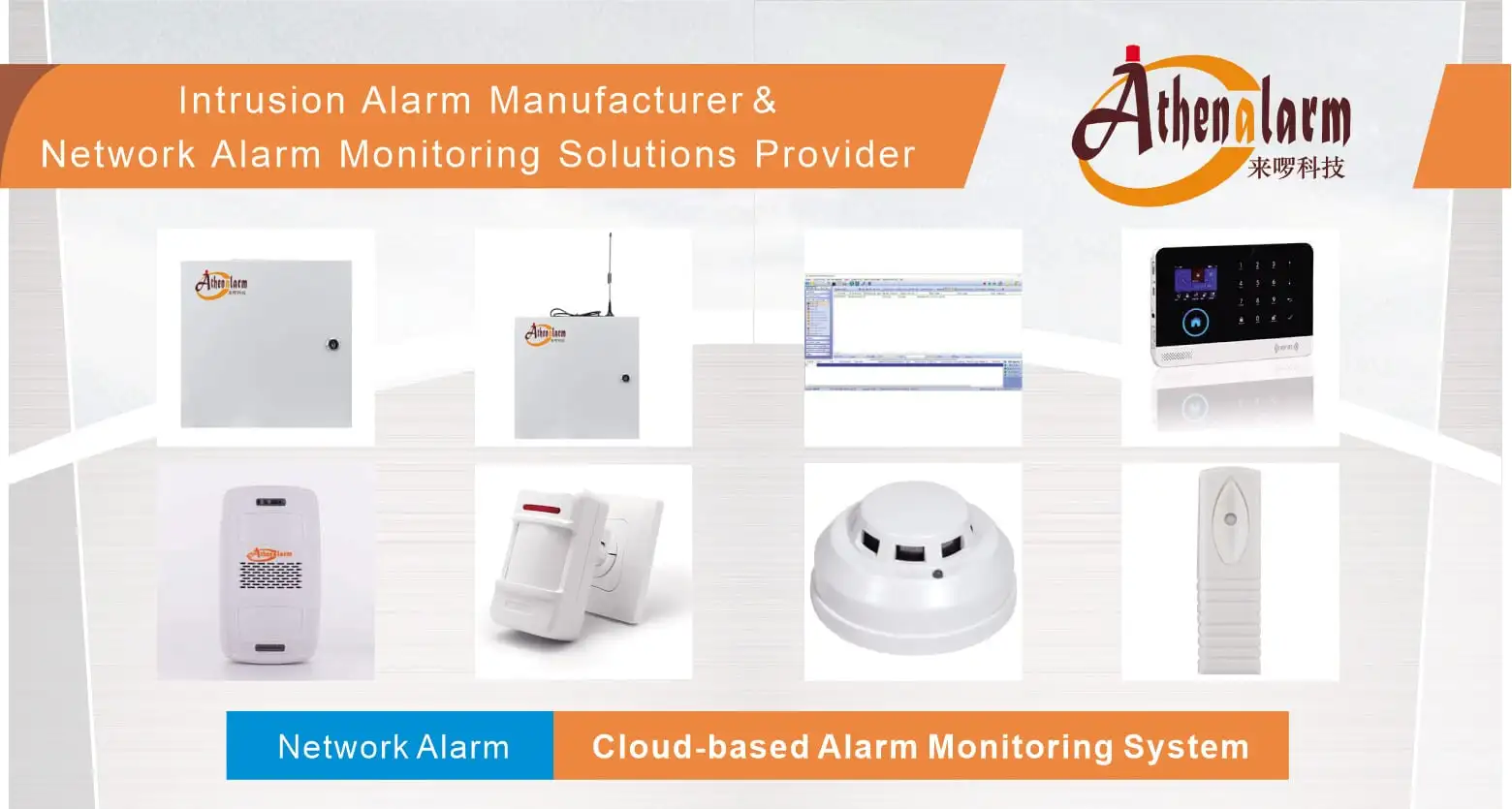
Operational Analysis of Security Alarm Monitoring Services: Systemic Gaps and Strategic Frameworks
1. Why Security Alarm Monitoring Services Still Face Structural Performance Gaps
A Security Alarm Monitoring Service now functions as the operational core of commercial protection strategy. Intrusion detection, video verification, audio analysis, and emergency dispatch are no longer separate subsystems; they are processed through a single monitoring chain that runs from field sensors to a Network Operations Center (NOC) or Alarm Receiving Centre (ARC), and from there to Public Safety Answering Points (PSAPs). This convergence has increased technical capability, but it has not resolved the structural weaknesses that determine whether a monitoring service performs reliably under real operating conditions.
The practical problem is not a lack of technology. It is that funding structures, verification architecture, technical standards, performance measurement, emergency-system interoperability, and regulatory clarity frequently lag behind the sophistication of the monitoring platforms themselves. A monitoring center can operate 24/7 with redundant IP, RF, and cellular communications and still generate excessive false dispatches, delayed response coordination, or unsustainable maintenance backlogs if these underlying structural elements are weak.
This distinction matters directly to deployment and procurement decisions. An integrator selecting a monitoring partner, a monitoring-center manager auditing internal operations, or a policymaker evaluating oversight requirements needs to know where a Security Alarm Monitoring Service is likely to fail structurally — not simply what features it advertises. The remainder of this analysis works through seven recurring structural gaps, the engineering trade-offs that connect them, the metrics used to evaluate whether corrective action is working, and the operational framework that ties these elements together.
1.1 The Monitoring Service as a Detection-to-Response Operating Chain
A Security Alarm Monitoring Service should be understood as an operating chain rather than a single product. Field sensors and local control panels detect an intrusion, fire, or unauthorized-access event and pass that signal through redundant transmission paths — typically IP, RF, and cellular — to a central NOC or ARC platform. At the monitoring center, the raw signal is evaluated against available verification data (video, audio, AI-based motion or occupancy analysis) before an operator makes a triage decision. Verified events are then routed, via API-based integration where available, toward PSAPs or directly notified to the client through a mobile dashboard.
Each stage depends on the one before it: field sensors depend on communication-path availability; the NOC/ARC platform depends on sensor data quality; the operator depends on verification inputs; and PSAP coordination depends on the reliability of the monitoring center’s dispatch decision. Because the chain is sequential, a Security Alarm Monitoring Service is only as reliable as its weakest linked stage, not as capable as its most advanced individual component.
1.2 Where Structural Weakness Enters the Monitoring Lifecycle
Structural weakness does not appear randomly; it tends to concentrate at specific points in the monitoring lifecycle where financial, technical, interoperability, or governance conditions are already fragile.
| Lifecycle Dimension | Typical Failure Point | Representative Consequence |
|---|---|---|
| Financial / lifecycle funding | One-time capital grants without recurring revenue | Deferred software updates, aging hardware, service degradation |
| Detection & verification | Single-sensor triggering without corroborating data | Elevated false dispatch rates, operator fatigue |
| Interoperability & dispatch | Proprietary platforms without open APIs | Manual coordination with emergency services, added latency |
| Governance & accountability | Absence of KPIs, audits, or regulatory clarity | Unmeasured service decline, unresolved liability disputes |
These four failure points map directly onto the seven-gap diagnostic framework that follows: funding instability corresponds to Gap 1, verification weakness to Gap 3, interoperability gaps to Gap 6, and governance gaps to Gaps 5 and 7. Gaps 2 and 4 — market competition and technical standardization — act as structural enablers that influence how quickly the other gaps can be corrected.
2. The Seven-Gap Diagnostic Framework for Security Alarm Monitoring Services
The seven gaps described below represent the core structural weaknesses that recur across Security Alarm Monitoring Service operations, independent of any single vendor or jurisdiction. Each gap is defined by a root cause, an operational or business consequence, and a strategic correction.
| Gap | Root Cause | Operational Impact | Strategic Fix |
|---|---|---|---|
| 1. Unsustainable funding models | One-time capital grants without recurring operating revenue | Deferred updates, aging infrastructure, service degradation | Subscription-based, tiered recurring revenue model |
| 2. Weak market competition | Legacy vendor and public-agency concentration; high certification cost | Limited innovation, inflated pricing, low customer leverage | Lower entry barriers, open-platform interoperability |
| 3. High false alarm rates | Single-sensor triggering without corroborating verification | Wasted emergency-response capacity, fines, credibility loss | Multi-sensor verification and operator training |
| 4. Lack of unified standards | Proprietary, non-interoperable monitoring architectures | Integration friction, higher total cost of ownership | Alignment with recognized standards (EN 50518, UL 827) |
| 5. Poor quality management | Absence of KPIs or structured feedback loops | Undetected service decline | KPI-based performance management (CSI, MTTR, FAR) |
| 6. Incomplete public-safety integration | Manual, siloed dispatch workflows | Slower or misrouted emergency coordination | API-based interoperability, NG911/PSAP connectivity |
| 7. Regulatory and insurance gaps | Ambiguous liability and oversight frameworks | Distrust, adoption hesitancy, unresolved fault attribution | Defined regulatory responsibility and liability coverage |
2.1 Gap 1: Unsustainable Funding Models
The causal chain behind this gap is direct: initial capital for a Security Alarm Monitoring Service frequently originates from a grant, a one-time procurement budget, or an early-stage investment round. That capital funds installation and initial platform deployment, but it does not fund the ongoing costs of software patching, technician training, or hardware refresh cycles. When recurring revenue is absent, maintenance activity slows first, followed by delayed feature updates, and eventually by measurable service degradation.
A subscription-based, tiered revenue model addresses this by converting the service into a recurring commercial relationship rather than a one-time deployment. Recurring revenue is intended to fund four ongoing obligations: software and firmware updates, hardware maintenance and replacement, technician and operator training, and incremental service enhancements such as mobile dashboards or AI-assisted analytics. This does not guarantee financial sustainability on its own, but it replaces a funding structure that has no mechanism for long-term continuity with one that does.
2.2 Gap 2: Weak Market Competition and High Entry Barriers
In many regions, monitoring services are concentrated among a small number of legacy vendors or public agencies, partly because certification requirements and regulatory processes create high fixed costs for new entrants. This market structure behaves differently from a fragmented, competitive market: fewer providers means fewer incentives to modernize verification technology, fewer alternative service tiers, and less negotiating leverage for enterprise buyers.
Lowering entry barriers for regional and SME-scale providers, combined with open-platform interoperability and performance-based licensing, is intended to widen the competitive field without abandoning oversight. Open platforms matter here because they let smaller providers integrate with existing verification tools and public-safety interfaces without rebuilding proprietary infrastructure — reducing the capital threshold required to compete on service quality rather than only on price.
2.3 Gap 3: High False Alarm Rates and Weak Verification
This gap sits at the intersection of sensor engineering and operator workflow. A single-point sensor trigger — a motion detector or door contact firing in isolation — provides a binary signal with no contextual evidence. Some jurisdictions report false alarm rates above 90% under these conditions, a figure that should be read as a reported, context-dependent statistic rather than a universal industry constant; actual rates vary by sensor type, installation quality, and verification architecture.
The engineering correction is multi-sensor verification: combining video surveillance, audio detection, and AI-driven motion or occupancy analysis so that a single trigger is evaluated against corroborating data before it reaches operator triage. AI analytics filters raw sensor noise and supplies a narrower set of higher-confidence events to the operator workstation; the operator then applies contextual judgment — time of day, access history, prior false-alarm patterns — before authorizing dispatch. Operator training in threat differentiation is a necessary complement to sensor fusion, because verification technology reduces ambiguous signals but does not remove the need for a final human judgment on genuinely marginal cases.
2.4 Gap 4: Lack of Unified Technical and Service Standards
Where monitoring architectures remain proprietary, interoperability friction tends to appear at every integration point — between field hardware and the NOC/ARC platform, and between the monitoring platform and external emergency systems. This friction raises total cost of ownership for enterprise clients because each new integration requires custom engineering rather than a standard interface.
| Standard | Geographic Context | Operational Relevance |
|---|---|---|
| EN 50518 | European Union | Defines expectations for signal redundancy, monitoring-center uptime, and operator training in ARC/NOC operations |
| UL 827 | United States | Establishes comparable benchmarks for central-station monitoring operations |
These standards function as an operational reference framework rather than a universal legal mandate; applicability depends on jurisdiction and client requirements. Their practical value is that they give integrators and enterprise buyers a common basis for evaluating signal redundancy, minimum uptime expectations, and certified operator training across providers, rather than relying on vendor-specific claims. Certification schemes extended to integrators, not only to monitoring centers, help maintain consistent quality across the full delivery chain.
2.5 Gap 5: Poor Quality Management and Performance Evaluation
Many monitoring centers operate without structured KPIs, which means service degradation can occur gradually and go uncorrected until a client complaint or a missed dispatch exposes it. This gap is less about technology than about management discipline: a monitoring center can have modern verification hardware and still lack any mechanism for detecting whether that hardware is performing as intended over time.
The corrective structure is a KPI-based quality framework — covering response performance, false-alarm performance, and customer-perceived service quality — supported by periodic compliance audits and certification tracking for monitoring staff. Section 4 below details how each metric is intended to be interpreted and used in management decisions, rather than treated as a reporting formality.
2.6 Gap 6: Incomplete Integration with Public Emergency Systems
Private monitoring centers that operate as closed platforms typically coordinate with police, fire, or EMS through manual telephone workflows. Each manual step — an operator calling a dispatch line, verbally relaying event details — introduces latency and transcription risk that a data-based handoff does not.
API-based integration, including protocols such as NG911, is intended to enable a more direct exchange of verified event data between a Security Alarm Monitoring Service and a PSAP. This should be understood as an enabling mechanism rather than a fully standardized, jurisdiction-independent implementation: NG911 adoption and PSAP-side API readiness vary by region, and a monitoring center’s ability to use this pathway depends on the receiving agency’s own technical capacity. Where available, it replaces a verbal handoff with a structured data transfer, reducing the manual steps between a verified alarm event and a dispatched response.
2.7 Gap 7: Insufficient Regulatory and Insurance Infrastructure
Ambiguity around who is responsible for a missed alarm, a delayed dispatch, or a data-handling failure discourages long-term investment in monitoring infrastructure, because providers cannot reliably price or insure their operational risk. This gap is distinct from the technical gaps above; it is a governance condition that affects whether providers and clients can agree on accountability terms at all.
A national or regional regulatory framework that defines responsibility for alarm response, data privacy, and fault attribution — paired with mandatory professional liability insurance tailored to monitoring operations — gives both providers and clients a defined basis for risk allocation. This does not remove operational risk, but it converts undefined liability exposure into insurable, contractually assignable risk.
3. Engineering Trade-Offs That Determine Monitoring-Service Performance
The seven gaps above are not resolved independently; several of the fixes interact with each other through engineering trade-offs that a monitoring-center operator has to manage deliberately.
3.1 Immediate Unverified Dispatch vs. Multi-Sensor Verification
Dispatching on a raw sensor trigger produces the fastest possible alert but carries the highest false-dispatch risk, since a single sensor provides no corroborating context. Adding multi-sensor verification — video, audio, AI motion analysis — introduces a short processing delay while that data is correlated, but this delay is generally small relative to the cost of an unnecessary dispatch, which includes municipal fines, reduced police responsiveness to future alerts from the same site, and client trust erosion. The trade-off is not “verify everything” versus “verify nothing”; it is calibrating how much verification latency is acceptable for a given threat class and client risk profile.
3.2 Proprietary Platform Isolation vs. Open API Interoperability
A fully proprietary monitoring architecture simplifies internal system control and reduces certain integration risks, because the provider governs every interface. However, this isolation limits the platform’s ability to connect with PSAPs, smart-building systems, or third-party verification tools without custom engineering work. Open API interoperability increases initial integration complexity but reduces long-term total cost of ownership and keeps the monitoring service compatible with evolving public-safety and building-management systems.
3.3 Fully Automated AI Triage vs. Operator-in-the-Loop Validation
Autonomous AI-based dispatch removes the labor bottleneck of human review and can process high volumes of sensor data continuously. But AI motion and occupancy models are not immune to edge-case false positives or false negatives, particularly in unfamiliar environments or unusual occupancy patterns. Combining AI-filtered threat assessment with operator-in-the-loop validation is intended to balance processing speed against contextual judgment — the AI layer narrows the volume of events requiring attention, while the operator retains responsibility for the final dispatch decision on ambiguous cases.
4. Measuring Whether a Security Alarm Monitoring Service Is Actually Improving
Correcting the seven gaps only has operational value if the results are measurable. A structured KPI framework converts abstract claims about “improved service quality” into specific, trackable indicators.
4.1 Core Performance Indicators: FAR, MTTR, and CSI
| KPI | What It Indicates | Management Use |
|---|---|---|
| False Alarm Ratio (FAR) | Proportion of dispatched alarms that were not genuine threats | Evaluates verification-architecture effectiveness |
| Mean Time to Response (MTTR) | Elapsed time between signal receipt and operator/dispatch action | Evaluates operator and workflow responsiveness |
| Customer Satisfaction Index (CSI) | Client-perceived service quality | Evaluates service-level performance from the client’s perspective |
| Annual Compliance Audits | Adherence to defined operational and regulatory standards | Evaluates governance consistency over time |
| Certification Tracking | Currency of operator and technician credentials | Evaluates workforce readiness |
Each metric answers a different management question. FAR tells a monitoring-center manager whether verification investments (Gap 3) are working. MTTR tells them whether operator workflow and communication redundancy (Gap 6, Section 1.1) are functioning under load. CSI captures whether the client-facing experience matches the technical performance data. Compliance audits and certification tracking address the governance weakness described in Gap 5 directly by giving that gap a concrete measurement mechanism.
4.2 Compliance Audits and Certification Tracking as Governance Signals
Audits and certification tracking are not simply administrative record-keeping; they are the mechanism by which a monitoring center demonstrates, to clients, insurers, and regulators, that its operational standards (Section 2.4) are being maintained rather than only claimed at the time of contract signing. A monitoring center that tracks FAR and MTTR internally but has no external audit trail has a measurement system without independent verification — which weakens its usefulness as a trust signal to enterprise clients or regulators.
4.3 Connecting KPI Evidence to Corrective Action
KPI data is most useful when it is tied to a specific corrective path rather than reported in isolation. A rising FAR points back to Gap 3 and should trigger a review of sensor placement, verification coverage, or operator training — not simply a note in a quarterly report. A degrading MTTR under normal signal volume points toward Gap 6 (interoperability and dispatch workflow) or communication-path redundancy, rather than toward verification technology. A declining CSI despite stable FAR and MTTR typically points toward client-facing value gaps (Section 6.3) rather than core detection performance. Reading KPI movement against this gap-specific mapping, rather than treating all metrics as a single generic “quality score,” is what allows a monitoring-center manager to prioritize which structural weakness to address next.
5. What Mature Markets Reveal About Monitoring-Service Models
Comparing monitoring-service structures across regions provides context for how the seven gaps play out under different market and regulatory conditions, without implying that one model is universally superior.
5.1 United Kingdom: Decentralized Private-Service Landscape
The UK monitoring landscape is largely driven by private providers operating in close coordination with local law enforcement. Industry sources report crime reductions in the range of 30–50% in specific monitored zones, such as parts of London; this figure should be read as a reported outcome tied to that specific context — level of police integration, monitored-zone density, provider maturity — rather than as a transferable benchmark for any monitoring deployment.
5.2 North America: Diverse Providers and Regulatory Fragmentation
North American markets include both large corporate-scale monitoring operations and smaller regional providers, which creates more competitive variety than a concentrated market (addressing Gap 2 conditions more directly) but also more regulatory fragmentation across states and municipalities. High false alarm ratios and inconsistent local regulation remain persistent challenges in this environment, illustrating that provider diversity alone does not resolve Gap 3 or Gap 7 without accompanying standardization and regulatory alignment.
5.3 Transferable and Context-Dependent Lessons
The transferable lesson across both markets is that close coordination between private monitoring providers and public safety agencies — whether through UK-style law-enforcement integration or North American API-based interoperability efforts — correlates with better emergency-response outcomes. The context-dependent lesson is that the specific mechanisms (police-integration models, crime-reduction figures, regulatory structures) are shaped by local conditions and cannot be assumed to reproduce identical results elsewhere.
6. A Three-Pillar Framework for Resilient Security Alarm Monitoring Services
The seven-gap corrections described above consolidate into three operational capability areas. Each pillar addresses a specific subset of the gaps rather than introducing a separate framework.
6.1 Pillar 1: Technical Infrastructure
Technical infrastructure directly addresses Gaps 1, 3, 4, and 6. Redundant communication paths — IP, RF, and cellular — reduce the risk that a single transmission failure interrupts monitoring continuity, supporting the reliability expectations embedded in EN 50518 and UL 827. Automated diagnostics and remote system healing reduce the maintenance burden that an unfunded lifecycle (Gap 1) would otherwise leave unaddressed. A 24/7 NOC/ARC operation is the baseline condition that makes continuous verification (Gap 3) and public-safety interoperability (Gap 6) operationally possible.
6.2 Pillar 2: Workforce Competency
Workforce competency addresses Gaps 3 and 5 directly. Role-based training, crisis-communication simulation, and false-alarm mitigation education give operators the judgment needed to complement AI-filtered verification data (Section 3.3). Re-certification and competency tracking feed directly into the certification-tracking KPI described in Section 4.1, converting workforce readiness from an assumption into a measured governance signal.
6.3 Pillar 3: Client-Facing Operational Value
Client-facing value addresses Gaps 1 and 2 from the demand side. Mobile control dashboards, smart-building integration (HVAC, access control context), and video-based alarm verification are the features that justify recurring subscription revenue (Gap 1) and differentiate a provider in a more competitive, open-platform market (Gap 2). Integrating tailored enterprise architectures, such as an enterprise alarm monitoring system connected with a dedicated network perimeter alarm system solution, provides the structural defense-in-depth necessary for mission-critical facilities. This pillar is where technical infrastructure and workforce competency become visible to the client, connecting internal operational quality to the commercial relationship that funds it.
7. Strategic Priorities for Closing the Seven Gaps
When multiple gaps coexist — which is the common case rather than the exception — corrective action benefits from a dependency-based sequence rather than parallel effort across all seven areas simultaneously.
- Stabilize the financial and lifecycle foundation first (Gap 1). Recurring revenue funds the maintenance, training, and technology upgrades required by every other correction; addressing verification or interoperability gaps without a funding mechanism tends to produce short-lived improvements.
- Reduce false-alarm and verification risk next (Gap 3). This is typically the most immediate source of financial penalties and credibility loss, and improvements here generate measurable FAR data that supports later governance work.
- Remove interoperability bottlenecks (Gaps 4 and 6). Standards alignment and API-based public-safety integration reduce dispatch latency and lower long-term integration costs, but depend on the verification and infrastructure stability established in the prior steps.
- Establish measurable operational governance (Gap 5). With funding, verification, and interoperability improvements underway, KPI tracking and compliance audits provide the evidence needed to confirm those changes are working rather than assumed to be working.
- Align regulation, certification, and liability coverage (Gaps 2 and 7). Market-entry and insurance conditions are easier to negotiate once a provider can demonstrate stable funding, measured performance, and standards compliance.
This sequence reflects dependency, not relative importance: a monitoring center facing an acute false-alarm penalty problem may still need to address Gap 3 in parallel with Gap 1, but the underlying funding structure remains the condition that determines whether any correction is sustainable beyond the initial fix.
8. FAQ
What Is a Security Alarm Monitoring Service?
A Security Alarm Monitoring Service is a centralized detection-to-response operating system that ingests signals from field sensors and control panels, applies verification methods such as video and AI-based motion analysis, and coordinates emergency dispatch through operator triage and, where available, API-based connections to Public Safety Answering Points. It typically operates through a Network Operations Center (NOC) or Alarm Receiving Centre (ARC), which functions as the central processing and decision point in the monitoring chain described in Section 1.1.
Why Are False Alarm Rates So High in Alarm Monitoring?
False alarm rates rise primarily when a single sensor trigger — such as a motion detector or door contact — is dispatched without corroborating verification data. Some jurisdictions report false alarm rates above 90% under these conditions, though the exact figure depends on sensor type, installation quality, and available verification architecture. The underlying cause is a lack of multi-sensor data fusion and operator threat differentiation, as detailed in Section 2.3.
How Can False Alarm Rates Be Reduced Effectively?
False alarm rates can be reduced by combining video surveillance, audio detection, and AI-driven motion or occupancy analysis before an event reaches operator triage, supported by operator training in threat differentiation. This multi-sensor verification approach adds a short processing step but is intended to filter out ambiguous single-sensor triggers before they result in an unnecessary dispatch, as described in Sections 2.3 and 3.1.
What Standards Govern Security Alarm Monitoring Center Operations?
EN 50518 and UL 827 are the primary reference standards cited for monitoring-center operations, covering the European Union and United States respectively. These standards address signal redundancy, monitoring-center uptime expectations, and operator training benchmarks, and function as an operational reference framework rather than a universal legal mandate; applicability depends on jurisdiction and contractual requirements, as outlined in Section 2.4.
How Do Monitoring Centers Integrate With 911 and Public Emergency Dispatch?
Monitoring centers integrate with public emergency dispatch through API-based data exchange, including protocols such as NG911, which allow a verified alarm event to be transmitted directly to a Public Safety Answering Point rather than relayed manually by phone. This integration reduces the manual steps between verification and dispatch where the receiving PSAP has the technical capacity to accept structured data, though adoption and readiness vary by region, as discussed in Section 2.6.
How Should Monitoring Centers Measure Operational Performance?
Monitoring centers should track False Alarm Ratio (FAR), Mean Time to Response (MTTR), and Customer Satisfaction Index (CSI), supported by annual compliance audits and staff certification tracking. Each metric points to a different operational area — FAR to verification quality, MTTR to workflow and communication responsiveness, and CSI to client-perceived service — allowing corrective action to be targeted rather than generalized, as detailed in Section 4.
9. System Component Checklist Appendix
9.1 Core Platform & Network Infrastructure
- Enterprise System Architecture: network alarm system
- Field Application Framework: network alarm monitoring system application
- Commercial Security Infrastructure: burglar alarm systems
- Dual-Path Redundant Gateway: GSM/WiFi alarm system
- OEM Security Manufacturing Standard: burglar alarm manufacturer
- Corporate Engineering Portal: Athenalarm
9.2 Industry-Specific Security Solutions
- Financial Institution Infrastructure: network bank alarm monitoring system solution
- Financial Self-Service Terminal Protection: bank ATM alarm monitoring system solution
- High-Value Vault Enclosure Protection: network bank vault alarm monitoring system solution
- Multi-Tenant Community Defense: network community alarm system solution
- Commercial Hospitality Protection: network hotel alarm system solution
- Commercial Retail & Store Security: network store alarm system solution
- Residential Intrusion Prevention Architecture: network house alarm system solution
9.3 Specialized Edge Sensing & Alarm Components
- Wide-Area Optical Sensing: wide angle PIR motion sensor
- Early-Stage Fire Detection: photoelectric smoke detector
- Combustible Environmental Hazard Monitoring: gas detector
- Structural Intrusion Vibration Sensing: digital vibration detector
- Hardwired Physical Duress Signaling: panic button
- Wireless Tactical Emergency Signaling: wireless panic button
- High-Decibel Visual Annunciation Unit: industrial warning light
- Dynamic On-Site Voice Intervention: motion sensor sound player
