
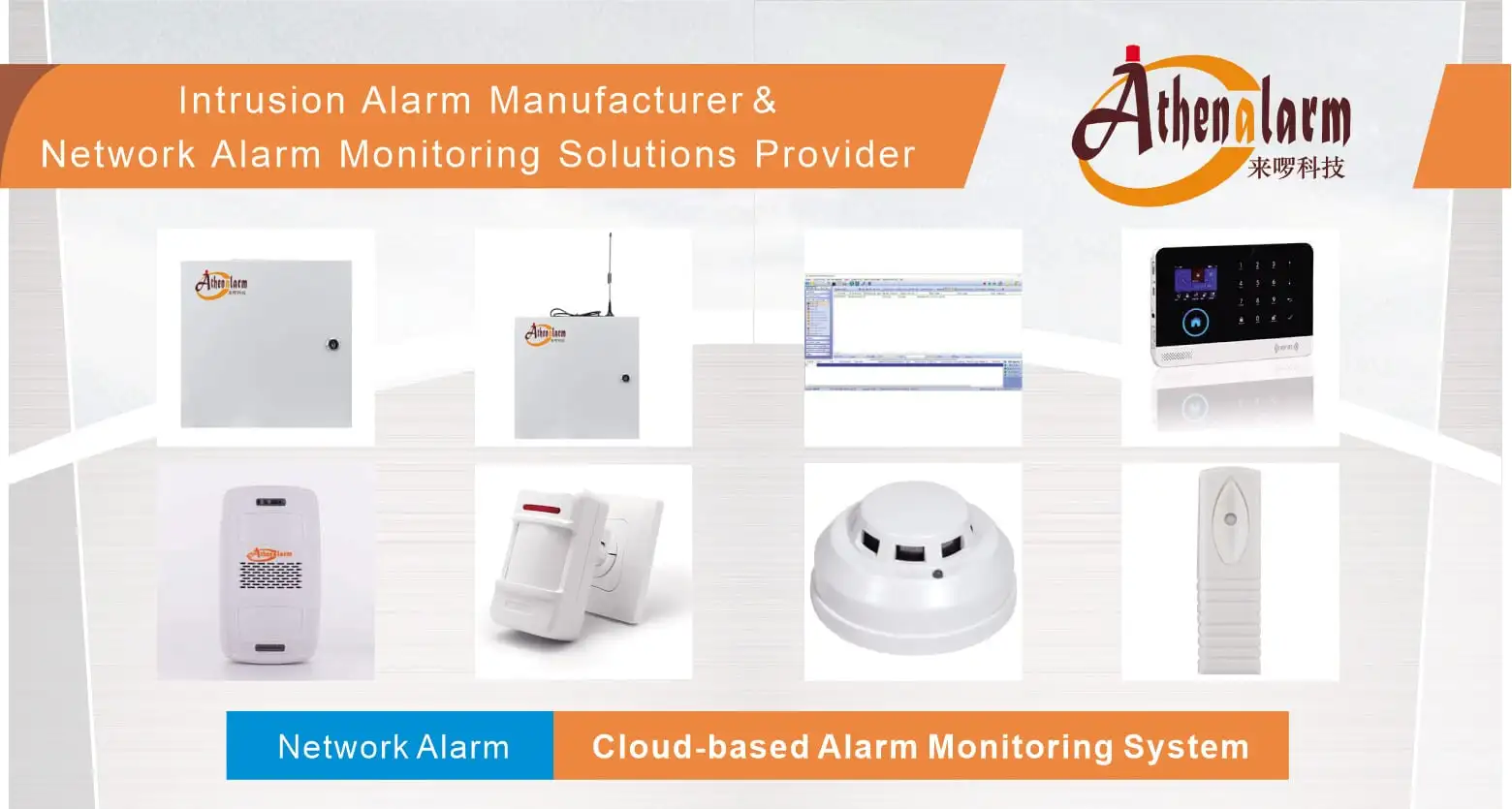
Commercial Intrusion Alarm System Selection: Architectural Evaluation and Critical Deployment Pitfalls
A commercial intrusion alarm system rarely fails because a single component breaks. It fails because the control panel, the detection layer, the communication path, and the maintenance program were never engineered as one coherent system. A facility manager discovers this only after the fact: a false alarm flood that desensitizes the monitoring team, a blind spot behind a relocated shelving unit, or a battery that quietly died three months before an intruder walked through an unguarded zone.
These failures share a common root cause: procurement decisions were made against a checklist of features rather than against the facility’s actual risk profile. A control panel selected for its price point instead of its failover logic. A PIR sensor placed opposite an HVAC diffuser instead of matched to the room’s thermal behavior. A DIY installation chosen to avoid integrator fees, without accounting for the audit trail and compliance gap it creates.
This directly affects capital allocation, insurance underwriting, and legal exposure. An intrusion alarm system that generates excessive false dispatches incurs municipal penalties and erodes operator confidence. A system that lacks UL or EN50131 compliance can affect insurance claim validity after a loss event. A system with no dual-path failover leaves a facility fully exposed during a single network outage.
The analysis below works through enterprise alarm monitoring systems in the order these failures actually occur in the field: control panel architecture, detector physics and placement, topology and layout engineering, maintenance operations, installation model, and finally the procurement logic that ties hardware selection to enterprise risk and measurable return on investment.
1. Evaluating Control Panel Architecture: Central Processing, Redundancy, and Failover
The intrusion alarm control panel is the edge-processing node of the intrusion detection network. It receives activation and fault signals from every connected sensor, executes local alarm logic, and determines what gets escalated—locally, to a monitoring center, or to an integrated VMS or access control platform. A panel that cannot process this correctly, or that has no path to report its own failure, converts every downstream sensor investment into a liability.
Two recurring selection errors define this failure mode. First, outdated panels are selected without network redundancy or failover support, meaning a single ISP outage or cellular dead zone disables the entire detection layer. Second, panels are chosen without remote diagnostics or mobile control functions, which removes the operator’s ability to verify system health between physical site visits.
A commercial-grade control panel should provide:
- Automated fault detection and continuous system health monitoring.
- Backup power via dual batteries or UPS integration.
- Encrypted wireless connectivity with 4G/LTE/Wi-Fi fallback.
- ONVIF compliance for interoperability with VMS and access control platforms.
- Cloud-enabled centralized supervision for multi-site organizations.
For multi-site enterprises, cloud-enabled panels that consolidate event data and diagnostics into a centralized network alarm management software platform reduce incident response time and lower the recurring cost of dispatching technicians for routine health checks.
1.1 Dual-Path Encrypted Communication and Power Failover Logic
The control panel depends on two independent forms of redundancy to remain operational during adverse conditions: communication path redundancy and power redundancy.
Communication failover means the panel maintains a primary connection (typically Ethernet or Wi-Fi) and automatically switches to a secondary path (4G/LTE) when the primary connection’s IP heartbeat is lost. Without this cellular switching logic, a cut network cable or a misconfigured router silently disables remote monitoring while the panel continues to operate—undetected until the next test cycle.
Power failover means the panel is supplied by dual batteries or integrated with a UPS, so that a utility outage does not interrupt detection or communication. A single-battery panel with no automated low-charge alerting can fail exactly when it is needed most: during a deliberate power cut preceding an intrusion attempt.
1.2 Cross-System Interoperability via ONVIF and Cloud Supervision
An intrusion control panel that operates in isolation from the rest of the security stack limits verification and response speed. ONVIF compliance allows the panel to interoperate with Video Management Systems (VMS) and Access Control Systems (ACS) through open, standardized event triggers rather than proprietary integrations.
In practice, this means a tripped zone can automatically call up the associated camera feed for visual verification and can instruct the access control system to lock down perimeter doors—without requiring an operator to manually cross-reference separate platforms. Selecting a panel without ONVIF support, or without documented open API access, constrains future integration with VMS or ACS platforms and increases long-term system rigidity.
2. Detector Mechanics and Environmental Sensor Matching
Even a properly specified control panel is only as reliable as the sensors feeding it. Detector technology must be matched to the physical and environmental conditions of the space it protects—not selected generically. Mismatched sensor technology is the leading cause of both false alarms and undetected breaches in commercial deployments.
| Detector Type | Detection Physics | Ideal Environment | Vulnerability / Risk Factor |
|---|---|---|---|
| Passive Infrared (PIR) | Detects changes in thermal (infrared) radiation | Interior rooms, offices, corridors | False triggers near heat sources, HVAC vents, direct sunlight |
| Microwave Detector | Doppler frequency shift from moving objects | Wide open interior spaces | Signal penetrates thin walls; reflects off glass and metal |
| Dual-Technology (PIR + Microwave) | Requires simultaneous PIR and microwave trigger | Spaces with pets, HVAC movement, or high false-alarm history | Higher hardware cost and calibration complexity |
| Glass Break Sensor | Acoustic recognition of glass-breaking frequency | Retail storefronts, glass-enclosed areas | Requires correct frequency calibration to avoid ambient noise triggers |
| Vibration Sensor | Detects mechanical shock/vibration on a surface | Safes, vaults, high-value enclosures | Limited to point-of-contact coverage; not volumetric |
| Anti-Masking Sensor | Optical/infrared supervision of sensor lens obstruction | Any zone requiring tamper detection during disarmed periods | Adds cost; requires correct commissioning to avoid nuisance faults |
Placement errors compound the technology mismatch problem: mounting sensors near heat sources, air vents, or reflective surfaces; leaving blind spots behind partitions or stacked equipment; or using indoor-rated sensors in outdoor-exposed zones. A full physical site survey—ideally supported by 3D modeling or a digital twin of the facility—allows detection angle, sensitivity, and mounting height to be calibrated against actual room geometry rather than generic manufacturer defaults.
2.1 Physics of Volumetric Detection: PIR vs. Microwave vs. Dual-Technology
PIR sensors detect the differential in infrared radiation as a warm body moves across the sensor’s field of view; they are effective indoors but are inherently sensitive to any thermal gradient, including hot air currents from HVAC diffusers or sunlight moving across a room during the day.
Microwave detectors emit a radio-frequency signal and measure the Doppler frequency shift caused by a moving object. They cover wider volumetric areas than PIR but transmit through non-rigid walls and reflect off glass and metal surfaces, which can register motion from outside the intended coverage zone.
Dual-Technology sensors combine both elements and require both the PIR and microwave circuits to trigger simultaneously before an alarm condition is raised. This dual-validation logic is what drives down false alarm rates in environments with pets, HVAC movement, or reflective surfaces—at the cost of higher unit price and more complex commissioning.
2.1.1 Mitigating Dynamic Environmental Interference and Thermal Plumes
A recurring field issue is the thermal plume generated by ceiling-mounted HVAC diffusers. Warm air rising and mixing with cooler ambient air creates a moving thermal gradient that a single-technology PIR sensor can register as a heat signature crossing its field of view, generating a false alarm with no human presence involved. The same effect occurs with direct sunlight moving across a room as the day progresses, which shifts seasonally and is easy to overlook during a single-point-in-time installation survey.
Addressing this requires either repositioning sensors away from airflow paths and window sightlines, or replacing single-technology PIR with Dual-Technology sensors in zones where HVAC or sunlight interference cannot be architecturally avoided.
2.2 Specialized Detection: Anti-Masking, Glass Break, and Vibration Mechanics
Anti-masking sensors add optical or infrared supervision of the sensor’s own lens, detecting when a foreign object, spray coating, or physical obstruction is placed over the detector—commonly attempted during disarmed periods before an armed intrusion attempt. Without anti-masking supervision, a masked sensor reports normal status while providing zero actual detection capability.
Glass break sensors use acoustic pattern recognition tuned to the specific frequency signature of breaking glass, distinguishing it from general ambient noise—relevant for commercial environments deploying network store alarm system solutions across retail storefronts and glass-enclosed high-value display areas.
High-precision digital vibration detectors detect mechanical shock transmitted through a rigid surface, making them essential within network bank vault alarm monitoring system solutions where an intruder is more likely to attempt physical breach of the enclosure itself rather than triggering a volumetric zone.
3. Layout Engineering and Topology Selection: Wired, Wireless, and Hybrid Systems
A correctly specified control panel and correctly matched sensors still fail to deliver reliable coverage if the physical layout and communication topology are not engineered together. Layout failures are rarely caused by defective hardware; they are caused by insufficient sensor density, ignored line-of-sight requirements, or a topology choice mismatched to the facility’s structural characteristics.
| Topology | Signal Stability | Installation Labor | Ongoing Maintenance | Best Application |
|---|---|---|---|---|
| Hardwired | High; immune to RF interference | High; requires conduit and cable routing planning | Low; no battery replacement cycle | High-risk zones, vaults, permanent installations |
| Wireless (RF) | Moderate; subject to RF attenuation and interference | Low; rapid deployment with minimal structural disruption | Ongoing battery replacement and RF integrity checks | Retrofit projects, leased spaces, rapid deployment needs |
| Hybrid | High core reliability with flexible expansion | Moderate; wired core plus wireless expansion zones | Moderate; combines both maintenance profiles | Multi-phase facilities, mixed old/new construction |
In reinforced concrete structures, wireless RF signals are subject to attenuation that may require additional RF repeaters and shortens the practical range between sensors and the control panel, increasing both installation complexity and the number of battery-powered nodes requiring periodic replacement. This is an operational cost that is frequently underestimated at the procurement stage when wireless is selected purely for deployment speed.
3.1 Hardwired Signal Stability vs. Wireless Deployment Flexibility
Hardwired systems route detection signals through physical cabling and conduit, providing the highest signal stability and immunity to RF interference—an important property for vaults and other high-risk zones where signal reliability cannot be compromised. The trade-off is extensive conduit planning and higher initial labor cost, making hardwired systems slower and more expensive to deploy, particularly in existing structures.
Wireless systems deploy quickly with minimal structural disruption, which is valuable for leased spaces or facilities where cabling is impractical. The recurring cost is battery maintenance and periodic RF integrity checks, since signal strength can degrade due to structural changes, new equipment installations, or battery aging.
Hybrid architectures combine a hardwired core—typically covering the highest-risk zones—with wireless expansion for secondary areas, balancing reliability against deployment speed and scalability.
3.2 Perimeter Layering and Coverage Optimization
Coverage gaps are typically the result of deploying too few sensors relative to the room’s geometry, or failing to account for seasonal changes such as shifting sunlight angles and HVAC cycling between seasons. Overlapping coverage between adjacent sensors eliminates single-point gaps where one sensor’s blind spot is not covered by an adjacent unit.
Deploying comprehensive network perimeter alarm system solutions with dual-layer detection—combining a fence beam or perimeter barrier with interior volumetric detection—prevents a single-point evasion route, since an intruder who bypasses the perimeter layer is still captured by the interior volumetric layer. Tagging each physical sensor to a digital floor plan supports both initial commissioning validation and long-term maintenance, since technicians can immediately identify which physical unit corresponds to a reported zone fault.
4. Establishing a Structured Preventive Maintenance Program (PMP)
An intrusion alarm system is not an install-and-forget asset. Sensors drift, batteries degrade, and firmware becomes outdated over the operational life of the system. The most damaging assumption in commercial deployments is that the absence of an alarm event means the system is functioning correctly—when in fact a masked sensor, a depleted battery, or a drifted PIR threshold can produce exactly that appearance of normalcy while providing zero actual protection.
| Interval | Maintenance Task | Purpose |
|---|---|---|
| Monthly | Functional walk-tests of motion detectors and perimeter zones | Confirms each zone still triggers correctly under real conditions |
| Monthly | Battery health diagnostics and auto-alert configuration review | Identifies early-stage battery degradation before failure |
| Quarterly | Firmware and security patch checks via cloud platform or USB interface | Closes known vulnerabilities and maintains panel software currency |
| Annual | Thermal and signal calibration by certified personnel | Corrects sensor sensitivity drift accumulated over the year |
Treating PMP execution as a subscription-based service allows integrators to convert a one-time installation into a recurring engagement, while giving the client an auditable maintenance history that supports insurance and compliance documentation.
4.1 Maintenance Cadence: Walk-Tests, Diagnostics, and Firmware Lifecycle
Monthly walk-tests confirm that motion detectors and perimeter zones respond correctly under actual site conditions, catching issues such as a sensor knocked out of alignment or a new obstruction placed in its field of view since the last test. Quarterly checks extend this to the panel’s firmware and security patch status, since outdated firmware can both degrade detection logic and introduce unpatched cybersecurity vulnerabilities on network-connected panels. Annual recalibration by certified technicians addresses drift that accumulates gradually and is not typically visible during a routine walk-test.
4.2 Managing Sensor Sensitivity Drift and Hardware End-of-Life (EOL)
Sensor components age physically. Optical lenses in glass break and anti-masking sensors can fog or accumulate dust over time, reducing detection accuracy. Pyroelectric elements in PIR sensors drift in sensitivity as they age, gradually narrowing the effective detection zone without any outward indication of malfunction. A system can report “normal” status on its diagnostic dashboard while providing substantially reduced real-world detection capability.
Ignoring end-of-life (EOL) warnings on batteries and sensor components compounds this risk, since a component nearing EOL is statistically more likely to fail during exactly the environmental stress conditions—temperature extremes, power fluctuations—that also correlate with higher intrusion attempt rates.
5. Certified Professional Integration vs. Consumer DIY Deployment Risks
Off-the-shelf DIY kits are frequently proposed for budget-constrained projects, but the hidden cost of misinstallation in a commercial context typically exceeds the short-term savings. The distinction is not about product quality alone; it is about the absence of system validation, regulatory compliance, and integration discipline that a certified installation process provides.
| Factor | Consumer DIY Deployment | Certified Professional Integration |
|---|---|---|
| Regulatory Compliance | No UL or EN50131 verification | Verified against UL and/or EN50131 standards |
| Audit Trail | Typically absent | Documented event logging and tamper-evident logs |
| Zoning Logic | Often inconsistent or improperly segmented | System-wide tuning and validated zoning |
| Sensor Threshold Calibration | Manufacturer default settings | Calibrated using site-specific equipment |
| Cross-System Integration | Limited or no VMS/ACS interoperability | Integrated via ONVIF/API with VMS, ACS, fire systems |
| Insurance/Legal Standing | May not satisfy underwriting requirements | Supports compliance documentation and claims processes |
5.1 Regulatory Code Compliance: Navigating UL and EN50131 Requirements
UL (Underwriters Laboratories) certification and the EN50131 European standard for intrusion detection systems establish minimum performance, reliability, and construction requirements for alarm system components and installation practices.
Commercial insurance underwriting and, in many jurisdictions, municipal alarm dispatch policy reference compliance with these standards. A system installed without verification against UL or EN50131 requirements may face resistance from insurers during claims processing following a loss event, independent of whether the hardware itself performed adequately during the incident.
5.2 System Calibration, Zoning Validation, and Forensics Auditing
Professional commissioning includes system-wide tuning using calibrated test equipment, verification that zoning logic matches the intended detection map, and confirmation that event logging captures a complete, tamper-evident audit trail. This audit trail supports post-incident forensics, allowing security teams to reconstruct the sequence of sensor activations, panel responses, and operator actions surrounding an event—capability that is typically absent in uncalibrated DIY deployments where thresholds are left at manufacturer defaults and zoning is configured without a validated site survey.
6. Aligning Selection Criteria with Enterprise Risk Profiles and Security ROI
The most consequential procurement mistake in enterprise security is selecting a system based on unit price rather than the facility’s actual threat exposure. This shortfall typically manifests as consumer-grade hardware deployed in a commercial context, underestimated complexity in multi-zone environments, or unaddressed cybersecurity risk on network-connected panels.
A weighted Risk Assessment Matrix ties hardware specification directly to asset criticality, giving procurement teams an objective basis for capital allocation instead of a generic feature checklist.
6.1 Building a Weighted Threat and Vulnerability Matrix
Building the matrix requires scoring each protected zone or asset against threat likelihood (historical incident data, location risk, access exposure) and asset criticality (financial value, operational dependency, regulatory sensitivity). Stakeholders from IT, operations, and compliance should participate in this scoring process, since network-connected intrusion panels introduce IT security considerations that facilities-only procurement decisions frequently overlook. The resulting weighted scores determine where hardwired high-reliability architecture and Dual-Technology sensors are justified, versus where a lighter wireless deployment is sufficient.
6.2 Key ROI Metrics for Commercial Security Investments
| ROI Metric | What It Measures | Business Relevance |
|---|---|---|
| Reduction in loss/theft claims | Fewer successful intrusion or theft incidents | Direct reduction in financial loss |
| Improved audit results | Compliance verification outcomes | Supports insurance underwriting and regulatory standing |
| Faster incident response | Time from detection to verified response | Reduces damage and loss exposure per incident |
| Increased uptime in mission-critical operations | System availability across all zones | Reduces operational disruption risk |
Defining measurable KPIs—response time, false alarm rate, and incident correlation accuracy—at the procurement stage allows the system’s performance to be tracked against the original risk assessment rather than evaluated only after an incident has already occurred.
7. FAQ
How does alarm communication reliability affect monitoring performance?
Communication reliability determines whether a triggered alarm actually reaches a monitoring center or mobile application in real time. A panel relying on a single communication path—Ethernet or Wi-Fi only—loses all remote reporting capability during a network outage, even though local sirens or triggers may still activate. Dual-path failover, switching automatically to 4G/LTE when the primary IP heartbeat is lost, is what preserves monitoring performance during exactly the conditions—power or network disruption—that often accompany a deliberate intrusion attempt.
What is the difference between PIR and Dual-Technology motion detectors?
PIR sensors detect changes in infrared thermal radiation, while Dual-Technology sensors combine PIR with a microwave (Doppler radar) detection element. The distinguishing factor is validation logic: a Dual-Technology unit requires both the PIR and microwave circuits to trigger simultaneously before raising an alarm, which eliminates the majority of false alarms caused by hot air currents, HVAC movement, or reflective interference that would trip a single-technology PIR sensor alone.
Why are consumer DIY alarm systems unsuitable for commercial facilities?
Consumer DIY kits typically lack verification against UL or EN50131 compliance standards, provide no tamper-evident audit trail, and are commissioned with manufacturer-default sensor thresholds rather than site-calibrated settings. In a commercial context, this results in inconsistent zoning logic, higher false alarm rates, limited or absent integration with VMS and access control platforms, and potential complications during insurance claims processing, since underwriters frequently reference recognized compliance standards during claims review.
How often should a commercial intrusion alarm system undergo preventive maintenance?
A structured cadence includes monthly functional walk-tests of motion detectors and perimeter zones alongside battery health diagnostics, quarterly firmware and security patch verification through the cloud platform or USB interface, and annual thermal and signal recalibration performed by certified technicians. This tiered schedule catches immediate faults monthly, software vulnerabilities quarterly, and gradual sensor sensitivity drift annually.
How does an intrusion alarm control panel integrate with VMS and Access Control Systems?
Modern commercial control panels use open standards such as ONVIF and encrypted APIs to trigger event-driven actions across connected platforms. When a zone trips, the panel can automatically call up the associated camera feed on the Video Management System for visual verification and instruct the Access Control System to lock down perimeter doors, coordinating detection, verification, and containment without manual cross-referencing between separate platforms.
How do anti-masking sensors protect intrusion alarm systems from physical tampering during disarmed periods?
Anti-masking sensors add optical or infrared supervision of the detector’s own lens, identifying when an object, coating, or obstruction is placed over the sensor. This is significant because masking attempts commonly occur during disarmed hours, before the system is armed for the night or off-hours period—without anti-masking supervision, the obstruction goes undetected until the sensor fails to trigger during an actual intrusion.
When should a business choose a hardwired intrusion system over a wireless or hybrid deployment?
Hardwired systems are appropriate where signal stability is non-negotiable, such as vaults, safes, or other high-risk zones where RF interference or battery failure cannot be tolerated. Wireless deployment is preferable when installation speed and minimal structural disruption are priorities, such as leased spaces or rapid retrofit projects, provided the facility can accommodate an ongoing battery replacement and RF integrity monitoring schedule. Hybrid architectures are typically selected when a facility requires wired reliability for critical zones combined with scalable wireless coverage for secondary areas.
8. System Component Specification Checklist Appendix
For enterprise architects and system integrators mapping hardware specifications against custom facility risk profiles, the following standardized subsystem components and application topology frameworks provide certified baseline interoperability:
Core Processing & Network Alarm Management Platforms
- Central Processing Node: Commercial Intrusion Alarm Control Panels
- Dual-Path Redundancy Communications: GSM & Wi-Fi Network Alarm Systems
- Central Supervisory Software: Network Alarm Center Management Software
- Central Management Systems: Integrated Network Alarm Systems Architecture
- Professional Engineering Manufacturing Partner: Burglar Alarm System Manufacturer Solutions
- Enterprise Security Portfolios: Commercial Intrusion Alarm Ecosystem & Global Brand Portal
Edge Detection & Physical Perimeter Sensors
- Volumetric Thermal Motion Detection: Standard Industrial PIR Motion Sensors
- Wide-Angle Motion Supervision: Wide-Angle Volumetric PIR Motion Sensors
- Structural Physical Contact Supervision: Industrial Perimeter Magnetic Door Contacts
- Environmental Fire & Smoke Diagnostics: Photoelectric Smoke Detector Units
- Hazardous Chemical Diagnostics: Industrial Gas Leak Detection Sensors
Emergency Verification, Duress & Deterrence Actuators
- Hardwired Physical Emergency Panic Systems: Emergency Panic Button Actuators
- Mobile Wireless Emergency Hold-Up Actuators: Wireless Hold-Up Panic Button Units
- Visual Local Alarm Deterrence: Industrial Visual Strobe Warning Light Systems
- Audible Annunciation & Interlocking Alerts: Motion-Activated Sound & Voice Alert Annunciators
Vertical & Industry-Specific Alarm Monitoring Frameworks
- Unified Central Dispatch Architecture: Network Alarm Monitoring System Solutions
- Multi-Site Deployment Topologies: Network Alarm Monitoring Applications
- Financial Institution Infrastructure: Network Bank Security Alarm Solutions
- Remote Banking Substation Protection: Bank ATM Perimeter & Enclosure Alarm Solutions
- Hospitality & Multi-Room Enterprise Facilities: Network Hotel Alarm Monitoring Solutions
- Residential & Gated Campus Complex Protection: Network Community Alarm Solutions & Multi-Tenant Residential Security Frameworks
