
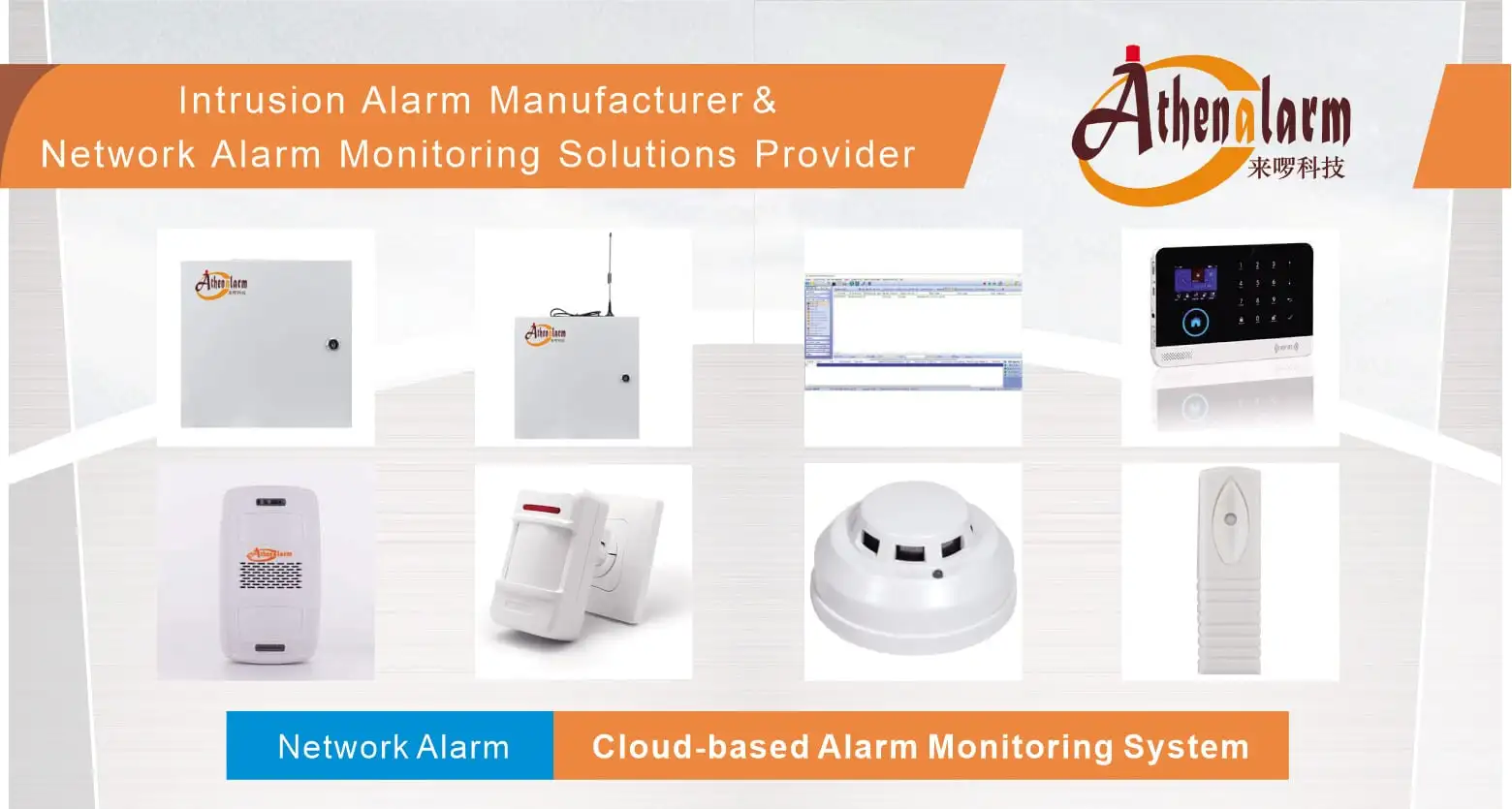
Modernizing Enterprise Intrusion Alarms: Subsystem Convergence and Operational Capabilities of Integrated Security Management Platforms
An intrusion alarm panel reports a zone violation at 2:14 a.m. at a distribution facility that operates across twelve sites. The panel confirms that a sensor was triggered. It does not confirm whether the event corresponds to a delivery vehicle at a loading dock, an access-control credential that failed to authenticate, or an actual unauthorized entry. The intrusion alarm system has performed its function — detection — but the operator receiving that event still lacks the surrounding information needed to decide what happens next.
This gap between event detection and event understanding is the operational problem an Integrated Security Management Platform (ISMP) is built to address. An ISMP is not a replacement for the intrusion alarm panel, the access-control controller, or the video recorder already installed at a site. It functions as a centralized coordination layer that ingests events from these subsystems, correlates them against defined conditions, and presents — or in some cases automatically executes — an appropriate response.
For enterprise security decision-makers, system designers, and integrators, this distinction changes the procurement question. It is no longer simply “which alarm panel should we buy,” but “how will alarm events be correlated with the other physical-security systems already deployed across our sites, and what does that correlation require architecturally.” Answering that question requires understanding how an ISMP structures event flow, where automation is appropriate, how multi-brand and legacy equipment participate, and what trade-offs a centralized architecture introduces.
The remainder of this analysis works through that architecture: how intrusion alarms function inside an ISMP, how convergence with other subsystems adds operational context, how conditional automation and hierarchical control operate, what protocol-level integration actually supports, and what engineering trade-offs should be evaluated before modernizing a standalone intrusion alarm deployment.
1. Why Standalone Intrusion Alarms Lose Operational Context in Enterprise Environments
1.1 From Isolated Alarm Event to Enterprise Security Event
A standalone intrusion alarm system performs a narrow and well-defined function: it monitors zones, tracks arming/disarming state, and generates an event when a sensor condition is met. That event is accurate with respect to the sensor, but it carries no information about who or what triggered it, whether an authorized credential was used nearby, whether the affected area is visible on camera, or whether similar events have occurred at other sites recently.
In a single-site deployment with a small footprint, an operator can often supply this missing context manually — checking a camera feed, calling a guard, reviewing an access log. In a multi-site enterprise environment, that manual correlation does not scale. The operator managing alarms across a dozen facilities cannot individually cross-reference every event against separate access-control, video, and fire-system interfaces without significant delay.
1.2 Operational Effects of Fragmented Security Management
When intrusion alarms, access control, video, and fire systems remain in separate management environments, several operational effects follow:
- Interface fragmentation — operators must switch between multiple, unrelated software environments to investigate a single event.
- Delayed context — determining whether an alarm corresponds to a genuine threat takes longer because supporting information is not co-located with the alarm event.
- Inconsistent multi-site policy — arming schedules, escalation rules, and response protocols are configured independently per site, increasing the likelihood of inconsistency.
- Weaker audit trail — reconstructing an incident for compliance or investigation purposes requires manually assembling records from separate systems.
1.2.1 Alarm Noise and Response Fatigue
A recurring operational problem in standalone intrusion alarm deployments is the volume of non-actionable events — alarms triggered by environmental conditions, procedural errors, or sensor sensitivity rather than genuine security incidents. Without a mechanism to filter or contextualize these events, operators must treat each one individually, which contributes to response fatigue and can reduce the attention given to alarms that do represent genuine risk. This is a described operational problem in enterprise security operations rather than a defect specific to any single alarm panel.
2. How an ISMP Changes the Architectural Role of an Intrusion Alarm System
2.1 ISMP as a Coordination Layer Rather Than a Replacement for Every Subsystem
An Integrated Security Management Platform sits above existing field systems rather than replacing them. The intrusion alarm panels, access-control controllers, cameras, and fire panels already deployed at a site continue to perform their native detection and control functions. The ISMP’s role is to receive events from these systems, apply centralized visibility and rule logic, and present a unified operational picture to security personnel.
This boundary matters for procurement planning: adopting an ISMP is primarily a management-layer decision, not necessarily a wholesale hardware replacement decision. Whether specific existing equipment can participate depends on its integration and protocol compatibility, addressed in Section 6.
2.2 From Detection to Event Management and Response
Within an ISMP, an intrusion alarm is extended beyond its native detection function through:
- Centralized event management — arming, disarming, and alert states across multiple zones and sites are displayed in a unified dashboard rather than separate panel interfaces.
- Remote administration — alarm panels can be administered individually or in batches from a central interface, which is relevant for multi-site operations where on-site visits to each panel are impractical.
- AI-assisted filtering — described machine-learning functions are applied to distinguish patterns associated with genuine events from patterns associated with non-actionable triggers, addressed further in Section 7.
2.2.1 Event-to-Action Architecture
The core architectural relationship that recurs throughout an ISMP deployment can be represented as:
Alarm Event → ISMP Ingestion → Correlation / Conditional Rule → Response (Operator or Automated) → Record / ReportEvery subsequent capability described in this article — cross-subsystem convergence, automation, hierarchical control, and analytics — is a variation of this same underlying flow applied to different event sources and response types.
3. Cross-Subsystem Convergence: Adding Context to Intrusion Alarm Events
The described value of convergence is not that intrusion alarms become less important, but that the operational meaning of an alarm event changes when it is correlated with data from other subsystems.
| Source Event | Connected System | Context / Action Added |
|---|---|---|
| Intrusion alarm (zone violation) | Video surveillance | PTZ orientation toward the affected zone; pre/post-event recording for visual verification |
| Intrusion alarm / access event | Access control | Confirms whether a valid credential was used at or near the alarm zone |
| Fire alarm event | Access control, public address, video | Coordinated exit unlocking, PA notification, and camera orientation toward affected zones |
| Parking / LPR event | Access control | Correlates vehicle identity with an associated access credential at entry points |
3.1 Intrusion Alarm and Video Surveillance Linkage
Linking intrusion alarms with video surveillance allows an alarm event to be paired with a corresponding visual record rather than remaining a text-based notification. This linkage supports both real-time verification and post-event investigation.
3.1.1 PTZ Camera Response and Pre/Post-Event Footage
The described workflow associates an alarm event with automatic PTZ camera orientation toward the relevant zone, along with recording that begins before the alarm trigger and continues afterward. This provides a visual record spanning the period immediately surrounding the event, which is relevant for both operator verification and forensic review. Whether this behavior is available, and how it is configured, depends on the specific video system’s integration with the ISMP.
3.2 Intrusion Alarm and Access Control Correlation
Access-control events — valid credential use, invalid attempts, door tampering — provide identity and entry context that an intrusion alarm alone cannot supply. Correlating an alarm zone violation with a recent access event at the same location helps an operator distinguish between an authorized presence that triggered a sensor incidentally and an entry that occurred without a valid credential.
3.3 Fire Alarm and Emergency Workflow Interconnection
Fire events require coordination across multiple subsystems simultaneously, and the described ISMP architecture treats fire alarm interconnection as a distinct workflow category rather than a simple alert.
3.3.1 Exit, Public Address, Camera, and Alert Actions
The source describes a fire-event workflow in which a triggered fire alarm can initiate unlocking of designated exits, activation of public-address systems, PTZ camera reorientation toward likely-affected zones, and dispatch of alerts to security teams and, where applicable, first responders. This is presented as an example of coordinated, predefined action rather than a guaranteed universal behavior across all deployments.
3.4 Parking and LPR as Additional Event Context
Parking and license-plate-recognition (LPR) systems contribute vehicle-level context to the broader security picture. Automated entry authentication, anomaly detection for tailgating or overstayed vehicles, and synchronization between driver credentials and access badges allow vehicle events to be correlated with the same access-control and identity data used elsewhere in the platform. Within the intrusion-alarm-modernization scope of this article, parking/LPR data functions primarily as supplementary context for perimeter and entry-related events rather than as an independent security discipline.
4. Conditional Logic Turns Security Events Into Coordinated Responses
Convergence establishes that events from different subsystems can be correlated. Conditional logic determines what happens once that correlation occurs.
4.1 The IF/THEN Model Behind Cross-System Automation
The described automation model follows a conditional structure: a defined condition (an event or combination of events) is associated with a defined action (a system response). This is functionally an IF/THEN model:
IF [condition across one or more subsystems] THEN [defined action]The condition may originate from a single subsystem (an intrusion alarm) or from a combination of subsystems (an intrusion alarm plus an access-control state).
4.2 Example: Unauthorized Entry With Alarm and Video Verification
The source describes a representative rule: if an after-hours unauthorized entry condition is detected, the platform can trigger a siren, direct a camera toward the affected zone, and alert security personnel. This is an example of how an intrusion alarm event, combined with an access-control condition (after-hours, no valid credential), becomes an input to a predefined multi-system action rather than a standalone notification.
4.3 Example: Fire Event and Coordinated Emergency Actions
As described in Section 3.3, a fire alarm event can serve as the condition for a workflow that unlocks exits, activates public address, and reorients cameras. This example illustrates that conditional workflows are not limited to intrusion-specific scenarios; the same event-to-action architecture applies across subsystem types.
4.3.1 Why Workflow Validation Matters
Conditional automation depends entirely on the accuracy of the underlying condition-to-action mapping. If an event type is misclassified, if a condition is defined too broadly or too narrowly, or if an action is mapped to the wrong zone or device, the resulting automated response may be inappropriate. The source does not document a specific incident of this kind, but the architectural dependency is direct: automated response quality is bounded by rule configuration quality, which makes commissioning-stage validation of event-to-action logic a necessary step rather than an optional one.
4.4 Automation Versus Operator Verification
The described architecture retains a human operational layer alongside automation. Security teams, on-site operators, regional desks, and administrators continue to review events, particularly where a rule’s confidence in a given condition is uncertain or where the consequence of an incorrect automated action is significant (for example, unlocking a secure area). Automation in this context supplements the operator function by reducing manual steps for well-defined, high-confidence conditions rather than eliminating the need for human review across all event types.
5. Multi-Site Control Requires Hierarchical Security Management
5.1 Central Command, Regional Operations, and Local Control
Enterprise deployments spanning multiple sites require a division of operational responsibility. The described architecture organizes this as a hierarchy:
Central Command Center → Regional Security Desk → Local Sub-Center / On-Site OperatorEach level can coordinate with the others while operating within a defined scope — a national command center overseeing enterprise-wide status, regional desks managing a cluster of sites, and on-site operators handling immediate, local response.
5.2 Role-Based Interfaces and Permission Segmentation
Role-based interfaces restrict platform functions according to operational responsibility. An on-site operator may be limited to acknowledging and responding to alarms at their location, while a regional or central administrator may have visibility and configuration rights across multiple sites. This segmentation is intended to reduce operational errors by limiting critical functions — such as global rule changes or credential provisioning — to personnel with the corresponding authority.
5.3 Sub-Center Operation During Central-Node Disconnection
A centralized architecture introduces a dependency on connectivity to the central management node. The source describes a mitigation for this dependency: sub-centers can continue functioning independently if disconnected from the central node, preserving local operational capability even when enterprise-wide coordination is temporarily unavailable.
5.3.1 Centralized Visibility Versus Local Operational Independence
This is an explicit architectural trade-off rather than a resolved problem. Centralization provides unified, enterprise-wide visibility and consistent policy enforcement; independent local operation preserves continuity when that centralization is unavailable. The two properties work together rather than substituting for one another, and the source does not specify quantitative failover behavior such as recovery time, data-synchronization mechanics, or the precise scope of functions retained during disconnection. Organizations evaluating this architecture should treat sub-center independence as a described capability to be confirmed at the implementation level, not as a guaranteed uptime figure.
6. Multi-Brand Integration Determines Whether Legacy Infrastructure Can Participate
6.1 Why Vendor-Neutral Integration Matters in Enterprise Security
Enterprise sites rarely run a single vendor’s equipment across every subsystem. Alarm panels, access controllers, cameras, and fire panels are frequently installed at different times, from different manufacturers, using different technology generations. An ISMP’s practical value depends heavily on whether it can incorporate this heterogeneous, already-installed base rather than requiring uniform hardware as a precondition for integration.
6.2 Integration Protocols Referenced by the Source
The source explicitly names the following protocols as supported for integration purposes:
| Protocol | General Integration Role |
|---|---|
| ONVIF | Interoperability standard commonly used for IP video devices across camera and recorder brands |
| BACnet | Data-exchange standard used where security systems interact with building-automation infrastructure |
| OPC | Data-exchange standard associated with industrial and operational-technology environments |
| Modbus | Serial/field communication protocol used by some legacy building and security controllers |
| MQTT | Lightweight publish/subscribe messaging protocol relevant to IoT sensor and event-distribution scenarios |
6.2.1 ONVIF
Referenced as a supported protocol for connecting IP video devices from multiple manufacturers into the platform’s video-linkage and PTZ-response workflows described in Section 3.1.
6.2.2 BACnet
Referenced as a supported protocol relevant to environments where physical security functions intersect with building-management systems.
6.2.3 OPC
Referenced as a supported protocol relevant to facilities with operational-technology or industrial-system dependencies alongside physical security.
6.2.4 Modbus
Referenced as a supported protocol relevant to integrating legacy field controllers that predate modern IP-based communication standards.
6.2.5 MQTT
Referenced as a supported protocol relevant to distributing events from IoT-class sensors and lightweight endpoints into the platform’s event-management layer.
6.3 Legacy Preservation Versus Architectural Uniformity
Supporting multiple protocols allows existing equipment to remain in service rather than being replaced solely to achieve integration, which affects both capital expenditure planning and infrastructure lifecycle decisions. The trade-off is that the resulting environment remains heterogeneous: different device generations, firmware versions, and vendor implementations coexist within the same managed platform, which adds integration and validation effort compared to a uniform, single-vendor environment.
6.3.1 Compatibility Must Be Verified Per System and Implementation
Native protocol support at the platform level does not by itself guarantee that every device claiming compliance with a given protocol will integrate correctly. Protocol implementations vary across manufacturers and firmware versions. Compatibility should be verified for the specific devices, firmware versions, and configurations present at a given site rather than assumed from protocol naming alone.
7. AI-Assisted Analytics Address Alarm Noise but Introduce a Sensitivity Trade-Off
7.1 Historical Event Data and Alarm Analysis
The platform’s analytics functions draw on historical event data — prior alarm occurrences, their classification, and their outcomes — as an input for identifying patterns associated with non-actionable events. This historical basis is what allows filtering functions to operate on more than a single event in isolation.
7.2 AI-Assisted False Alarm Filtering
Machine-learning-based filtering is described as a mechanism for distinguishing patterns associated with genuine threats from patterns associated with non-threatening triggers, reducing the proportion of alarms that require full manual investigation. The source does not specify the underlying algorithm, model type, or a quantified reduction rate, and no such figures should be assumed.
7.3 Video and Event Context for Verification
Video-based analytics — detecting loitering, unusual movement paths, or object abandonment — add a further layer of context that can support or contradict an alarm’s initial classification, functioning alongside the AI-assisted filtering described above rather than as a separate, unrelated feature.
7.3.1 False Alarm Suppression Versus Detection Sensitivity
Reducing non-actionable alarms and preserving sensitivity to genuine events are, structurally, competing objectives. A filtering configuration tuned aggressively toward suppressing nuisance events increases the risk of also suppressing a legitimate event that shares similar characteristics; a configuration tuned toward maximum sensitivity will retain more nuisance alarms. The source frames sensitivity tuning based on historical data as a way to manage this balance, but does not provide a specific accuracy or false-negative rate, and none should be inferred.
7.4 Predictive Intelligence: What the Source Supports and What It Does Not
The source references predictive intelligence in which the platform suggests rule changes based on historical incident data and environmental context. This is a stated directional capability rather than a documented, quantified feature. It should be presented as a described function to be evaluated against a specific implementation, not as a proven predictive-accuracy claim.
8. Operational Analytics Extend ISMP From Event Management to Security Governance
8.1 Interactive Mapping and Operational Visibility
Interactive mapping functions provide a spatial view of device status, ongoing incidents, and site layout, allowing operators to assess conditions across a facility or portfolio of sites without manually cross-referencing separate status lists.
8.2 Automated Reports, KPIs, and Audit-Ready Logs
Automated report generation, KPI tracking, and audit-oriented logging reduce the manual effort involved in assembling records for internal review or external audit. These functions consolidate event history that would otherwise be distributed across separate subsystem logs, which is directly relevant to the audit and investigation limitations described in Section 1.2.
8.3 Mobile, Cloud, and Hybrid Operational Access
Mobile and cloud support allow administrators to monitor and manage the platform remotely rather than requiring on-site presence at a management console, and hybrid deployments combining cloud and on-premise components are described as an increasingly standard configuration.
8.3.1 Cloud Support Is an Architectural Option, Not a Universal Deployment Model
Cloud and hybrid support should be understood as an available architectural option rather than a fixed characteristic of every ISMP deployment. The specific cloud provider, data-residency model, and on-premise/cloud division of responsibilities are implementation decisions that vary by deployment and are not defined at the general platform level.
9. Engineering Trade-Offs That Should Be Evaluated Before ISMP Modernization
Each capability described above carries a corresponding engineering consideration. These should be evaluated together rather than treated as unconditional benefits.
| Decision Dimension | Advantage | Engineering Consideration |
|---|---|---|
| Centralization | Unified event visibility across sites | Creates a dependency on central-node availability |
| Multi-brand integration | Legacy preservation and deployment flexibility | Increases integration and compatibility-verification effort |
| Automation | Faster, consistent predefined responses | Requires accurate rule and event-to-action configuration |
| AI-assisted filtering | Reduces non-actionable alarm burden | Must be balanced against detection sensitivity |
| Hierarchical control | Clear functional separation by role and site | Increases the number of roles and permissions to administer |
9.1 Centralized Visibility Versus Central-Node Dependency
Centralization consolidates event visibility but ties coordinated operation to the availability of the central management environment, which is the reason the described sub-center failover model exists.
9.2 Integration Flexibility Versus Integration Complexity
Vendor-neutral, multi-protocol support broadens which existing equipment can participate, but a more heterogeneous environment requires more integration validation than a single-vendor deployment.
9.3 Automation Speed Versus Configuration Control
Conditional workflows reduce manual response steps for defined conditions, but the value of that speed depends entirely on whether the underlying rules are correctly configured and validated.
9.4 AI Filtering Versus Detection Sensitivity
Filtering reduces nuisance-alarm handling but must be tuned against the risk of suppressing genuine events, as described in Section 7.3.1.
9.5 Legacy Preservation Versus Architectural Uniformity
Retaining existing equipment avoids unnecessary replacement cost but keeps the operating environment heterogeneous, with device-specific behavior that must be managed individually.
9.6 Hierarchical Control Versus Permission Complexity
Granular, role-based control improves functional separation across an enterprise but increases the number of roles, permissions, and site-level relationships that must be defined and maintained.
10. A Practical Evaluation Framework for Enterprise Intrusion Alarm Modernization
Rather than evaluating an ISMP purely by feature list, security managers and system designers can assess a proposed deployment against the following criteria.
10.1 Subsystem Integration Scope
- Which existing security systems (intrusion, access, video, fire, parking/LPR) need to be integrated.
- Which event relationships are operationally significant for the organization’s risk profile.
- Which subsystems must remain independently functional regardless of ISMP status.
10.2 Protocol and Compatibility Requirements
- Which of the referenced protocols (ONVIF, BACnet, OPC, Modbus, MQTT) match the organization’s existing equipment.
- Whether device-level compatibility has been verified for the specific firmware and vendor implementations in use, not assumed from protocol naming.
- Which legacy devices, if any, cannot be integrated and must be addressed separately.
10.3 Operational Hierarchy and Permissions
- How central, regional, and local responsibilities should be divided.
- Which functions require restriction to specific roles.
- What local operators are expected to do independently during central-node disconnection.
10.4 Automation and Verification Requirements
- Which event conditions are well-defined enough to support automated response.
- Which responses require operator verification before execution, particularly where the action affects physical access.
- How event-to-action rules will be validated during commissioning.
10.5 Analytics and Reporting Requirements
- What level of historical event analysis and false-alarm tuning is needed.
- Which compliance frameworks (e.g., ISO 27001, NIST, GDPR) the organization must document alignment with, understanding that automated logs and reports support — but do not themselves constitute — certification.
- What KPI and audit-log formats are required for internal or regulatory review.
10.6 Resilience and Continuity Requirements
- The organization’s tolerance for loss of centralized visibility during connectivity disruption.
- Which local functions sub-centers must retain during disconnection.
- How the described failover model aligns with the organization’s continuity requirements, recognizing that specific recovery mechanics are implementation-dependent.
11. FAQ
Q: What is an Integrated Security Management Platform (ISMP) and how does it transform traditional intrusion alarms?
A: An ISMP is a centralized coordination and management environment that connects intrusion alarms with other security subsystems — including video, access control, fire, and parking systems — to enable unified event visibility, correlation, conditional automation, and operational reporting. It transforms intrusion alarms from isolated, reactive event-reporting units into inputs within a broader, correlated security-management workflow, without necessarily replacing the underlying alarm hardware itself.
Q: How does an ISMP handle integration with legacy equipment from different vendors?
A: The described platform architecture supports multi-brand integration through named protocols including ONVIF, BACnet, OPC, Modbus, and MQTT, allowing existing equipment from different manufacturers to participate without full replacement. Because protocol implementations vary by vendor and firmware version, actual device-level compatibility should be verified for the specific equipment in use rather than assumed from protocol support alone.
Q: What happens to local security operations if the central ISMP node disconnects?
A: The described architecture allows regional or local sub-centers to continue operating independently when disconnected from the central node, preserving local monitoring and response capability. The source does not specify exact recovery times, data-synchronization behavior, or the precise scope of functions retained during disconnection, so these details should be confirmed at the implementation level.
Q: How does cross-subsystem video and alarm linkage help address false alarm response fatigue?
A: Linking alarm events to video — through PTZ camera orientation, pre/post-event recording, and AI-assisted video analytics — gives operators visual context to confirm or dismiss an alarm more quickly than relying on the alarm signal alone. This reduces the manual investigation burden associated with non-actionable events, though it must be balanced against the risk of over-suppressing genuine alerts, as described in the sensitivity trade-off in Section 7.3.1.
Q: How does an ISMP simplify compliance auditing for standards such as ISO 27001, NIST, and GDPR?
A: An ISMP can generate automated compliance reports, KPI summaries, and audit-ready logs that consolidate event records which would otherwise be scattered across separate subsystem logs, reducing manual audit-preparation effort. These reporting capabilities support governance and audit processes; they do not by themselves constitute automatic certification against ISO 27001, NIST, or GDPR, which require independent assessment.
Q: Can an ISMP integrate access control, video surveillance, fire alarms, and parking systems with intrusion alarms?
A: Yes, according to the described architecture. Access control provides identity and entry context, video provides visual verification, fire systems contribute emergency-workflow triggers, and parking/LPR systems provide vehicle-related context — each correlated with intrusion alarm events through the platform’s centralized event-management layer.
Q: How does an ISMP automate responses to intrusion or fire events?
A: Through conditional logic structured as IF/THEN rules — for example, an after-hours unauthorized entry condition triggering a siren, camera orientation, and a security alert, or a fire event triggering exit unlocking, public-address activation, and camera reorientation. These automated actions depend on accurate event-to-action configuration validated during commissioning.
Q: How does hierarchical control work in a multi-site ISMP architecture?
A: The described model organizes control across central command centers, regional security desks, and local/on-site operators, each operating through role-based interfaces that restrict platform functions according to operational responsibility. This structure supports coordinated enterprise-wide policy while allowing localized response at the site level.
Q: Does an ISMP reduce the need to replace existing intrusion alarm infrastructure?
A: In many cases, yes — vendor-neutral, protocol-based integration is described as a way to incorporate existing alarm panels and related infrastructure rather than requiring wholesale replacement. Whether specific equipment can be retained depends on its protocol compatibility and implementation, so replacement cannot be assumed to be entirely avoidable in every case.
Q: What should security teams evaluate before modernizing standalone intrusion alarms with an ISMP?
A: Teams should assess subsystem integration scope, protocol and device-level compatibility, hierarchical control and permission structure, which responses should be automated versus operator-verified, analytics and compliance-reporting requirements, and resilience requirements for central-node disconnection — the evaluation framework detailed in Section 10.
12. Appendix: System Component & Industry Deployment Specifications
12.1 Edge Intrusion & Environmental Detection Components
- Motion Detection Units: Standard PIR Motion Sensors
- Wide-Area Infrared Coverage: Wide-Angle PIR Motion Sensors
- Perimeter & Portal Monitoring: Heavy-Duty Door Contacts
- Structural Tamper & Intrusion Sensing: Digital Vibration Detectors
- Smoke & Fire Hazard Detection: Photoelectric Smoke Detectors
- Hazardous Gas Detection: Industrial Gas Detectors
- Hardwired Duress Alerts: Emergency Panic Buttons
- Wireless Hold-up Emergency Calling: Wireless Panic Buttons
- Visual Alarm Signaling: Strobe Warning Lights
- Audible Guidance & Voice Alerts: Motion-Activated Voice Alert Players
- Remote & Hybrid Field Terminals: GSM/Wi-Fi Alarm Systems
12.2 Industry-Specific Deployment Architectures
- Enterprise Field Application Scenarios: Network Alarm Monitoring Applications
- Financial & Banking Networks: Network Bank Security Monitoring System Solutions
- ATM & Kiosk Asset Protection: Bank ATM Alarm Monitoring System Solutions
- Vault & High-Value Storage Defense: Bank Vault Alarm Monitoring Solutions
- Commercial Hospitality Protection: Network Hotel Alarm System Solutions
- Commercial Retail Operations: Network Store Alarm System Solutions
- Multi-Tenant & Community Perimeter Safety: Network Community Alarm Solutions
- Residential Estate Safety: Network House Alarm System Solutions
