
How to Prevent Workplace Crime: A Proactive, Layered Approach
Workplace and business crime prevention is often treated as a technology purchase: install an alarm, add cameras, and the risk is assumed to be handled. In practice, crime exposure in a workplace comes from more than one direction — external intrusion, internal theft, suspicious activity during operating hours, and unmonitored premises after closing — and no single control addresses all of them at once. A proactive crime-prevention approach treats prevention as a layered combination of people, procedures, physical safeguards, security technology, analytics, cybersecurity context, and external cooperation, aligned to the specific vulnerabilities of the workplace rather than to a fixed product list. The sections below walk through each of these layers, how they relate to one another, and how they should be matched to a workplace’s actual risk profile.
1. Start With the Workplace Crime Risks You Need to Prevent
Before selecting any prevention control, a business needs to define which categories of crime risk actually apply to its operation. Workplace/business crime risk generally spans external threats such as burglary and unauthorized entry, and internal threats such as employee theft, shoplifting, cash-handling losses, and other suspicious activity connected to normal operations. Because these risk categories differ in cause and timing, a prevention plan that addresses only one of them — most commonly external intrusion — leaves the rest of the risk exposure unmanaged.
1.1 Internal and External Threats Require Different Prevention Considerations
External threats, such as burglary or unauthorized entry, typically involve someone outside the organization attempting to bypass physical barriers to access the premises, cash, or inventory. Internal threats, such as employee theft, shoplifting, and cash-handling irregularities, instead arise from within day-to-day operations and are connected to how people, cash, and inventory are handled while the business is running. A prevention strategy built only around stopping outside intrusion can leave internal theft, shoplifting, and cash or inventory losses effectively unaddressed, since these risks are not primarily about breaching a physical perimeter.
1.2 Business-Hours and After-Hours Risks
Crime exposure also changes with whether a workplace is occupied or closed. During business hours, employees and customers are present, cash and inventory are actively handled, and the relevant risks include employee theft, shoplifting, and other suspicious activity that requires attentive staff and monitoring to identify. After hours, the premises are typically unoccupied, and the relevant risk shifts toward unauthorized entry and burglary, where physical safeguards, alarms, and surveillance carry more of the prevention burden because staff are not present to observe or respond directly. A prevention plan designed only for one of these conditions — only occupied hours, or only closed hours — leaves part of the risk environment unaddressed. The specific combination of measures appropriate for each condition remains dependent on the individual workplace.
2. Build Prevention Around Complementary Layers, Not a Single Control
Effective workplace crime prevention functions as a layered model in which people and procedures, physical safeguards, security technology, analytics, cybersecurity considerations, and external cooperation each address a different part of the same underlying risk. These layers are complementary rather than interchangeable: a gap in one layer — for example, employees who are not trained to recognize or report suspicious activity — is not compensated for simply by adding more cameras. Which combination of layers is relevant to a given workplace depends on that workplace’s specific vulnerabilities rather than on a fixed or universal control stack.
2.1 People and Procedures as the First Prevention Layer
Employees function as an active prevention layer rather than a passive backdrop to physical and technological controls. This layer includes security awareness of what suspicious activity looks like, training on relevant procedures, reporting mechanisms — including anonymous reporting channels — a workplace security culture that supports raising concerns, and emergency drills that prepare staff to respond appropriately. This human layer does not replace physical or technological controls; it complements them, because awareness and reporting can identify or interrupt activity that a camera or alarm alone would only record or detect after the fact.
2.2 Operational Controls for Internal Theft and Loss Risks
Internal theft and related loss risks are addressed primarily through operational and procedural controls rather than perimeter security. Relevant examples include dual authorization for sensitive transactions, surprise audits, defined cash-handling practices, smart drop safes and time-delay safes for cash management, point-of-sale and inventory monitoring, and buddy systems for tasks involving cash or valuable inventory. These are examples of controls that address internal-control weaknesses; they are not universally required configurations, and no specific effectiveness figures or return-on-investment claims are established for any of them. Their relevance depends on the operational risks present in a given workplace.
3. Use Physical Safeguards to Deter, Restrict, and Delay Crime
3.1 Physical Measures That Support Layered Prevention
Physical safeguards contribute to prevention by deterring, restricting, delaying, or improving visibility around relevant crime risks. Locks restrict entry to authorized means of access. Lighting improves visibility around a premises, which supports both deterrence and the ability of people or surveillance to observe activity. Reinforced entry points make forced or unauthorized entry more difficult. Time-delay safes slow access to cash even if an intruder reaches the safe itself. Each of these measures performs a distinct function, and together they form one layer within the broader prevention framework rather than a complete strategy on their own. This discussion remains at the level of the function each measure performs; it does not extend to installation methods, engineering specifications, or product-level comparisons.
4. Use Security Technology as a Supporting Prevention Layer
Monitored alarms, video surveillance, and access control are commonly associated with workplace crime prevention, but their role is to support the broader layered framework rather than to constitute it on their own.
4.1 Alarms, Video Surveillance, and Access Control
| Technology | Functional Role | Prevention Contribution |
|---|---|---|
| Monitored Alarms | Detect unauthorized entry or activity and communicate it to a monitoring point | Supports timely awareness that a potential incident is occurring |
| CCTV / Video Surveillance | Monitor and record activity across covered areas | Supports deterrence and after-the-fact review of activity |
| Access Control | Restrict entry to authorized individuals or specific areas | Supports limiting exposure of sensitive areas to unauthorized access |
These categories perform detection, monitoring, and restriction functions that complement the physical and human layers described above. This discussion is limited to what each technology category functionally contributes; it does not extend to specific products, vendors, technical specifications, communication protocols, or performance claims, none of which are established in the underlying technical basis for this article.
4.2 Why Technology Alone Is Not a Crime-Prevention Strategy
Relying only on security technology is insufficient because a meaningful share of workplace crime risk — internal theft, shoplifting, cash and inventory loss — is connected to operational and human factors that alarms, cameras, and access control do not directly address. An unmonitored camera does not stop an employee from bypassing a cash-handling procedure, and an access-controlled door does not prevent inventory shrinkage that occurs during normal operating hours. Employee awareness and reporting, operational controls such as dual authorization and audits, and physical safeguards all remain necessary parts of the layered model alongside security technology. This does not imply that any specific technology is ineffective; it means that technology functions as one layer within a broader framework rather than as a substitute for the other layers.
5. Add Analytics and Cybersecurity Where They Support the Prevention Framework
5.1 AI and Smart Analytics for Suspicious-Activity Identification
Data, AI, and smart analytics can support proactive crime prevention by analyzing available security-related information — such as surveillance footage or alarm data — to support identification of suspicious activity. This functional role positions analytics as an information-layer supplement to human and technological controls, helping surface activity that might otherwise only be noticed through direct observation or after-the-fact review. The exact implementation of AI or smart analytics in a given deployment, along with any specific detection accuracy, predictive capability, or real-time performance, is not established in the underlying technical basis for this article, and no such claims should be inferred from the functional role described here.
5.2 Cybersecurity as Part of Cyber-Physical Crime Prevention
Cybersecurity and physical security can function as integrated controls against blended cyber-physical threats, where a digital-system compromise affects physical security controls such as access systems. Treating cybersecurity and physical security as separate concerns can leave a gap at the point where the two intersect. Within the scope of this article, cybersecurity is supporting context for workplace crime prevention rather than the primary subject: no specific cybersecurity architecture, encryption method, protocol, or compliance requirement is established or addressed here.
6. Match Prevention Measures to Workplace Conditions and Risks
6.1 Align Controls With Identified Workplace Vulnerabilities
Preventive controls should correspond to the vulnerabilities actually present in a workplace rather than to a generic list of security products. The table below illustrates this relationship at a conceptual level; it is not a fixed or mandatory configuration.
| Vulnerability Area | Relevant Prevention Layers |
|---|---|
| Unauthorized entry / after-hours intrusion | Physical safeguards, security technology, after-hours procedures |
| Employee theft / cash and inventory loss | Employee awareness and reporting, internal operational controls |
| Shoplifting / suspicious customer activity | Employee awareness, video surveillance, analytics support |
| Blended cyber-physical exposure | Cybersecurity integrated with physical access controls |
The specific combination of controls appropriate to a given vulnerability area remains dependent on the workplace’s own risk profile and operating conditions.
6.2 Combine Human, Operational, Physical, and Technology Controls
Human, operational, physical, and technological controls are complementary rather than substitutable. Employee awareness and reporting identify activity that technology alone would only record. Operational controls such as dual authorization and audits address internal risks that perimeter security does not reach. Physical safeguards deter and delay unauthorized entry. Security technology detects, monitors, and restricts activity across covered areas. Combining these layers according to a workplace’s identified vulnerabilities — rather than adopting a single mandatory stack — preserves the proactive, layered character of the prevention approach.
7. Keep the Prevention Program Scalable, Sustainable, and Connected
7.1 Scale Controls Without Losing the Layered Model
Workplace crime prevention should be deployed as a scalable and sustainable combination of controls rather than as isolated measures, so that the program can remain practical as workplace risks, operations, or growth change over time. This principle is qualitative: no quantified cost, budget threshold, return-on-investment figure, or performance benchmark is established for how prevention should scale, and none should be inferred from this framework.
7.2 Include External Cooperation as a Supporting Layer
Community and law-enforcement cooperation supports broader crime-prevention efforts as one additional layer of the overall framework, reflecting that workplace crime prevention does not occur entirely within the physical boundaries of a business. This article does not establish or describe specific police procedures, legal requirements, or community-policing programs; cooperation is presented here only as a general supporting layer within the broader prevention approach.
7.3 Connect Crime Prevention With Safety and Business Resilience
Crime-prevention measures connect to outcomes beyond immediate incident reduction, including employee safety, customer trust, business resilience, and operational continuity. Viewed this way, workplace crime prevention functions as a business-continuity and safety concern rather than an isolated security expense. These connections are qualitative; no quantified financial benefit or loss-reduction figure is established or implied.
8. FAQ
Q1: What is proactive workplace crime prevention?
Proactive workplace crime prevention is a layered approach that combines people, procedures, physical safeguards, security technology, analytics, cybersecurity context, and external cooperation to reduce crime-related exposure before incidents occur, rather than relying primarily on responding after a crime happens. It is not a single security technology or a fixed technical architecture; the specific combination of layers depends on the workplace’s own risks and operating conditions.
Q2: How can businesses prevent employee theft and internal crime?
Internal crime is addressed primarily through employee awareness and reporting combined with operational controls such as dual authorization, surprise audits, defined cash-handling practices, point-of-sale and inventory monitoring, smart drop or time-delay safes, and buddy systems for cash or inventory tasks. These are examples of relevant controls rather than universal requirements, and no quantified effectiveness figures apply to them; internal theft prevention depends on operational and human factors that external-intrusion measures alone do not address.
Q3: What role do alarms, CCTV, and access control play in workplace crime prevention?
Monitored alarms detect unauthorized entry or activity and notify a monitoring point; CCTV/video surveillance monitors and records activity to support deterrence and review; access control restricts entry to authorized individuals or areas. These technologies support detection, monitoring, and restriction within the broader layered framework; they support but do not replace human, procedural, and physical controls.
Q4: How can AI and smart analytics support workplace crime prevention?
AI and smart analytics can analyze available security-related information, such as surveillance footage or alarm data, to support identification of suspicious activity. This is a supporting, functional role within the broader prevention framework. The exact implementation and performance of any particular AI or analytics deployment are not established here, so no accuracy, predictive-capability, or real-time-performance claims should be assumed.
Q5: How do cybersecurity and physical security relate to workplace crime prevention?
Cybersecurity and physical security can operate as integrated controls against blended cyber-physical threats, since a compromise of digital systems can affect physical security controls such as access systems. Within workplace crime prevention, cybersecurity is supporting context rather than the primary subject, and no specific cybersecurity architecture, protocol, or implementation detail is addressed.
Q6: How should businesses prevent crime during business hours and after hours?
During business hours, risk is concentrated around employee- and customer-related activity such as theft, shoplifting, and cash or inventory handling, which depend on staff awareness and operational controls. After hours, with the premises unoccupied, risk shifts toward unauthorized entry and burglary, which depend more heavily on physical safeguards, alarms, and surveillance. Prevention planning needs to account for both operating conditions rather than only one, with the specific configuration remaining workplace-dependent.
9. Technical Appendix: System Component Checklist & Solution Architectures
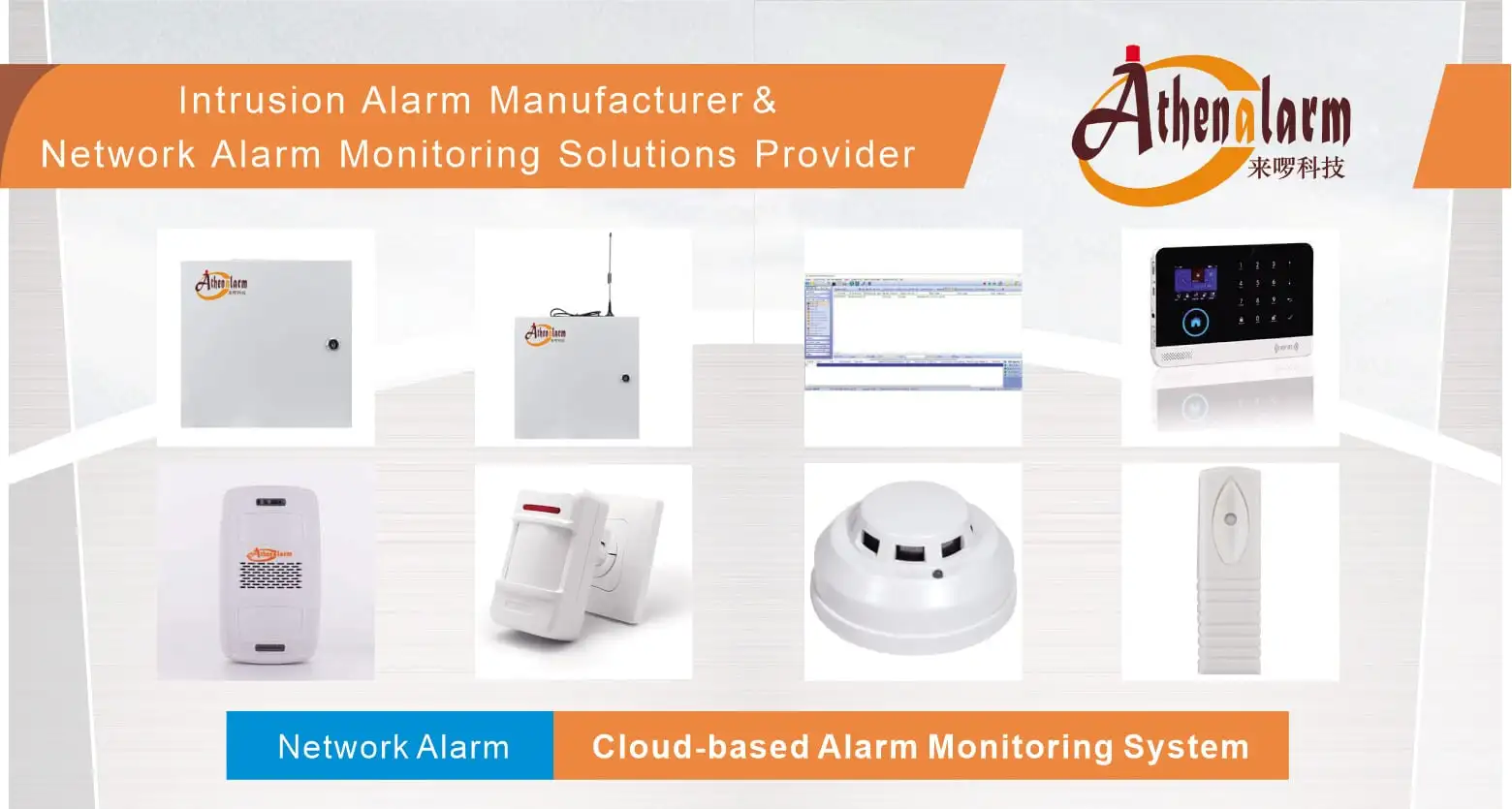
For engineering teams and facility managers implementing the layered prevention framework described above, the following standardized hardware components and vertical market solutions serve as functional building blocks within integrated enterprise safety architectures:
9.1 Central Infrastructure & Control Hardware
- Control Units: Intrusion Alarm Control Panel Architecture
- Network Systems: IP Network Alarm System Platform
- Monitoring Solutions: Network Alarm Monitoring System Solution
- Applications: Network Alarm System Operational Applications
- Smart Integration: GSM / Wi-Fi Alarm System Hub
- Security Components: Burglar Alarm System Hardware Matrix
9.2 Edge Intrusion & Perimeter Detection Sensors
- Motion Detection: PIR Motion Sensor
- Wide-Area Motion Sensing: Wide-Angle PIR Motion Sensor
- Access Point Protection: Magnetic Door Contact Sensor
- Structural Intrusion Sensing: Digital Vibration Detector
- Hazard Detection: Photoelectric Smoke Detector & Combustible Gas Detector
9.3 Emergency Response & Deterrence Components
- Manual Duress: Hardwired Panic Button & Wireless Emergency Panic Button
- Visual Annunciation: Strobe Warning Light Unit
- Audio Deterrence: Motion-Activated Voice Alert Sound Player
9.4 Industry-Specific Security Solutions
- Financial Institutions: Network Bank Security Solution
- ATM Security: Bank ATM Monitoring Solution
- Vault Protection: Bank Vault Security Solution
- Commercial & Retail: Store Alarm System Solution
- Hospitality: Hotel Alarm Monitoring Solution
- Residential & Community: Community Alarm Solution & House Alarm Solution
