
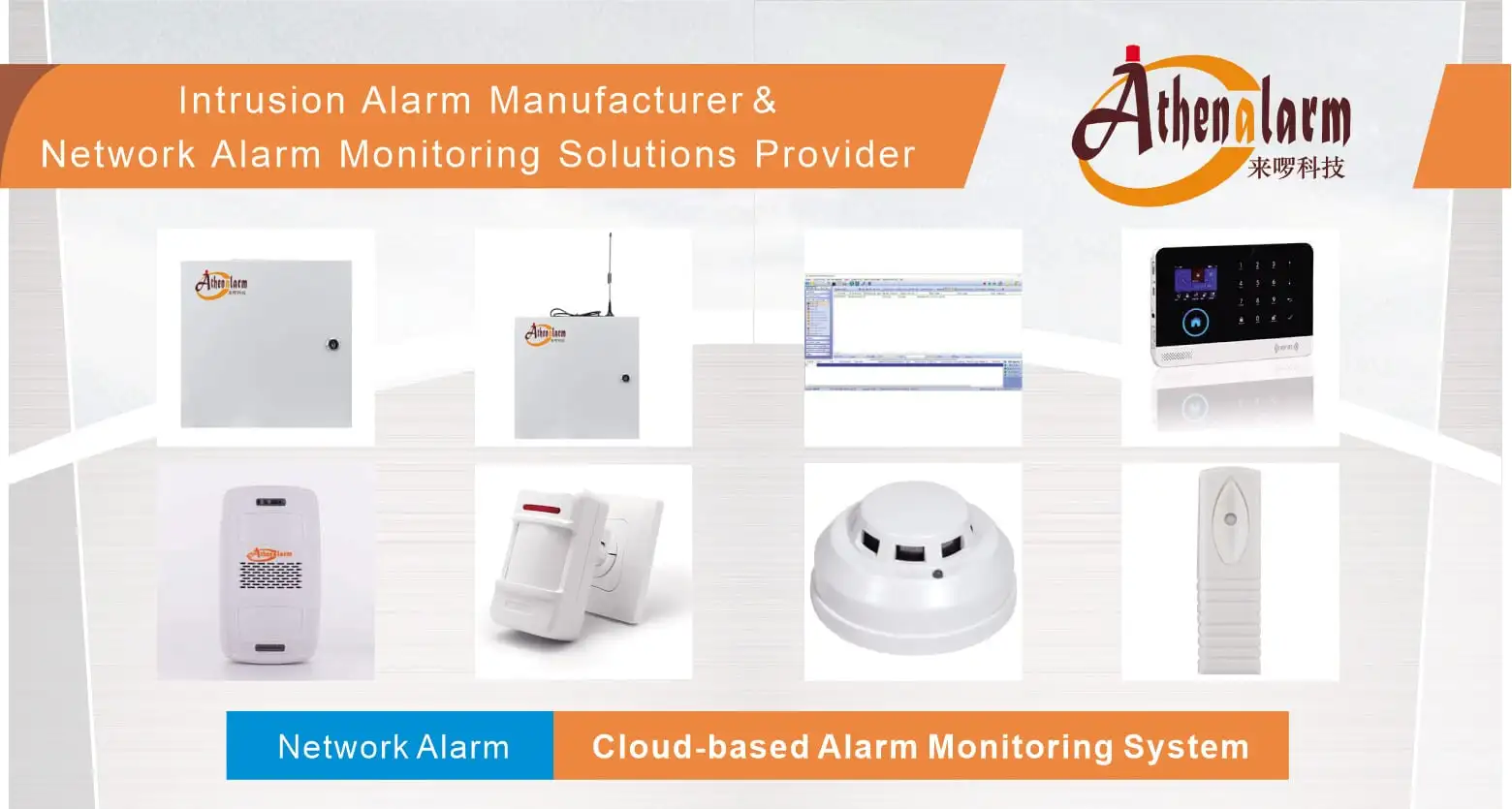
Business Alarm Control Panel Setup Guide: How to Build a Secure, Scalable, and Smart Commercial Alarm System
1. What Is a Business Alarm Control Panel—and Why It Matters
A business alarm control panel is the centralized processing unit at the core of any commercial intrusion detection and security alarm system. It receives input from every connected sensor and detector, evaluates events against programmed logic, and initiates appropriate responses—whether that means triggering a local siren, dispatching a signal to a professional monitoring center, or activating an integrated building system. In commercial deployments, the control panel is far more than a switching device: it is the decision engine that determines how your security infrastructure responds to every threat scenario, from an unauthorized after-hours entry to a coordinated multi-zone intrusion attempt.
For B2B procurement teams, security systems integrators, and facility directors, selecting the right business alarm control panel is one of the highest-leverage decisions in any security project. The wrong choice creates cascading problems: incompatible sensors, limited scalability, compliance gaps, and expensive rip-and-replace cycles years before the end of the intended system lifespan. The right choice delivers a platform that grows with the organization, integrates with adjacent systems, and remains operationally sound across a 10–15 year deployment horizon.
This guide addresses the full scope of that decision—covering system architecture, feature requirements, deployment workflow, and, most critically, the 9 key selection criteria that every organization must apply when evaluating commercial alarm control panels. These 9 factors are: system scalability, integration capability, cybersecurity architecture, communication redundancy, regulatory compliance, remote management capability, user access control, energy efficiency, and vendor ecosystem quality.
Whether you are commissioning security for a single commercial facility or standardizing a panel platform across a national multi-site operation, the framework presented here is designed to support precise, defensible, and future-proof procurement decisions.
2. The Role of the Alarm Control Panel in Commercial Security
A commercial alarm control panel functions as the centralized hub through which every security-related event is received, processed, and acted upon. In a well-designed system, no sensor activates, no alert fires, and no response protocol executes without passing through the control panel’s logic engine. This makes it fundamentally different from any individual security device: it is simultaneously the system integrator, the event arbiter, and the communications gateway.
2.1 Core operational responsibilities include:
Centralized device integration. The panel interfaces with the full spectrum of detection hardware—motion detectors, passive infrared (PIR) sensors, door and window contacts, glass-break detectors, vibration sensors, smoke and CO detectors, panic buttons, and duress devices. Each feeds real-time status data into the panel continuously.
Signal processing and event management. When a sensor reports an anomaly, the panel does not simply trigger an alarm. It cross-references the event against zone programming, time schedules, user credentials, and escalation rules—then determines whether the situation warrants a silent alert, an audible siren, a strobe activation, or an immediate dispatch request to a central monitoring station.
User interface and system control. Authorized personnel interact with the system through keypads, touchscreen terminals, proximity card readers, or mobile applications. The panel enforces access hierarchies: an administrator may have full system control, while a cleaning contractor is permitted to disarm only a specific zone within a defined time window.
Communications gateway. The panel transmits structured alarm signals to professional monitoring centers via one or more channels—traditional PSTN landlines, broadband IP connections, or cellular networks. It also receives remote commands, acknowledgments, and software updates through these same pathways.
Regulatory compliance and audit logging. Every arming event, disarming action, zone trigger, system fault, and user login is time-stamped and recorded in a tamper-evident event log. This audit trail supports compliance verification under frameworks such as HIPAA (healthcare), PCI-DSS (payment environments), SOC 2 (technology operations), and local fire and life safety codes. Insurance carriers frequently require access to these logs during claim investigations.
System self-monitoring. High-quality panels continuously assess their own operational health: battery voltage, AC power status, communication link quality, tamper detection on the enclosure, and sensor supervision signals. Any anomaly generates an automatic fault alert, enabling proactive maintenance before a component failure becomes a security vulnerability.
3. Types of Business Alarm Control Panels
Selecting the right panel architecture is the first substantive decision in any commercial security project. The four primary categories each carry distinct technical profiles, cost structures, and operational trade-offs.
3.1 Hardwired Panels
Hardwired panels communicate with all connected devices via dedicated physical cable runs—typically 4-conductor shielded wire for sensors and 22-gauge twisted pair for keypads. They are the industry standard for large, permanent facilities such as manufacturing plants, distribution warehouses, government buildings, and data centers.
The principal advantages are exceptional reliability and immunity to radio frequency (RF) interference. Because signals travel over copper rather than through the air, hardwired systems are not susceptible to jamming, co-channel interference from neighboring wireless networks, or the signal degradation that can affect RF devices over time.
The trade-offs are installation complexity and reduced flexibility. Running cable through finished walls, raised floors, or conduit in occupied facilities is expensive and disruptive. Adding zones after initial installation requires additional cabling, which may not be practical in certain building configurations.
Best for: Industrial facilities, hospitals, data centers, government installations, and environments where RF interference is a concern or where existing wiring infrastructure already exists.
3.2 Wireless Panels
Wireless panels communicate with sensors and keypads via encrypted RF signals, typically operating in the 433 MHz, 868 MHz, or 2.4 GHz bands. Installation is dramatically faster because no cable runs are required—sensors simply pair with the panel during commissioning.
Modern wireless panels use frequency-hopping spread spectrum (FHSS) or direct sequence spread spectrum (DSSS) technologies to resist interference and prevent signal interception. Supervised wireless systems require each device to check in with the panel at defined intervals—typically every 60 to 90 minutes—generating a fault alert if a device fails to respond. This supervision mechanism provides a meaningful level of tamper detection that earlier wireless generations lacked.
Battery management is the primary ongoing operational requirement. Enterprise-grade wireless panels report battery status for every connected device, enabling scheduled maintenance rather than reactive replacements.
Best for: Retail environments, small-to-medium office buildings, historic structures where cabling would cause physical damage, and facilities undergoing phased renovation.
3.3 Hybrid Panels
Hybrid panels support both hardwired and wireless device zones on a single controller. They are the most operationally flexible solution for organizations integrating legacy wired infrastructure with new wireless expansion zones, or executing a phased security modernization program.
From a procurement perspective, hybrid panels extend the useful life of existing cable investments while enabling wireless expansion where new cabling is impractical—significantly reducing the capital expenditure of system upgrades. Configuration is more complex than pure-type systems, requiring careful zone planning to ensure consistent supervision settings across both device types.
Best for: Businesses upgrading from legacy hardwired systems, multi-building campuses with mixed wiring infrastructure, and organizations executing multi-phase security modernization programs.
3.4 Smart IP-Based Panels
Smart IP-based panels represent the current frontier of commercial alarm technology. These systems communicate over Ethernet and cellular networks, integrating natively with cloud-based security platforms, enterprise IT infrastructure, and IoT ecosystems.
Their defining capability is remote management at scale. A security operations team can monitor, configure, update, and respond to events across dozens or hundreds of sites from a single dashboard—without dispatching technicians or relying on on-site personnel. Real-time analytics, mobile push notifications, and AI-assisted event filtering are standard features on leading IP-based platforms.
The cybersecurity requirements are correspondingly elevated. IP-based panels must be treated as network endpoints subject to the same hardening standards applied to enterprise servers: encrypted communications, certificate-based authentication, regular firmware patching, and network segmentation.
Best for: Multi-site retail chains, corporate campuses, logistics networks, cloud-first organizations, and any environment where centralized remote management is a core operational requirement.
Expert Guidance: Never evaluate panels solely on purchase price. Total cost of ownership encompasses installation labor, ongoing licensing fees, hardware maintenance, firmware update costs, integration work, and eventual replacement cycles. A lower-cost panel that requires expensive proprietary sensors or lacks API access may cost substantially more over a five-year horizon than a premium panel with an open architecture.
4. Essential Features of Commercial Alarm Control Panels
Beyond the basic ability to detect and report alarm events, enterprise-grade business alarm control panels offer a range of advanced capabilities that directly affect operational performance, integration depth, and long-term value.
Multi-zone management with granular customization. Commercial panels support anywhere from 8 to 512+ zones, each independently programmable for detection type, response behavior, time schedules, and arming state. Zones can be grouped into partitions—logical subsets that operate semi-independently. A retail business, for example, might partition the system so that the stockroom is armed during business hours while the sales floor remains disarmed, with separate user codes and schedules for each area.
Role-based user access controls. Every user interacting with the system should hold credentials tied to a specific permission profile. Administrator accounts carry full system access; manager accounts can arm or disarm designated zones and retrieve event reports; staff accounts are restricted to specific zones within defined time windows. All activity is logged against the individual user credential, creating meaningful accountability at every level.
Comprehensive event logging and audit trails. Enterprise panels maintain detailed, tamper-evident records of all system events: sensor activations, arming and disarming actions, user logins, configuration changes, communication faults, and self-test results. Logs should be exportable in standard formats—CSV, PDF, XML—for integration with incident management systems or regulatory reporting workflows.
Redundant communication paths. A panel that relies on a single communication channel represents a single point of failure. Leading commercial panels support simultaneous operation across multiple communication paths—Ethernet as primary, cellular as secondary, and optionally Wi-Fi or PSTN as tertiary backup—with automatic failover to the next available channel when the primary path is disrupted.
Integration with building management systems. Modern commercial panels expose API and protocol interfaces—Modbus, BACnet, KNX, REST—enabling bidirectional integration with HVAC systems, lighting controllers, energy management platforms, and fire suppression systems. This enables scenario-based automation: when the alarm is set to “away” mode, the HVAC setpoint automatically adjusts to an energy-saving schedule; when a fire alarm triggers, all access-controlled doors release to their fail-safe (open) position.
Self-monitoring and predictive diagnostics. High-quality panels run continuous self-tests on every connected device and communication path, routing fault reports—low battery, sensor supervision failure, communication path degradation, tamper detection—to maintenance teams via email, SMS, or integration with a facilities management platform. This capability transforms security maintenance from a reactive process into a proactive one.
Intuitive user interfaces. Keypads and touchscreens should support multilingual operation, role-appropriate menu structures, and clear status visualization. In high-traffic facilities with diverse workforces, this is a practical operational requirement for consistent and correct system use, not an optional convenience.
5. 9 Key Selection Criteria for a Business Alarm Control Panel
The following nine criteria form a structured, field-tested framework for commercial alarm control panel procurement. Each factor has direct implications for system performance, total cost of ownership, regulatory standing, and long-term operational resilience.
5.1 Criterion 1: System Scalability
A control panel that meets your current requirements but cannot grow with your organization is not a long-term solution—it is a deferred replacement cost. When evaluating scalability, assess the following dimensions:
- Zone capacity and expansion path: What is the maximum zone count, and how is expansion achieved? Panels that scale via wired zone expansion modules offer the most reliable path. Confirm that expansion does not require replacing the core panel hardware.
- User capacity: How many unique user credentials can the system support? For large organizations with high staff turnover, panels supporting thousands of codes rather than hundreds are essential.
- Partition support: Can the system be logically subdivided to accommodate multiple tenants, departments, or operational units without deploying separate hardware?
- Processing performance under load: As more sensors and integrated systems feed data into the panel, does the architecture maintain real-time responsiveness, or does performance degrade?
Demand written specifications from vendors covering maximum zone counts, expansion module compatibility, and the hardware generations supported by their current software platform. A panel with a five-year-old processing architecture may be approaching end-of-life on its scalability roadmap even if it appears fully functional today.
5.2 Criterion 2: Integration Capability
The commercial security ecosystem does not exist in isolation. A business alarm control panel that cannot communicate with other security and building systems forces operators to manage multiple disconnected platforms—a significant operational liability.
Evaluate integration capability across three dimensions:
- Protocol support: Does the panel natively support open standards such as ONVIF (IP cameras), BACnet or Modbus (building automation), Wiegand or OSDP (access control), and REST or MQTT (cloud and IoT platforms)? Open protocol support eliminates vendor lock-in and enables best-of-breed component selection.
- API availability: Does the vendor publish a documented, version-controlled API? A well-documented API allows your internal IT team or a systems integrator to build custom integrations with enterprise tools—HR platforms, visitor management systems, security information and event management (SIEM) solutions.
- Scenario-based physical integration: Can alarm events trigger actions in connected systems? A door-forced-open alarm should trigger video recording on the nearest camera, send a push notification to the on-call security manager, and log a video bookmark—automatically, without operator intervention.
Avoid panels that achieve “integration” only through proprietary middleware requiring ongoing vendor licensing. True integration is built on open standards and documented interfaces.
| Integration Standard | Application Domain | Key Benefit |
|---|---|---|
| ONVIF | IP Camera Systems | Vendor-agnostic video integration |
| OSDP / Wiegand | Access Control | Secure reader-to-panel communication |
| BACnet / Modbus | Building Automation | HVAC, lighting, energy coordination |
| REST / MQTT | Cloud & IoT Platforms | Flexible API-based data exchange |
| SIA DC-09 | Monitoring Centers | Standardized alarm signal transmission |
5.3 Criterion 3: Cybersecurity Architecture
As commercial alarm panels migrate to IP-based architectures, they become network endpoints—and potential attack surfaces. A poorly secured panel can serve as an entry point into your enterprise network, a vector for alarm signal spoofing, or a target for service disruption.
Minimum cybersecurity requirements for any commercial panel under consideration:
- Encryption: All wireless device communication must use AES-128 or higher. All IP communications must use TLS 1.2 or TLS 1.3.
- Authentication: Remote access to the panel management interface must enforce multi-factor authentication (MFA). Default factory credentials must be changed at commissioning, and the panel must reject weak or previously compromised passwords.
- Firmware integrity: Firmware updates must be digitally signed by the manufacturer and verified by the panel prior to installation. Rollback protection should prevent attackers from forcing a downgrade to a vulnerable firmware version.
- Network segmentation: IP-based panels should be deployed on a dedicated security VLAN, isolated from general corporate network traffic, with firewall rules restricting connections to specifically authorized IP addresses and ports.
- Cloud platform compliance: Verify that cloud management platforms hold SOC 2 Type II or ISO 27001 certification, and review vendor data processing agreements and incident response commitments.
- Administrative audit logging: Every configuration change, remote access session, and firmware update should be logged with user ID, timestamp, and source IP address.
5.4 Criterion 4: Communication Redundancy
Communication path reliability is the single most testable—and most frequently neglected—dimension of alarm system resilience.
A panel with only one active communication channel can be rendered unable to report alarms by a localized network outage, a cut cable, or a deliberate jamming attack. The consequences range from delayed emergency response to a complete security blackout during the precise events the system was built to detect.
Best practices for commercial alarm panel communication:
- Dual-path active operation: Configure the panel to report over two independent paths simultaneously—typically Ethernet and cellular. Both paths should be live at all times, not merely on standby. Monitoring center protocols such as SIA DC-09 support dual-path supervision, allowing the station to detect path failure even in the absence of an alarm event.
- Supervision frequency: For high-security environments, configure supervision intervals of 90 seconds or less so that a communication failure is detected and escalated quickly.
- Automatic failover and recovery: The panel should fail over to the secondary path without manual intervention when the primary path fails, and restore primary path operation automatically when connectivity returns.
- Anti-jamming and carrier redundancy: Select panels that support multiple cellular bands and can switch carriers if the primary carrier’s signal is degraded. Dual-SIM support provides additional carrier redundancy in high-risk deployments.
Test all communication paths at commissioning and at least quarterly thereafter. Document every test result as part of your compliance record.
5.5 Criterion 5: Regulatory Compliance and Certification
In many industries and jurisdictions, alarm system compliance is mandatory, not advisory. Deploying a non-certified or non-compliant system can invalidate insurance coverage, trigger regulatory penalties, and create direct liability following a security incident.
Key certifications and standards to verify:
- UL Listed (Underwriters Laboratories): UL 2050 governs central station monitoring services; UL 681 covers installation requirements for burglary alarm systems. UL listing is required by many commercial property insurers as a coverage condition.
- EN 50131 (Europe): Defines graded performance levels (Grade 1 through Grade 4) based on threat environment. Verify that the selected panel achieves the grade appropriate to your risk assessment.
- IEC 60839: The international framework standard for alarm systems, referenced in many national building codes and procurement specifications.
- HIPAA: Requires access controls, audit logging, and physical security for areas containing protected health information. The control panel’s event logging and authentication features directly support HIPAA compliance.
- PCI-DSS: Requires physical access controls and monitoring for cardholder data environments. Panel audit logs and zone-based access restrictions are directly applicable.
- SOC 2: Cloud-connected panels whose management platforms process operational data may be subject to SOC 2 requirements for the service provider.
Always request current certification documentation before final vendor selection. Certifications can lapse or be withdrawn, and an expired listing provides no coverage benefit.
5.6 Criterion 6: Remote Management Capability
For multi-site organizations, remote management capability is an operational necessity, not a convenience feature. A panel system that requires on-site access for configuration changes, firmware updates, or event log retrieval places an unsustainable burden on security operations teams.
Key remote management capabilities to specify in your RFP or procurement criteria:
- Centralized multi-site dashboard: A single interface providing real-time status visibility across all panels at all locations, with the ability to acknowledge alarms, review event logs, and issue remote arm or disarm commands.
- Remote configuration and programming: The ability to modify zone parameters, user credentials, time schedules, and communication settings without dispatching a technician. This capability typically reduces configuration labor costs by 60–80% compared to on-site-only management.
- Over-the-air firmware updates: Centralized firmware deployment with scheduling controls that prevent updates during business hours or elevated-risk periods.
- Remote diagnostics and health monitoring: Real-time visibility into panel health—communication path status, battery voltage, sensor supervision, tamper detection—with automated alert escalation when anomalies are detected.
- Secure mobile access: A mobile application that enforces MFA and session timeouts, enabling authorized personnel to receive push notifications, acknowledge alarms, and perform basic system control from any location.
Evaluate the remote management platform on its own security posture—not merely its feature set. The management platform is an additional attack surface requiring the same level of scrutiny as the panel hardware itself.
5.7 Criterion 7: User Access Control and Credential Management
Poorly managed user credentials are among the most common and costly sources of security system vulnerabilities in commercial environments. Shared PIN codes, credentials that are never deactivated after employee departures, and unrestricted system access for all staff create significant and entirely preventable operational risks.
Requirements for robust credential management in a commercial alarm control panel:
- Role-based access profiles: Distinct permission levels—at minimum, administrator, supervisor, and user—with granular control over which zones, functions, and time windows each role can access.
- Individual user codes: Every person requiring system access should hold a unique credential. Shared codes eliminate individual accountability and render audit trails meaningless.
- Time-limited and scheduled access: The ability to define active time windows per user. A cleaning contractor’s code should be valid only between defined hours on specified days. Temporary employee codes should carry automatic expiration dates.
- Automated credential revocation: Integration with HR or identity management systems to disable credentials immediately when an employee terminates, transfers, or changes role. Manual revocation processes are consistently unreliable.
- Activity logging: All credential use—successful and unsuccessful—should generate a log entry with timestamp, zone identifier, and user ID. Invalid credential attempts should trigger an immediate alert.
- Duress codes: Designated duress codes that arm the system normally while simultaneously transmitting a silent alert to the monitoring station—critical for environments with robbery or coercion exposure.
5.8 Criterion 8: Energy Efficiency and Sustainable Deployment
Energy efficiency has become a substantive criterion in commercial alarm panel procurement, driven by operational cost management and corporate sustainability mandates. A panel system operating continuously—24 hours a day, 365 days a year—accumulates a meaningful energy footprint over its operational life, particularly across multi-site deployments.
Practical efficiency features to evaluate:
- Standby power consumption: Compare standby power specifications across competing panels. Differences of 5–10 watts may appear minor but translate to significant energy costs over multi-year, multi-site deployments.
- Solar and alternative power compatibility: Solar-ready power supply units capable of integrating with photovoltaic systems are increasingly available from major panel manufacturers—particularly relevant for remote locations, outdoor facilities, and organizations with renewable energy commitments.
- Intelligent battery management: Continuous battery health monitoring with optimized charging cycles that maximize battery lifespan, reducing both replacement costs and electronic waste.
- Sensor-level power optimization: Wireless sensor networks supporting dynamic transmission power adjustment—reducing RF output when signal quality is strong—extend battery life without compromising supervision integrity.
- Green certifications: RoHS compliance (restriction of hazardous substances) and applicable energy efficiency certifications are increasingly relevant in procurement processes with formal sustainability criteria.
Include power consumption specifications in your technical evaluation scoring matrix. From a lifecycle perspective, energy-efficient panels reduce total cost of ownership in a measurable and documentable way.
5.9 Criterion 9: Vendor Ecosystem and Support Quality
A business alarm control panel is a long-term infrastructure commitment. The quality of the vendor relationship—financial stability, support infrastructure, certified installer network, and product roadmap transparency—has a direct bearing on the panel’s operational value across its entire service life.
Vendor evaluation criteria:
- Financial stability and market longevity: Panel systems are typically designed for 10–15 year operational lifespans. A vendor who exits the market or discontinues a product line before that horizon creates significant replacement and integration costs. Assess vendor financial health, market position, and installed base size.
- Certified installation and service network: Verify that the vendor maintains factory-certified installation and service partners in your region with defined SLAs for emergency service calls.
- Software and firmware update commitment: Request documentation of the support lifecycle for specific panel models—particularly the end-of-life date for software updates and security patches.
- Training and documentation quality: Comprehensive, current technical documentation—installation manuals, configuration guides, API references, integration guides—is a reliable indicator of a vendor’s commitment to the professional installer and integrator community.
- Reference customers and case studies: Request references from organizations of comparable scale and operational complexity. Direct conversations with existing customers are more informative than vendor-produced testimonials.
- Open ecosystem vs. proprietary lock-in: Panels requiring proprietary sensors, keypads, and expansion modules create long-term vendor dependency at the vendor’s pricing. Open architecture panels that work with standard third-party devices provide significantly greater procurement flexibility and competitive pricing throughout the system’s lifespan.
6. Integration with Broader Security and Building Systems
A business alarm control panel functions most effectively not as a standalone device, but as the integration hub of a layered security and building management ecosystem.
| System Component | Control Panel Integration Role |
|---|---|
| Intrusion Detectors | Zone assignment, trigger logic, response escalation |
| IP Camera Systems | Alarm-triggered recording, video bookmarks, live view on alarm |
| Access Control | Credential-based arming/disarming, zone lockdown on breach |
| Fire Alarm Systems | Emergency procedure coordination, door release, evacuation protocols |
| HVAC and Lighting | Occupancy-based automation, energy mode on arm, emergency override |
| Entry Intercoms | Video/audio verification integrated with alarm decision logic |
| SIEM Platforms | Structured event data export for enterprise security operations |
| Visitor Management | Temporary credential issuance, arrival/departure logging |
The value of these integrations is concrete and measurable. In a retail environment, an alarm-triggered camera clip covering the exact sensor zone that activated can reduce false dispatch costs by 40–60% compared to systems that generate alarm signals without visual context. In a healthcare facility, automatic door release on fire alarm activation—coordinated through the control panel—can be the operational difference between an orderly evacuation and a chaotic one.
Implementation guidance: Prioritize panels that support open integration standards—ONVIF for cameras, OSDP for access control, REST APIs for cloud platforms. Proprietary integration protocols that tie you to a single vendor for every system component eliminate your ability to independently optimize each layer of your security architecture.
7. System Setup and Operational Deployment Workflow
Effective control panel deployment requires structured execution across six distinct phases. Skipping or compressing any phase creates operational vulnerabilities that may not surface until an actual security event exposes them.
7.1 Phase 1: Risk Assessment and Requirements Definition
Before any equipment is selected or installed, conduct a formal facility risk assessment. This should include a physical survey of all access points, high-value asset locations, and areas requiring time-sensitive response. Define zone boundaries based on the assessment, identify applicable regulatory requirements, and document power and communication infrastructure needs.
Deliverable: A zone map, compliance requirements list, and technical specification document that forms the basis for panel selection and system configuration.
7.2 Phase 2: Panel Selection and System Design
Apply the 9 key selection criteria described above to evaluate candidate panels against your documented requirements. Develop a complete system design specifying zone assignments, device types, communication paths, power architecture, integration points, and backup power capacity.
Critical consideration: Specify minimum battery backup duration based on your risk assessment. High-security environments typically require a minimum of 24 hours of standby power; critical infrastructure environments may require 72 hours or more.
7.3 Phase 3: Physical Installation
Mount the panel within a tamper-resistant steel enclosure in a physically secured, access-controlled location not visible from public areas. Connect AC power and verify proper grounding. Install and connect all sensors, keypads, and communication devices according to the system design. For hardwired systems, document all cable runs and label every connection.
Critical detail: Never co-locate the panel with the primary network switch or server room. A single physical breach should not compromise both the security system and the IT infrastructure simultaneously.
7.4 Phase 4: Programming and Configuration
Program all zones, user credentials, time schedules, communication paths, and integration parameters according to the system design document. Configure redundant communication paths and verify that path supervision signals are transmitting correctly to the monitoring center. Establish remote management access and confirm that all administrative accounts enforce strong, unique passwords and MFA.
Document all configuration settings in a secure, version-controlled record that can be referenced during maintenance, troubleshooting, or system recovery.
7.5 Phase 5: Testing and Commissioning
Conduct comprehensive testing before declaring the system operational. This must include:
- Walk tests: Physically trigger every sensor and verify correct zone identification and response behavior
- Communication path tests: Confirm that alarm signals transmit correctly via all configured paths—primary, secondary, and any tertiary backup
- Power failure simulation: Disconnect AC power and verify seamless transition to battery backup without event loss or communication disruption
- Remote management verification: Confirm that remote access functions correctly, with MFA enforced at all entry points
- Integration tests: Verify that alarm events correctly trigger responses across all integrated systems—cameras, access control, building management
Document all test results and retain as part of the commissioning record.
7.6 Phase 6: User Training and Ongoing Maintenance
Train all authorized system users on correct arming and disarming procedures, emergency response protocols, and fault reporting processes. Training should be role-specific—administrators require configuration knowledge that standard users do not need.
Establish a maintenance schedule: monthly communication path tests, quarterly battery load tests, semi-annual sensor cleaning and functional tests, and annual full system audits. Apply security patches promptly and schedule feature updates during planned maintenance windows.
Critical Warning: Failing to test backup communication paths after initial commissioning is the single most common cause of alarm systems that appear fully operational but fail to report during real events. Test every path. Document every test. Repeat quarterly.
8. Emerging Trends in Commercial Control Panel Technology
The commercial alarm control panel market is undergoing a period of substantive technological evolution. Understanding these trends is essential for making procurement decisions that will remain technically and operationally sound across the five-to-ten-year horizon of a typical deployment.
AI-powered event filtering and behavioral analysis. Machine learning algorithms trained on historical sensor data can distinguish genuine intrusion events from environmental false triggers—a swinging door, an HVAC airflow disturbance, a large insect crossing a PIR detector’s field of view. Leading platforms report false alarm reduction rates of 70–90% compared to threshold-based detection alone, with direct cost implications: false dispatch fees and unnecessary emergency service responses represent significant operational expenses.
Edge processing architecture. Next-generation panels incorporate on-board processing capable of executing complex decision logic locally, without cloud connectivity. This eliminates latency from cloud round-trips for time-critical decisions, maintains operation during internet outages, and reduces the volume of data transmitted to cloud platforms—important for organizations with bandwidth constraints or data residency requirements.
Mobile-first management interfaces. Modern platforms deliver full management capability through secure mobile applications—push notifications, remote arm/disarm, live event feeds, and two-way audio with monitoring stations, accessible from any location. Mobile interfaces must balance functional completeness with security rigor: session timeouts, device-bound authentication, and remote wipe capability are baseline requirements.
Open integration platform ecosystems. The market is shifting toward alarm control platforms that function as open ecosystems, exposing APIs and supporting third-party integrations through formal partner programs. This enables organizations to build highly customized security operations environments by combining best-of-breed components from multiple vendors.
Green technology and sustainable hardware design. Manufacturers are increasingly prioritizing power efficiency, recyclability, and hardware longevity as core design criteria. Solar-compatible power architectures, RoHS-compliant materials, and extended hardware support lifecycles are becoming meaningful differentiators in enterprise procurement processes with sustainability mandates.
Self-healing and autonomous fault recovery. Advanced panels can detect, diagnose, and in many cases resolve common fault conditions without human intervention—automatically switching communication paths, re-establishing lost sensor supervision, or restarting communication modules following a transient fault.
9. Common Mistakes to Avoid in Business Alarm Panel Selection
Even experienced security professionals make procurement decisions that create costly operational problems years down the line. The most consequential mistakes share a common characteristic: they trade long-term operational value for short-term cost savings or implementation convenience.
Selecting a panel based solely on initial purchase price. Panel hardware typically represents a small fraction of total system cost over its operational life. Labor, licensing, integration, maintenance, and replacement are far larger cost drivers. A panel that saves $500 upfront but requires $5,000 in proprietary accessories or lacks an open API is not a good procurement decision.
Underestimating future scalability requirements. Security requirements grow with organizations. A panel installed at a facility’s current 50-zone capacity that cannot expand beyond 64 zones will require complete replacement when the facility grows—a cost that a modest increase in initial investment would have entirely avoided.
Neglecting cybersecurity during procurement. Requesting a vendor’s cybersecurity specification sheet is non-optional for any IP-connected panel. Default credentials, unencrypted communications, and unsigned firmware are disqualifying characteristics for enterprise deployment.
Failing to test backup communication paths. A panel with a configured but untested cellular backup path may have a SIM that was never properly activated, a cellular antenna that was never connected, or a monitoring center configuration that does not recognize the backup path format. Test every path. Document the test.
Purchasing systems without clear compliance verification. Insurance carriers and regulatory auditors will request certification documentation. If you cannot produce it, your coverage may be invalidated at precisely the moment you need it most.
Allowing vendor lock-in through proprietary device ecosystems. Every proprietary sensor, keypad, or expansion module added to a locked system deepens dependency on a single vendor at that vendor’s pricing—for the entire operational life of the system. Open architecture is a long-term cost and flexibility advantage that compounds over time.
10. Conclusion: The Business Alarm Control Panel as a Strategic Infrastructure Asset
A business alarm control panel, selected and deployed with rigor, is not merely a security device. It is a strategic infrastructure asset that underpins operational resilience, regulatory compliance, insurance cost management, and the long-term coherence of your security ecosystem.
To summarize the 9 key selection criteria covered in this guide:
- System Scalability — Ensure the panel can grow with your organization in zones, users, and architectural complexity without requiring hardware replacement.
- Integration Capability — Demand open protocol support and documented APIs enabling best-of-breed integration across cameras, access control, building management, and enterprise IT systems.
- Cybersecurity Architecture — Require AES encryption, TLS communications, MFA enforcement, signed firmware, and network segmentation as non-negotiable baseline requirements.
- Communication Redundancy — Deploy dual-path active communication with supervised failover, and test every path at commissioning and quarterly thereafter.
- Regulatory Compliance and Certification — Verify UL listing, EN 50131 grade, and all application-specific compliance requirements before final selection.
- Remote Management Capability — Require centralized multi-site management, over-the-air firmware updates, and mobile access with appropriate security controls.
- User Access Control and Credential Management — Enforce individual credentials, role-based permissions, time-limited access, and automated revocation integrated with HR processes.
- Energy Efficiency and Sustainable Deployment — Evaluate standby power consumption, solar compatibility, and RoHS compliance as components of total cost of ownership and sustainability commitments.
- Vendor Ecosystem and Support Quality — Assess financial stability, certified installer networks, software support lifecycle, and open vs. proprietary architecture before committing to a platform.
Organizations that apply this framework consistently—rather than defaulting to the lowest quoted price or the most familiar brand name—achieve security systems that perform reliably under real-world conditions, adapt to changing operational requirements without disruptive replacement cycles, and deliver measurable value across their full service life.
The control panel is where your security investment either comes together or falls apart. Choose it with the same strategic discipline you apply to any critical infrastructure decision.
11. FAQ: Business Alarm Control Panel
1. What is a business alarm control panel, and how does it differ from a residential alarm panel?
A business alarm control panel is a commercial-grade security processing unit designed to manage large numbers of zones, multiple user permission levels, complex integration with building systems, and professional central station monitoring—capabilities that far exceed those of residential panels. Commercial panels typically support 32 to 512+ zones, role-based access hierarchies, redundant communication paths, and open API integration with IP cameras, access control systems, and building management platforms. Residential panels are designed for simpler, single-tenant environments with limited zone counts and fewer integration requirements.
2. How many zones does a commercial alarm control panel typically support?
Entry-level commercial alarm control panels typically support 16 to 32 zones, mid-range panels support 64 to 128 zones, and enterprise-grade systems can manage 256 to 512+ zones via expansion modules. When selecting a panel, always specify a zone capacity 30–50% above your current requirement to accommodate future facility expansion without replacing the core hardware.
3. What communication methods does a business alarm control panel use to transmit signals to a monitoring center?
Commercial panels support one or more of the following communication paths: broadband Ethernet (IP), cellular (4G LTE or 5G), traditional PSTN landline, and Wi-Fi. Best practice for commercial deployments is dual-path operation—typically Ethernet as primary and cellular as secondary—with both paths active simultaneously and supervised at intervals of 90 seconds or less for high-security environments.
4. Is cybersecurity a significant concern for IP-connected business alarm control panels?
Yes. IP-connected alarm control panels are network endpoints and must be hardened accordingly. Minimum requirements include AES-128 encryption for wireless device communication, TLS 1.2 or TLS 1.3 for all IP communications, multi-factor authentication (MFA) for remote access, digitally signed firmware updates, and deployment on a dedicated security VLAN isolated from general corporate network traffic. Panels that do not meet these specifications should not be considered for enterprise deployment.
5. What certifications should a business alarm control panel hold for commercial deployment?
In the United States, look for UL 681 listing for the panel hardware and UL 2050 compliance for the central station monitoring service. In Europe, EN 50131 grade certification (Grade 2 through Grade 4 depending on risk level) is the applicable standard. Internationally, IEC 60839 provides the framework reference. Industry-specific deployments may additionally require HIPAA compliance (healthcare), PCI-DSS adherence (payment environments), or SOC 2 alignment for cloud-connected management platforms.
6. How does a commercial alarm control panel support multi-site security management?
Enterprise-grade IP-based commercial alarm panels connect to centralized cloud management platforms that provide a unified dashboard for monitoring, configuring, and responding to events across all locations simultaneously. Security operations teams can remotely arm or disarm individual panels, push firmware updates to entire panel fleets, review event logs from any site, and receive push notifications on mobile devices—all without dispatching technicians to individual locations.
7. What is the difference between a hardwired, wireless, and hybrid business alarm control panel?
Hardwired panels communicate with sensors via dedicated cable runs and offer maximum reliability and RF interference immunity, but require extensive installation work. Wireless panels communicate via encrypted RF signals (typically FHSS or DSSS) and install rapidly without cable runs, but require ongoing battery management. Hybrid panels support both wired and wireless zones on a single controller, offering the most deployment flexibility—particularly for organizations integrating legacy wired infrastructure with new wireless expansion zones.
8. How often should a commercial alarm control panel system be tested and maintained?
Communication path tests should be conducted monthly. Battery load tests should be performed quarterly. Sensor cleaning and functional testing should occur semi-annually. Full system audits—including zone walk tests, firmware review, and compliance documentation update—should be conducted annually. Backup communication paths, in particular, must be tested quarterly: untested cellular backup paths are among the most common causes of alarm reporting failures during actual events.
9. Can a business alarm control panel integrate with access control and video surveillance systems?
Yes. Leading commercial alarm control panels support integration with access control systems via Wiegand or OSDP interfaces, and with IP camera systems via ONVIF or proprietary SDKs. This integration enables scenario-based automation: a forced-door alarm can simultaneously trigger video recording on the nearest camera, lock down adjacent access-controlled doors, and send a push notification to the on-call security manager. Prioritize panels with open protocol support to avoid proprietary middleware dependencies.
10. What is the expected operational lifespan of a commercial alarm control panel?
Commercial alarm control panels are typically engineered for 10–15 year operational lifespans, though software support lifecycles vary by vendor and model. When evaluating vendors, request explicit documentation of the firmware update commitment and the end-of-support date for the specific panel model under consideration. Panels approaching end-of-support dates lose access to security patches—a significant cybersecurity risk for IP-connected systems.
