
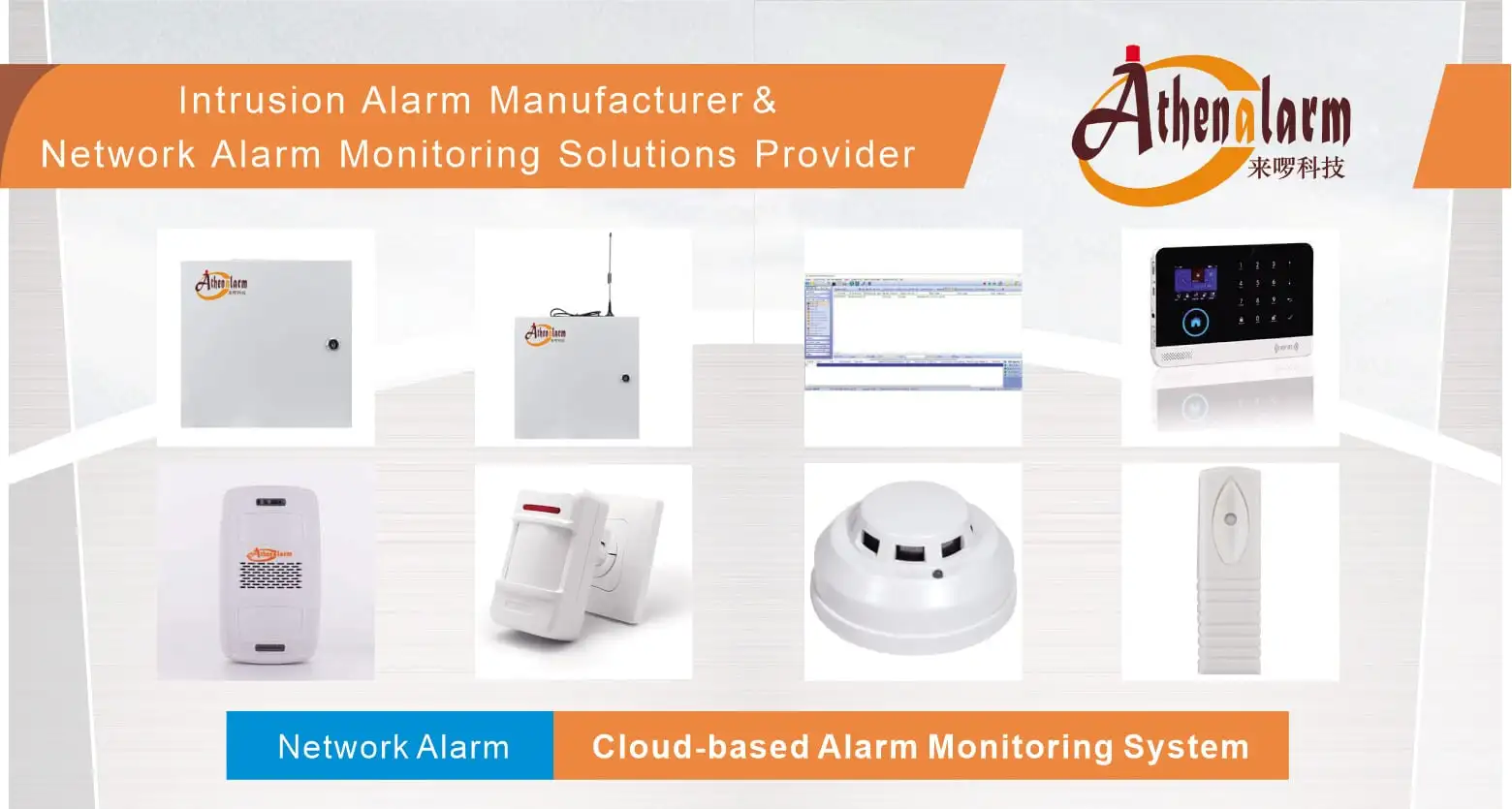
Burglar Alarm System Engineering and Deployment: A 10-Step Framework for Security Professionals
A burglar alarm system that performs well in a product demonstration can still fail in the field. The hardware may be technically capable, yet the deployment underperforms because architecture, sensor placement, communication resilience, maintenance scheduling, system integration, regulatory compliance, and lifecycle cost are treated as separate concerns instead of one connected engineering decision chain. This is the practical problem security integrators, facility managers, and procurement teams face when specifying commercial or enterprise intrusion detection systems: the individual components are rarely the point of failure — the decisions connecting them are.
A burglar alarm system is a control-panel-centered detection and notification architecture. It receives signals from distributed sensors, evaluates them against configured logic, activates local alarm outputs, and transmits event data through communication modules to monitoring stations, staff, or law enforcement. This chain only holds together when every stage — detection technology, wiring conditions, power resilience, communication redundancy, maintenance cadence, and integration with adjacent systems such as CCTV and access control — is deliberately engineered rather than assumed.
For B2B buyers, this matters operationally and financially. An incorrectly placed motion sensor generates nuisance alarms that erode confidence in the system. A single communication path introduces a point of failure in remote notification. A wireless deployment chosen purely for lower installation labor introduces a recurring battery-maintenance obligation that changes the total cost of ownership. None of these issues are visible at the point of purchase; they surface during operation.
The following ten-stage framework walks through the engineering decisions that determine whether a burglar alarm deployment performs reliably over its operational life — from establishing system architecture, through component selection, site design, installation, maintenance, compliance, technology evaluation, vendor selection, sustainability, and final lifecycle validation.
1. Establish the System Architecture Before Selecting Devices
Before specifying sensors or panels, the system boundary and signal flow must be defined. Treating a burglar alarm system as a loose collection of devices — rather than a layered architecture with a defined boundary — is the most common source of downstream integration and reliability problems.
1.1 Map the Burglar Alarm System from Detection to Response
A burglar alarm system functions as a signal chain. Understanding this chain clarifies what each component is responsible for and where a failure in one layer propagates to the next.
1.1.1 Detection → Control → Alarm → Communication → Notification
The functional chain runs: detection devices generate an input signal → the control panel evaluates that signal against configured logic → the panel activates local alarm outputs (sirens, strobes) → the panel transmits event data through communication modules → the communication module notifies the monitoring station, staff, or law enforcement. Each stage depends on the one before it; a failure in the communication layer, for example, does not prevent local detection or local alarm activation, but it does prevent remote notification.
1.1.2 Verification and Response as Integration Layers
CCTV and access control are not core burglar-alarm components; they are connected operational endpoints that extend the system’s function. An alarm event can trigger CCTV-based video verification and can coordinate with access control for automated lockdown, but these interactions occur after the core detection-to-notification chain has already executed. Treating this boundary clearly prevents scope confusion during design and procurement.
1.2 Define the Core System Components
The core system boundary includes six functional groups.
1.2.1 Control Panel and System Logic
The control panel manages inputs, evaluates system logic, controls outputs, and manages communications, including user codes and entry/exit delays. It is the central coordination point of the architecture.
1.2.2 Detection and Input Layer
PIR sensors, dual-tech motion detectors, acoustic glass-break sensors, seismic sensors, and beam detectors form the distributed input layer that supplies the control panel with intrusion-related signals.
1.2.3 Alarm and Notification Outputs
Sirens, strobes, auto-dialers, and mobile notifications form the local and immediate-remote alarm response layer, activated by the control panel once logic conditions are met.
1.2.4 Communication and Power Resilience
Communication modules (GSM, Ethernet, cloud connectivity) carry alarm data to remote endpoints. Power supply with battery backup ensures the system continues to operate during a primary power interruption.
1.2.5 Tamper Protection
Tamper switches, protective housings, and anti-masking capability are designed to detect interference attempts, such as covering or obstructing a sensor, and report that condition to the control logic.
1.3 Match Architecture to Deployment Scale
Panel architecture should match the scale and management model of the deployment. Standalone panels suit small, single-site facilities where local control is sufficient. Hybrid panels combine wired and wireless inputs and are commonly applied to retrofit projects where full rewiring is impractical. IP/cloud-based panels support remote configuration and centralized monitoring dashboards, which is relevant for multi-site enterprise deployments. The architectural choice should follow the deployment’s operational scope, not the other way around.
2. Select Detection and Communication Components Against the Risk
Component selection should be driven by the specific intrusion risk and the physical environment being protected, not by a generic hardware list.
2.1 Choose Detection Technology for the Protected Condition
2.1.1 PIR Motion Detection
PIR sensors detect motion within open interior spaces and are commonly deployed to cover general room and corridor movement.
2.1.2 Dual-Tech PIR + Microwave Detection
Dual-tech motion detectors combine PIR and microwave detection technologies. The source material identifies this combination as reducing false alarms by more than 50%. This figure should be treated as a source-stated benchmark for the referenced combination, not as a universal, independently validated performance guarantee applicable to every installation condition.
2.1.3 Acoustic Glass-Break Detection
Acoustic glass-break sensors are designed to recognize distinct sound frequencies associated with breaking glass, making them appropriate for glazed perimeter openings.
2.1.4 Seismic Detection
Seismic sensors detect drilling or heavy impact conditions, making them relevant to protecting safes, vaults, or reinforced walls where forced entry is a concern.
2.1.5 Beam Detection for Extended Perimeters
Beam detectors are used to cover extended perimeter distances, with the source citing coverage up to 200 meters. This figure should be treated as a source-stated specification rather than a guaranteed coverage distance under all site conditions.
2.2 Use Environmental Conditions to Guide Detector Selection
2.2.1 HVAC Airflow and PIR Placement
PIR sensors should avoid installation near HVAC vents, since airflow can interfere with motion-detection accuracy and contribute to nuisance alarms.
2.2.2 Windows and Reflective Glass
PIR sensors should not be mounted facing windows, and reflective glass surfaces require deliberate placement consideration, since both conditions can affect detection reliability.
2.2.3 Installation Environment and Wiring Conditions
Alarm wiring should be routed away from high-voltage lines to avoid interference with signal integrity. Environmental and wiring conditions should be assessed during design, not corrected after commissioning.
2.3 Evaluate Communication Resilience
2.3.1 Single Communication Path Dependency
A system relying on a single communication path (GSM only, or IP only) introduces a single point of failure for remote notification: if that path fails, alarm data cannot reach the monitoring station regardless of correct detection and local alarm activation.
2.3.2 Dual-Path GSM + IP Architecture
Professional-grade deployments commonly use dual-path communication, combining GSM and IP. This architecture reduces dependency on any single communication path. It does not eliminate the possibility of communication failure; it distributes the risk across two independent paths, which lowers — but does not remove — the probability that both fail simultaneously.
2.4 Treat Detection Performance Claims as Deployment-Specific
Stated performance figures for detection technologies, including the dual-tech false-alarm reduction benchmark and the beam-detector coverage figure, describe the source specification under stated conditions. Actual field performance depends on installation quality, environmental placement, and site-specific interference factors, and these figures should not be presented to stakeholders as guaranteed outcomes.
3. Design Zones and Deployment Architecture Around Site Risk
System design translates the architecture and component decisions into a site-specific plan.
3.1 Conduct a Structured Site Risk Assessment
3.1.1 Entry Points and Facility Layout
Design begins with an inventory of entry points and an assessment of facility layout, since these determine where perimeter and entry-zone devices are required.
3.1.2 Threat History and Environmental Risks
Threat history and environmental risk factors inform which detection technologies and zone configurations are appropriate for a given facility.
3.2 Build the Zone Strategy
3.2.1 Entry/Exit Zones
Entry and exit zones use timed delays to allow authorized entry and exit without triggering an immediate alarm response.
3.2.2 Interior Zones
Interior zones cover sensitive rooms or corridors and are typically configured without entry delay, since access to these areas after arming indicates an unauthorized condition.
3.2.3 Perimeter Zones
Perimeter zones represent the first points of contact with an intrusion attempt and commonly use reinforced detection devices appropriate to the protected boundary.
3.3 Compare Wired and Wireless Deployment Models
Wired and wireless architectures carry different installation, maintenance, and scalability profiles, which should be weighed against the specific project’s constraints rather than a general preference for one technology.
| Factor | Wired Systems | Wireless Systems |
|---|---|---|
| Installation | Complex but secure | Quick, less invasive |
| Initial cost | Higher (labor-intensive) | Lower upfront for retrofits |
| Maintenance | Low (no batteries) | Regular battery changes |
| Flexibility | Limited | High |
| Scalability | Medium | High |
| Best-fit scenario | New construction, permanent installations | Retrofit projects, rapid deployment needs |
A wireless deployment reduces initial installation labor, particularly for retrofits, but introduces an ongoing battery-maintenance obligation. A wired deployment requires more complex installation but carries a lower recurring maintenance burden. Neither model is categorically superior; the correct choice depends on the facility’s construction stage, retrofit constraints, and the buyer’s tolerance for recurring maintenance versus upfront labor cost.
3.4 Evaluate Integration Requirements During Design
3.4.1 CCTV for Video Verification
CCTV integration allows an alarm event to be paired with video verification, supporting faster and more accurate assessment of whether an alarm reflects a genuine intrusion.
3.4.2 Access Control for Coordinated Response
Access-control integration allows an alarm event to trigger automated lockdown, extending the response beyond notification into physical containment.
3.4.3 Fire & Safety and Building Automation Interfaces
Fire and safety systems and building automation platforms (such as lighting or HVAC control) can share panel-level interfaces with the burglar alarm system, but these remain adjacent systems rather than core alarm components.
3.5 Reserve Capacity for Future Expansion
The source framework recommends reserving 15–30% future expansion capacity during initial design. This recommendation should be treated as a design-planning guideline to avoid architectural rework as facility needs grow, rather than a fixed universal formula; the source material does not specify whether this margin applies to zones, device counts, panel capacity, or communication bandwidth, so the specific allocation should be defined per project.
4. Install and Commission the System Against Real Deployment Conditions
Installation quality determines whether the designed architecture performs as intended once devices leave the specification stage and enter a physical facility.
4.1 Establish the Installation Sequence
4.1.1 Mount the Control Panel in a Protected Location
The control panel should be mounted in a protected space, limiting physical access and tamper opportunity.
4.1.2 Install and Position Detection Devices
Sensors should be positioned according to the environmental placement rules identified during design — avoiding HVAC vents, windows, and reflective glass exposure identified as risk factors.
4.1.3 Protect and Label Alarm Wiring
Wiring should be run through tamper-proof conduits and labeled using professional hardware standards to support future maintenance and troubleshooting.
4.1.4 Configure Logic, Codes, and Delays
System logic, user codes, and entry/exit delays must be configured according to the zone strategy established during design.
4.1.5 Conduct Real-World Intrusion Testing
Installation concludes with real-world intrusion testing to validate that detection, alarm activation, and notification behave as designed under actual site conditions.
4.2 Control Environmental and Electrical Installation Risks
4.2.1 Avoid HVAC-Related PIR Problems
PIR sensors should not be installed near HVAC vents, since airflow can produce inconsistent detection behavior.
4.2.2 Avoid Problematic Window and Reflective-Glass Placement
Sensors should not face windows, and reflective glass surfaces near the detection field should be accounted for during placement.
4.2.3 Keep Alarm Wiring Away from High-Voltage Lines
Running alarm wiring near high-voltage lines is identified as an installation risk and should be avoided during routing.
4.3 Validate the Designed System During Commissioning
Commissioning confirms that the architecture, zone configuration, and integration behavior function together as designed. This includes verifying alarm outputs, confirming communication-path delivery, checking integration triggers with CCTV or access control where applicable, and executing the intrusion test defined during installation. Commissioning is the point at which design assumptions are either confirmed or exposed.
5. Maintain Reliability Through Diagnostics and Lifecycle Operations
A burglar alarm system’s reliability is a function of ongoing maintenance, not a fixed property of the installed hardware.
5.1 Establish a Recurring Maintenance Cycle
| Interval | Activity |
|---|---|
| Monthly | Walk tests, routine sensor cleaning |
| Quarterly | Full system inspection |
| Bi-annually | Battery replacement |
| Annually | Full diagnostics |
5.1.1 Monthly Walk Tests and Routine Cleaning
Monthly walk tests confirm that sensors continue to trigger correctly and that sensor housings remain free of dust or obstruction.
5.1.2 Quarterly Inspections
Quarterly inspections review wiring condition, mounting integrity, and general system status.
5.1.3 Bi-Annual Battery Replacement
Battery replacement on a bi-annual cycle addresses the predictable depletion of backup power sources before failure occurs.
5.1.4 Annual Full Diagnostics
Annual diagnostics provide a comprehensive review of panel logic, communication-path status, and device-level performance.
5.2 Diagnose False Alarm Conditions
False alarms are commonly linked to pets, drafts, or unsuitable sensor placement near HVAC vents or windows. The diagnostic sequence runs: identify the environmental condition → review sensor placement → assess sensor condition → recalibrate or reposition → verify through retesting. Addressing the underlying environmental cause is more effective than repeatedly recalibrating a sensor placed in an unsuitable location.
5.3 Diagnose Communication Failures
Communication failures require checking GSM and IP signal status. The diagnostic sequence runs: identify which communication path is affected → check signal or connectivity status on that path → verify panel communication configuration → confirm whether an alternate path (in dual-path configurations) is functioning → verify that notifications are reaching the monitoring endpoint. This is one of the operational reasons dual-path architecture is specified at the design stage — a single-path failure does not need to eliminate remote notification if an alternate path is available and functioning.
5.4 Diagnose Offline Sensors
Offline sensors are attributed to battery depletion or wiring problems. Diagnosis involves checking battery status first, then inspecting wiring where the sensor remains offline after battery replacement.
5.5 Manage System Availability
The source material sets a target system uptime greater than 99%. This should be understood as a stated operational target guiding maintenance planning, not a measured, independently verified performance guarantee, since the source does not define the measurement methodology behind the figure.
6. Align Deployment With Applicable Security and Data Requirements
Compliance requirements affect both design decisions and the legal and insurance standing of a deployed system.
6.1 Map the Referenced U.S. Requirements
6.1.1 NFPA 731
NFPA 731 is referenced as a standard applicable to electronic premises security systems in the U.S. context.
6.1.2 UL 681
UL 681 is referenced as applicable to installation and classification requirements for burglar alarm systems.
6.1.3 UL 827
UL 827 is referenced as applicable to central-station alarm services.
6.2 Consider the Referenced European Framework
6.2.1 EN 50131
EN 50131 is the referenced European standard governing alarm system requirements in the EU regulatory context.
6.3 Separate Alarm-System Requirements From Data-Privacy Requirements
6.3.1 GDPR Considerations for Video/Audio Data
GDPR applies where the deployment involves video or audio data processing, such as integrated CCTV verification. It is a data-privacy consideration relevant to connected systems, not a burglar-alarm hardware standard, and should be evaluated separately from the alarm-system compliance codes listed above.
6.4 Integrate Compliance Review Into the Project Lifecycle
Compliance review should occur at each project phase — design, procurement, installation, and commissioning — rather than as a single pre- or post-installation checkpoint. This reduces the risk of discovering a compliance gap after the system is already deployed. These references should be treated as applicable standards to evaluate for a given jurisdiction and project scope, not as a claim that every listed standard automatically governs every installation.
7. Evaluate Emerging Technologies Without Losing System Control
Newer capabilities extend what a burglar alarm system can do, but each introduces additional operational and architectural considerations that should be evaluated deliberately rather than adopted by default.
7.1 Evaluate AI and Machine Learning Capabilities
7.1.1 Behavioral Analytics
AI and machine learning capabilities support behavioral analytics intended to improve detection accuracy by analyzing activity patterns.
7.1.2 Video Analytics and Alarm Verification
Video analytics can support alarm verification when paired with CCTV integration, contributing to faster assessment of triggered events.
7.2 Evaluate Cloud and Multi-Site Management
Cloud platforms support centralized dashboards for enterprise buyers managing multiple sites, consolidating monitoring and configuration into a single management layer.
7.3 Evaluate IoT and Connected-System Integration
IoT integration extends the alarm system’s connected scope to devices such as smart locks, lighting, and voice assistants. Each additional connected device increases the operational surface that must be configured, monitored, and maintained.
7.4 Treat Cybersecurity as an Architectural Consideration
IP, cloud, and IoT connectivity introduce cybersecurity considerations that do not exist in a fully local, non-connected deployment. The source material references encrypted communication as a hardening measure. Specific encryption algorithms, protocols, or certification claims are not established in the source material and should not be presented as confirmed technical specifications; cybersecurity should be addressed as an architectural consideration introduced by connectivity, evaluated against the vendor’s actual documented capabilities.
8. Evaluate Vendors by Technical Fit and Total Cost of Ownership
Vendor selection affects long-term performance and cost as much as the technical architecture itself.
8.1 Evaluate Vendor Capability
8.1.1 Certifications and Applicable Requirements
Vendor evaluation should include verification that offered systems align with the applicable regulatory requirements identified for the project’s jurisdiction.
8.1.2 Proven Track Record
A vendor’s installation and support history is a relevant evaluation criterion for enterprise deployments.
8.1.3 Technical and 24/7 Support
Availability of technical support, including 24/7 coverage, affects how quickly communication failures, offline sensors, or false-alarm conditions can be resolved.
8.2 Build the TCO Model
| Cost Category | Description |
|---|---|
| Hardware | Panels, sensors, communication modules |
| Installation | Labor, wiring, conduit, mounting |
| Software licenses | Cloud dashboard or management platform fees |
| Training | Staff and technician configuration training |
| Monitoring | Ongoing monitoring-station service fees |
| Maintenance | Battery replacement, inspections, diagnostics |
8.3 Compare CapEx Against Lifecycle OpEx
A system with a lower purchase price can carry a higher total cost of ownership once installation labor, software licensing, training, monitoring fees, and maintenance-related technician intervention are included. Evaluating acquisition cost in isolation, without these lifecycle categories, produces an incomplete economic comparison.
8.4 Evaluate Scalability and Upgrade Paths
Vendor evaluation should confirm whether the offered architecture supports the expansion capacity reserved during design (see Section 3.5) without requiring disproportionate architectural rework, and whether firmware, configuration, and hardware upgrade paths are available as the deployment scales.
9. Optimize Energy Use and Long-Term Deployment Efficiency
Energy and operational efficiency measures reduce recurring costs without altering the core detection-to-notification architecture.
9.1 Reduce Device-Level Power Requirements
9.1.1 Low-Power Sensors
Low-power sensors extend battery cycle length, reducing the frequency of battery-related maintenance visits.
9.1.2 Solar-Powered Devices for Remote Sites
Solar-powered devices are applicable to remote-site deployments where routine power access or battery servicing is more difficult.
9.2 Reduce Operational and Technician Burden
9.2.1 Centralized Monitoring
Centralized monitoring reduces redundant monitoring infrastructure across multi-site deployments.
9.2.2 Remote Diagnostics
Remote diagnostics reduce technician travel for certain diagnostic tasks, but physical intervention is still required for activities such as battery replacement and wiring inspection; remote diagnostics reduce some maintenance overhead without eliminating on-site servicing.
9.3 Connect Sustainability to Lifecycle Economics
Energy-efficiency measures produce a lifecycle benefit when they reduce the frequency of technician-dependent maintenance activities identified in Section 5 — for example, low-power sensors reducing battery-replacement frequency directly lowers a recurring line item in the TCO model built in Section 8.2.
10. Validate the Complete Burglar Alarm Deployment Against Lifecycle Risk
Professional deployment judgment, rather than comprehensive knowledge of every available technology, is what “mastering” a burglar alarm deployment actually requires. This closing validation stage connects the preceding nine stages to the core risks identified throughout the framework.
10.1 Validate the Architecture
Confirm the system boundary, detection coverage against identified site risk, control logic configuration, communication-path resilience, power backup, and tamper protection established in Sections 1 and 2.
10.2 Validate Deployment Reliability
Confirm sensor placement against environmental risk factors, wiring conditions, commissioning test results, false-alarm behavior, communication-path status, and sensor availability established in Sections 4 and 5.
10.3 Validate Lifecycle Readiness
Confirm the maintenance schedule, firmware/configuration management process, reserved expansion capacity, integration requirements, vendor support terms, and TCO model established in Sections 3, 8, and 9.
10.4 Validate Against the Core Risk Model
| Risk | Cause | Mitigation |
|---|---|---|
| Communication failure | Single-path dependency | Dual-path GSM + IP communication |
| False alarms | Environmental interference, poor placement | Correct detector selection and placement, recalibration |
| Sensor unavailability | Battery depletion, wiring faults | Scheduled battery replacement, wiring inspection |
| Installation-induced problems | HVAC exposure, window placement, high-voltage proximity | Professional installation per placement rules |
| Power interruption | Loss of primary power | Battery redundancy |
| Maintenance neglect | Missed inspection/diagnostic cycles | Scheduled maintenance cadence |
| Insufficient future capacity | No reserved expansion margin | 15–30% capacity reserve at design stage |
| Integration failure | Poor coordination with CCTV/access control | Define integration at design, verify at commissioning |
| Cybersecurity exposure | IP/cloud/IoT connectivity | Encrypted communication, cybersecurity hardening |
| Lifecycle cost escalation | Incomplete cost evaluation | TCO-based vendor and architecture evaluation |
Each of the ten stages in this framework exists to close one of these risks before it becomes an operational failure. Architecture defines the boundary; component selection matches detection to risk; site design allocates zones and capacity; installation and commissioning convert design into a working system; maintenance sustains reliability; compliance protects legal and insurance standing; technology evaluation extends capability without losing control; vendor and TCO evaluation protect the economic model; and sustainability measures reduce recurring operational burden. Reviewed together, they form the basis for a deployment that can be technically defended and economically justified across its operational life.
11. FAQ
1. How do dual-tech motion detectors help reduce false alarms in commercial environments?
Dual-tech motion detectors combine PIR and microwave detection, and the source specification for this combination reports a false-alarm reduction of more than 50%. This figure is a stated benchmark for the combined-technology approach; actual field results depend on installation quality and site-specific environmental conditions, so it should not be treated as a guaranteed outcome for every deployment.
2. What is the TCO difference between wired and wireless burglar alarm systems?
Wired systems typically involve higher initial installation labor but lower recurring maintenance, since there is no battery cycle to manage. Wireless systems reduce upfront installation effort, particularly for retrofits, but introduce a recurring battery-replacement obligation. The correct choice depends on whether the project prioritizes lower initial labor cost or lower recurring maintenance cost over the deployment’s operational life.
3. Why is dual-path GSM + IP communication recommended for commercial burglar alarm systems?
Dual-path communication reduces dependency on any single communication path. If one path (GSM or IP) fails, the alternate path can still carry alarm data to the monitoring endpoint. This reduces the probability of a complete remote-notification failure; it does not eliminate the possibility of communication disruption entirely.
4. What regulatory codes apply to commercial burglar alarm installations in the U.S. and Europe?
In the U.S. context, NFPA 731, UL 681, and UL 827 are referenced as applicable standards. In Europe, EN 50131 is the referenced framework. GDPR applies separately as a data-privacy requirement relevant to connected video or audio processing, not as a burglar-alarm hardware standard. Applicability should be confirmed against the specific project’s jurisdiction and scope.
5. What causes false alarms in commercial burglar alarm systems?
The source material identifies pets, drafts, and unsuitable sensor placement — particularly PIR sensors positioned near HVAC vents or facing windows — as common causes. Diagnosis should trace the environmental condition, review placement, check sensor condition, recalibrate as needed, and verify through retesting.
6. Why do burglar alarm sensors go offline?
The two source-supported causes are battery depletion and wiring problems. Diagnosis typically starts with checking battery status before inspecting wiring if the sensor remains unavailable.
7. How often should commercial burglar alarm systems be maintained?
The source framework recommends monthly walk tests and cleaning, quarterly inspections, bi-annual battery replacement, and annual full diagnostics as the recurring maintenance cadence.
8. How should security professionals plan future expansion capacity for a burglar alarm system?
The source framework recommends reserving 15–30% future expansion capacity during initial design. This margin should be defined per project against relevant categories such as device count, zone count, or panel capacity, since the source does not specify a single fixed application of the percentage.
9. How do burglar alarm systems integrate with CCTV and access control?
CCTV provides video verification of an alarm event, and access control can execute an automated lockdown in coordinated response. Both are connected operational endpoints rather than core burglar-alarm components, and their integration should be defined during system design and validated during commissioning.
10. What should B2B buyers evaluate when selecting a burglar alarm system vendor?
Relevant evaluation criteria include certifications aligned to the applicable regulatory requirements, a documented track record, availability of technical and 24/7 support, scalability and upgrade paths, and a full total cost of ownership model covering hardware, installation, software licenses, training, monitoring, and maintenance.
11. Can connected burglar alarm systems introduce cybersecurity risks?
IP, cloud, and IoT connectivity expand the system’s operational surface relative to a fully local deployment. The source material identifies encrypted communication and cybersecurity hardening as relevant considerations. Specific encryption protocols or algorithms are not established in the source material and should be verified directly against a vendor’s documented technical specifications.
12. What should be checked when commissioning a commercial burglar alarm system?
Commissioning should confirm correct configuration of logic, user codes, and entry/exit delays; validate sensor placement against environmental risk factors; verify alarm output activation; confirm communication-path delivery to the monitoring endpoint; check integration behavior with CCTV or access control where applicable; and execute real-world intrusion testing.
12. System Component Checklist & Application Appendix
For technical integrators specifying hardware components and deployment topologies within commercial environments, reference the following standardized system interfaces and specialized architecture solutions:
12.1 Vertical Market Architecture Solutions
- Enterprise Platform Homepage: Athena Burglar Alarm System Platform
- Manufacturing & OEM Services: Professional Burglar Alarm Manufacturer Services
- Network Infrastructure Standard: Enterprise Network Alarm System Topologies
- Field Deployment Frameworks: Network Alarm Monitoring System Applications
- Financial Perimeter Security: Network Bank Alarm Monitoring System Solution
- Remote Banking & ATM Defense: Bank ATM Alarm Monitoring System Solution
- Commercial & Hospitality Facilities: Network Hotel Alarm System Solution & Network Store Alarm System Solution
- Residential & Community Security: Network Community Alarm System Solution & Network House Alarm System Solution
12.2 Hardware Devices & Edge Sensing Modules
- Intrusion Hardware Inventory: Commercial Burglar Alarm Hardware & Accessories
- Spatial Motion Detection: Industrial PIR Motion Sensor Solutions & Wide-Angle PIR Motion Sensor Modules
- Structural & Vibration Detection: Digital Vibration Detector Components & Heavy-Duty Door Contact Switches
- Hazard Sensing Interface: Photoelectric Smoke Detector Units & Industrial Gas Detector Modules
- Emergency Trigger Devices: Hardwired Emergency Panic Button Devices & Wireless Panic Button Transmitters
- Annunciation & Communications: Strobe Warning Light Indicators, Dual-Path GSM/WiFi Alarm System Terminals, and Motion-Activated Sound Players
