
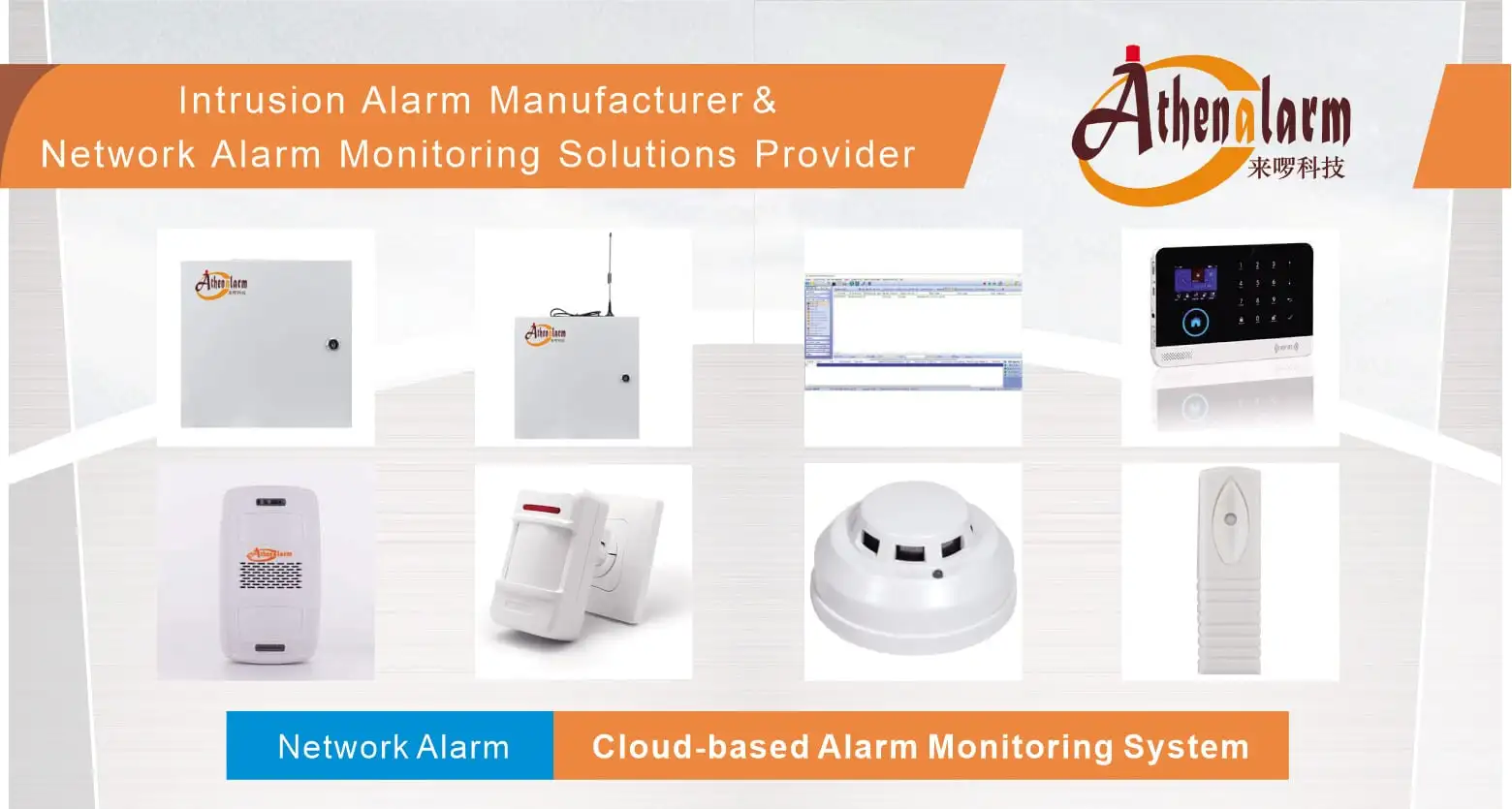
How Burglar Alarm Control Panels Work: A Practical Guide to System Architecture, Intelligent Detection, Integration, and Reliable Security Operations
1. What Are Burglar Alarm Control Panels—and Why They Define Your Entire Security Program
A burglar alarm control panel is not simply a piece of hardware installed in a back room. It is the decision-making core of your entire intrusion detection infrastructure—the component through which every sensor reading, every alert, every automated lock command, and every notification transmitted to a monitoring center must pass. Get it right, and you have a system that is fast, reliable, and scalable. Get it wrong, and no quantity of cameras, sensors, or perimeter barriers will compensate for its structural deficiencies.
In the professional security industry, burglar alarm control panels are evaluated not as commodity components but as strategic platforms. The panel you select determines the maximum number of zones your system can manage, the communication protocols available for monitoring center integration, the cybersecurity posture of your physical security infrastructure, and the degree to which your alarm system can interact intelligently with access control, CCTV, building automation, and enterprise IT systems. For procurement managers, security integrators, and technical directors, the control panel specification is the most consequential decision in the entire system design process—and it deserves the analytical rigor typically reserved for enterprise software procurement.
This guide examines 16 critical functions that define the operational capability of a modern burglar alarm control panel. These functions span system architecture, zone management, intelligent signal processing, communication redundancy, automation logic, cybersecurity design, installation methodology, lifecycle management, and the emerging technology directions that will shape the next generation of intrusion detection systems. Whether you are specifying a solution for a 200,000-square-foot distribution center, evaluating competing platforms for a multi-site enterprise rollout, or building out a regional security program for a commercial property portfolio, this article provides the depth and precision to support confident, well-informed decisions.
1.1 The 16 Critical Functions at a Glance
| # | Function | Primary Value |
|---|---|---|
| 1 | Central Processing Architecture | Real-time, deterministic alarm response |
| 2 | Zone Configuration and Management | Granular intrusion detection coverage |
| 3 | Intelligent Signal Processing | False alarm reduction at source |
| 4 | Alarm Output Mechanisms | Multi-channel deterrence and response |
| 5 | Remote Communication and Alert Transmission | Reliable, multi-format alert delivery |
| 6 | Dual-Path Redundant Communication | Eliminating single-point communication failure |
| 7 | User Interface and Access Control | Operational usability and access security |
| 8 | Role-Based Permissions and Audit Logging | Accountability and compliance |
| 9 | Programmable Automation Logic | Context-aware, conditional security responses |
| 10 | Surveillance System Integration | Alarm-triggered video verification |
| 11 | Access Control and Smart Building Integration | Unified physical security management |
| 12 | Cybersecurity Architecture | Protection against network-level threats |
| 13 | Installation and Commissioning Workflow | Quality assurance from day one |
| 14 | Maintenance and Lifecycle Management | Long-term system reliability |
| 15 | Procurement Criteria for B2B Buyers | Platform selection framework |
| 16 | Future Technology Directions | Investment-proofing your procurement |
2. Central Processing Architecture
The central processing unit (CPU) embedded within a burglar alarm control panel is its operational foundation. It executes the system firmware, interprets incoming sensor signals, applies decision logic, coordinates outputs, manages communication channels, and maintains comprehensive event logs—all in real time and with sub-second latency.
A well-engineered control panel CPU operates on a deterministic, interrupt-driven architecture rather than a general-purpose operating system. This distinction is not academic: it ensures that alarm events are processed without being queued behind lower-priority tasks. When a door contact triggers at 2:47 a.m., the system cannot tolerate delays introduced by background processes, memory garbage collection, or OS scheduling. Deterministic processing means the response is predictable, fast, and verifiable.
Beyond the CPU itself, the hardware subsystems that support it are equally critical to overall system performance:
Input Interfaces connect wired sensors via terminal blocks and wireless sensors via RF receivers operating at 433 MHz, 868 MHz, or proprietary encrypted frequencies. Each input is continuously polled or interrupt-triggered to detect state changes with no perceptible delay.
Output Interfaces include relay contacts, transistor-driven outputs, and open-collector terminals capable of driving sirens, strobes, magnetic locks, emergency lighting, and auxiliary equipment. High-quality panels specify relay ratings—typically 1–5A at 12–30VDC—and support normally-open, normally-closed, and pulsed output configurations.
Power Management Subsystems incorporate AC/DC conversion, surge and spike protection, 12V sealed lead-acid (SLA) or LiFePO4 battery backup, and intelligent charging circuits that monitor battery health continuously. Battery backup capacity should be sized to match the facility’s risk profile: enterprise deployments commonly specify 24–72 hours of standby operation.
Non-Volatile Memory stores firmware in ROM or flash, user configuration in EEPROM or NVRAM, and event history in dedicated storage capable of retaining 50,000–500,000 records depending on panel grade. Watchdog timer circuits automatically restart the CPU if firmware hangs, preventing silent system failures that would otherwise go undetected.
Procurement Tip: When evaluating panels at this level, ask vendors directly: What is the event log capacity? What is the rated standby battery life under full load? Can firmware be updated remotely with cryptographic verification, or does it require physical access?
3. Zone Configuration and Management
Zones are the fundamental organizational unit of any intrusion detection system. Each zone represents a logical grouping of one or more sensors, assigned specific behavioral rules that govern how the system responds when that zone is triggered. Effective zone design is not merely a technical exercise—it is a strategic decision that directly impacts operational efficiency, alarm accuracy, and incident response speed.
3.1 Zone Types in Professional-Grade Panels
| Zone Type | Behavior | Typical Application |
|---|---|---|
| Instant | Triggers alarm immediately on activation | Perimeter doors and windows |
| Entry/Exit Delay | Allows 15–60 seconds for authorized access before triggering | Main staff entry points |
| 24-Hour | Always active regardless of arm/disarm state | Hold-up buttons, tamper circuits, fire inputs |
| Panic | Silent or audible alarm on activation | Dedicated panic buttons, duress codes |
| Fire | Dedicated circuit with specific output behavior | Smoke and heat detectors |
| Bypass-Enabled | Authorized temporary exclusion from active system | Doors that must remain open during business hours |
Zone Supervision adds a critical layer of integrity monitoring. Supervised zones use end-of-line (EOL) resistor circuits that allow the panel to continuously verify whether sensor wiring is intact, shorted, or open. Any unauthorized cut or short-circuit in the wiring immediately triggers a tamper condition—this is a non-negotiable feature for any professional installation.
Zone Partitioning enables a single panel to manage multiple independent security areas. A multi-tenant commercial building may have one panel managing ten separate tenant zones, each with its own arming schedule, user codes, and event log. Partitioning is equally essential in facilities where security clearance levels differ across areas.
Cross-Zoning is an advanced technique requiring two separate zones to trigger within a defined time window before an alarm is confirmed. This approach is particularly effective in high-traffic environments where a single motion detector activation might be caused by HVAC-driven airflow, equipment vibration, or passing vehicle headlights. Cross-zoning significantly reduces false alarm rates in these scenarios without compromising detection reliability.
Enterprise-grade systems support 32 to 512 zones with addressable sensor buses, enabling granular identification of the exact device that triggered an event—critical for large campuses where “Zone 4 alarm” is insufficient information for a responding security officer.
4. Intelligent Signal Processing and False Alarm Reduction
False alarms are the single greatest operational liability in burglar alarm system management. They erode trust among security personnel, consume monitoring center resources, risk progressive financial penalties in jurisdictions that impose fines for repeated unnecessary dispatches, and ultimately lead facilities teams to disable or work around alarm notifications. Addressing false alarms is not optional—it is foundational to a professionally specified system.
Modern burglar alarm control panels address this challenge through multiple intelligent processing layers working in combination:
Pulse Count Logic requires a defined number of signal pulses within a fixed time window before confirming an alarm. A PIR motion sensor that pulses once is treated as noise; one that pulses three times within ten seconds triggers an alarm event. This approach filters out brief signal spikes caused by electromagnetic interference, power fluctuations, or momentary sensor instability.
Digital Signal Processing (DSP) is applied to sensors whose outputs are waveform-based rather than simple on/off states. Glass break detectors generate a characteristic acoustic signature: a low-frequency flex followed by a high-frequency shatter. DSP algorithms analyze this signature pattern in real time and reject signals that do not match the expected acoustic profile.
Environmental Compensation dynamically adjusts detection thresholds based on ambient conditions. Temperature significantly affects PIR sensor sensitivity—a warm summer day with substantial thermal contrast produces more background radiation than a cool winter morning. Advanced panels integrate temperature and humidity readings to recalibrate sensor sensitivity continuously, maintaining consistent performance across seasons without manual adjustment.
Anti-Masking Detection identifies attempts to defeat sensors by spray-painting lenses, covering them with tape, or placing objects directly in front of them. Anti-masking circuits in passive infrared detectors continuously verify that the sensor’s field of view is unobstructed. A masking attempt triggers a tamper condition immediately—before any intrusion attempt is even made.
AI-Based Pattern Recognition is now incorporated into higher-grade panels and their associated sensor platforms. Machine learning models trained on historical event data distinguish between the movement profile of a human intruder and those of pets, swinging ceiling fans, or equipment vibration. Some systems now include behavioral anomaly detection that flags activity statistically unusual for a given location and time, even when no explicit sensor threshold is crossed.
For B2B deployments where false alarm rate is a tracked performance metric, specifying panels with multi-layer signal validation is a significant risk mitigation strategy with measurable ROI.
5. Alarm Output Mechanisms
When an intrusion is confirmed, the control panel must execute an immediate, coordinated response across multiple output channels. The design of this output logic directly impacts deterrence effectiveness, personnel response time, and post-incident documentation quality.
Audible Alarms represent the most immediate deterrent output. Professional-grade external sirens range from 100 to 120 dB at one meter—sufficient to be heard across large facilities or adjacent properties. Internal sounders (80–100 dB) alert occupants and disorient intruders. Panels should support self-contained siren units with internal batteries and tamper protection, ensuring that cutting the wire to the siren does not silence the alarm.
Visual Indicators include xenon strobe lights and LED arrays that mark active alarm zones. Strobes serve dual purposes: they guide responding personnel to the affected area, and in high-ambient-noise environments, they provide visual confirmation of an active alarm to individuals who may not hear the audible signal clearly.
Relay Outputs are programmable contacts that can activate virtually any connected device: magnetic door locks in fail-secure or fail-safe configurations, emergency lighting, powered gates, smoke curtains, or facility-wide lockdown systems. The number and current rating of relay outputs is a key specification—enterprise panels typically offer 8–16 relay outputs with additional expansion module support.
Remote Alerts transmitted over communication channels include push notifications to mobile applications, email alerts, SMS messages, and structured event data to monitoring center software. To be operationally useful, these alerts must include zone identification, event type, timestamp, and current system status.
Output logic should be fully programmable by zone, event type, time schedule, and alarm priority. A low-priority perimeter sensor activation during business hours might generate only a silent notification to the security desk. The same zone activated at 3:00 a.m. should trigger full sirens, strobe lights, and an immediate monitoring center voice call—automatically, without manual intervention.
6. Remote Communication and Alert Transmission
The effectiveness of a burglar alarm system depends entirely on its ability to transmit alert information reliably, rapidly, and securely to the appropriate recipients. A panel that detects an intrusion but fails to communicate that event delivers no meaningful security value.
PSTN Dialers use the public switched telephone network to call pre-configured numbers using DTMF tones or recorded voice messages. While now considered legacy technology, PSTN remains relevant in rural areas or jurisdictions where cellular coverage is inconsistent.
GSM/4G/LTE Modules provide cellular communication for SMS, voice, and data-over-cellular transmission. Cellular is increasingly the primary channel for commercial systems due to its independence from the property’s broadband infrastructure: cutting an internet cable does not disable cellular-based alarm reporting.
IP-Based Communication over Ethernet or Wi-Fi leverages TCP/IP, HTTPS, or MQTT protocols to transmit structured event data to cloud platforms or monitoring center software. IP communication enables high-bandwidth, bidirectional connectivity—making it possible to retrieve full event logs, push configuration updates, and perform remote diagnostics without dispatching a technician.
Cloud Connectivity enables over-the-air (OTA) firmware updates, real-time diagnostics, mobile push notifications, and web dashboard access from any location with internet access—a material operational advantage for organizations managing security across multiple sites simultaneously.
Configuration requirements for IP communication—including correct APN settings for cellular modules, firewall rules permitting outbound connections on relevant ports, and DNS resolution reliability—must be validated during commissioning and re-validated after any network infrastructure changes.
7. Dual-Path and Redundant Communication
Single-channel communication is a structural vulnerability. If the panel’s primary alert transmission path fails—due to a cut cable, cellular tower outage, or ISP disruption—and no backup exists, the system operates silently during precisely the period when communication matters most.
Dual-path communication is the professional standard for any installation where reliable alarm reporting is required:
- Primary Path (IP/Ethernet): High-speed, structured communication under normal conditions.
- Secondary Path (GSM/LTE): Automatically activates within seconds if the primary IP path becomes unavailable.
The control panel must monitor path availability continuously and switch to the backup path rapidly—not after a 30-minute timeout. Many panels also support path supervision polling, where the monitoring center software sends regular “heartbeat” requests to the panel; a failure to receive a response within a defined window triggers an immediate alert at the monitoring center.
Dual-SIM cellular modules add a further layer of redundancy, enabling automatic failover between two cellular networks from different carriers—critical in regions where single-carrier coverage is unreliable.
The communication protocol itself also matters. Proprietary manufacturer protocols often include encryption, acknowledgment-based delivery, and tamper detection that generic SMS or email notifications cannot provide. For high-security applications, Secure Remote Protocol (SRP) or similar acknowledged, encrypted transport protocols should be explicitly specified.
8. User Interface and Access Control
The user interface is the daily operational touchpoint between the control panel and the personnel who rely on it. A poorly designed interface drives dangerous workarounds—PIN codes written on sticky notes, zones left bypassed for convenience, systems left unarmed at night—that create precisely the vulnerabilities the underlying technology is designed to prevent.
Keypads remain the most common user interface for burglar alarm systems. Modern keypads should include a backlit alphanumeric or graphic display, clear audible keypress confirmation, zone status indicators, and fault reporting. System status must be communicated unambiguously: personnel should never have to memorize a sequence of beep patterns to determine whether the system is fully armed.
Touchscreen Panels provide a significantly richer user experience, enabling graphical floor plan display with active zone highlighting, multi-step armed state management, and integrated video preview from associated cameras. The trade-off is higher hardware cost and greater susceptibility to physical damage in industrial environments.
RFID and NFC Readers integrated into the keypad or as standalone modules allow arming and disarming via proximity cards or fobs, eliminating the need to memorize PIN codes. This is particularly valuable in facilities with high staff turnover or multiple shift workers who may not reliably remember numeric credentials.
Mobile and Web Dashboards extend system interaction to smartphones and desktop browsers, enabling remote arming, real-time event monitoring, report generation, and notification management. These interfaces must communicate with the panel over encrypted channels (TLS 1.2 minimum), and all remote sessions should require multi-factor authentication without exception.
9. Role-Based Permissions and Audit Logging
Access to burglar alarm system functions must be governed by clearly defined, role-specific permissions. This is both a security requirement and a compliance necessity in regulated industries.
9.1 Recommended Permission Model
| Role | Permissions |
|---|---|
| Administrator | Full access: user management, zone programming, system configuration |
| Manager | Arm/disarm all partitions, view event logs, generate reports; no configuration access |
| Guard / Operator | Arm/disarm assigned partitions only; no programming or log access |
| Temporary User | Time-limited, restricted partition access; automatically expires |
| Installer | Technical access for configuration and maintenance via a separate installer code |
Every user interaction—arm, disarm, zone bypass, access denied, configuration change—must be recorded in the event log with the user identity, precise timestamp, and action performed. This audit trail is essential for post-incident investigation, compliance reporting, and identifying anomalous behavioral patterns. A user who disarms the system 30 minutes before a reported theft will appear in the log.
Regular access audits should be scheduled quarterly at minimum: review the active user list, remove accounts belonging to departed employees, update access levels that no longer match current job roles, and verify that installer codes have not been shared with non-technical personnel.
10. Programmable Automation Logic
The distinction between a basic alarm panel and an enterprise-grade security platform lies largely in the sophistication of its automation logic engine. Advanced control panels support conditional, event-driven programming that extends system capability far beyond simple sensor-to-siren response.
Event-Driven Rules are if-then-else constructs linking sensor events to output actions:
- If a perimeter door opens between 22:00 and 06:00 on weekdays, activate the external siren and send an SMS to the security manager.
- If motion is detected in the server room AND an access card was not presented at the server room door within the preceding 30 seconds, trigger a silent alert to the monitoring center.
- If the panic button is activated, lock all perimeter doors, illuminate emergency lighting, and initiate a monitoring center voice call.
Scheduled Arming and Disarming automates system state management based on configured time schedules, eliminating dependence on manual arming by departing staff—a persistent and costly source of after-hours security gaps. Schedules should support different configurations for weekdays, weekends, public holidays, and custom date ranges.
Multi-Condition Logic enables complex rule construction using AND, OR, and NOT operators across multiple zones and system states, allowing nuanced responses that reflect real operational contexts rather than crude binary alarm triggers.
Protocol Integration with Building Management Systems (BMS) and SCADA platforms using Modbus RTU, KNX, BACnet, or OPC-UA protocols extends alarm panel automation into broader facility management workflows—enabling automatic HVAC shutdown in a zone following a fire alarm, or elevator lockdown during an intrusion event.
11. Integration with Surveillance Systems
A burglar alarm control panel operating in isolation from CCTV provides only half of the situational picture. Integration between the alarm system and video surveillance transforms reactive detection into proactive, verifiable security intelligence.
Alarm-Triggered Recording configures the video management system (VMS) to begin recording at the highest available quality and frame rate upon receipt of an alarm trigger from the control panel. In systems where continuous recording is cost-prohibitive, this approach ensures that footage from the period immediately before and after an alarm event is always captured and retained.
PTZ Camera Positioning allows the alarm panel to dispatch preset position commands to pan-tilt-zoom cameras, automatically directing coverage to the triggered zone. A perimeter fence sensor triggered at Zone 12 immediately moves the nearest PTZ camera to the preset covering that section of fence—without any operator intervention.
Video Verification provides monitoring center operators with a video clip or live stream immediately upon alarm receipt, enabling an informed dispatch decision within seconds rather than defaulting to emergency response for every alarm. This integration substantially reduces unnecessary emergency dispatches and their associated costs and legal liabilities.
VMS Event Log Synchronization exports alarm panel events into the video management system’s event database, enabling cross-referenced searches: Show all video footage from any camera active within 60 seconds of an alarm event at Zone 7 between January and March.
12. Integration with Access Control and Smart Building Systems
The convergence of physical security systems onto unified management platforms is now a mainstream enterprise requirement. Burglar alarm panels that support open integration protocols eliminate the data silos that historically forced security teams to manage disconnected systems with separate interfaces and inconsistent event records.
Access Control Synchronization links door controller state with alarm system logic. When the alarm system is armed in night mode, the access control system can automatically restrict entry to biometric-verified personnel only, regardless of card credentials. When an alarm triggers, all access points in the affected zone can immediately switch to lockdown mode, preventing unauthorized exit as well as entry.
HVAC and Lighting Integration enables coordinated responses that extend security value into energy management. Unoccupied zones can reduce HVAC output and dim lighting when the alarm system detects no motion, and restore normal conditions upon authorized access. In large commercial facilities, this integration delivers measurable, auditable energy savings.
SIEM Integration exports structured alarm event data to Security Information and Event Management platforms, where it can be correlated with network security events, access control logs, and HR system data to identify insider threat patterns or coordinated attack scenarios. This capability is particularly relevant for financial institutions, data centers, and critical infrastructure operators.
API-Based Integration using RESTful APIs or GraphQL interfaces allows alarm panel event data to be consumed by custom applications, enterprise dashboards, or third-party security platforms without requiring proprietary hardware gateways. This software-layer integration is the preferred approach in cloud-first organizations.
13. Cybersecurity Architecture
As burglar alarm control panels become networked, cloud-connected devices, they inherit all the cybersecurity risks associated with any IP-connected system. A panel with inadequate cybersecurity is not merely a weak link—it is an attack surface that adversaries can exploit to disable physical security systems remotely, gather intelligence about facility operations, or pivot to the broader corporate network.
13.1 Minimum Cybersecurity Requirements for Professional Deployments
Encrypted Communication: All data in transit between the panel, monitoring center, cloud platform, and user interfaces must be encrypted using TLS 1.2 or higher. Proprietary communication protocols that lack encryption are unacceptable in any security-conscious deployment.
Secure Boot: Panel firmware should implement a cryptographic verification process that prevents unauthorized or modified firmware from executing—protecting against firmware-level attacks that could disable alarm functions or exfiltrate configuration data.
Certificate-Based Authentication: Remote access to the panel’s web interface or API should require device certificates rather than simple username/password credentials, preventing credential-stuffing and brute-force attacks.
Firmware Update Security: OTA updates must be signed by the manufacturer and cryptographically verified by the panel before installation. Unsigned updates must be rejected regardless of delivery channel.
Network Isolation: Alarm panel networks should be segregated from general corporate networks using VLANs or physical separation. Firewall rules should permit only outbound connections on required ports, blocking all inbound-initiated connections except those originating from the monitoring center’s verified IP ranges.
Vulnerability Disclosure and Patch Response: Evaluate vendors on the speed and transparency of their response to reported vulnerabilities. A vendor that has never published a security advisory is not necessarily more secure—they may simply not be conducting security research on their own products.
Organizations deploying alarm systems in regulated industries should verify that the panel and its associated software meet ISO/IEC 27001, NIST SP 800-82, or the relevant sector-specific cybersecurity framework.
14. Installation and Commissioning Workflow
The technical quality of a burglar alarm system is ultimately realized—or undermined—during installation and commissioning. Errors made at this stage are difficult to detect and expensive to correct after handover. The following eight-step workflow establishes a quality-assured commissioning process.
Step 1 – Site Survey and Threat Assessment Conduct a structured walkthrough of the facility, identifying all entry and egress points, coverage blind spots, environmental hazards (electromagnetic interference sources, temperature extremes, vibration), and areas requiring heightened security priority. Document the survey with photographs and annotated floor plans.
Step 2 – System Design and Zone Planning Develop a detailed zone plan specifying sensor type, location, coverage angle, zone classification, and wiring route for each device. Define partition boundaries, arming schedules, output logic, and communication paths. Obtain written client approval before proceeding.
Step 3 – Panel and Sensor Placement Install the control panel in a secure, climate-controlled, access-restricted location—ideally a dedicated security equipment room or locked cabinet. Avoid locations adjacent to main entry doors or public spaces. Mount sensors according to manufacturer specifications for coverage geometry and installation height.
Step 4 – Wiring and Power Infrastructure Use shielded, fire-retardant cable routed in metal conduit where accessible. Maintain physical separation between alarm wiring and power cables to prevent electromagnetic interference. Document all cable runs with labels at both ends. Verify AC mains connection, battery backup capacity, and UPS integration before energizing.
Step 5 – System Configuration Program all zones, partition assignments, delay configurations, output logic, user codes, and communication parameters according to the approved design. Use the panel’s offline programming tool where available to prepare and document the configuration file before uploading to the panel.
Step 6 – Communication Path Setup and Validation Test each communication path independently: confirm IP connectivity, validate cellular signal strength and APN configuration, verify monitoring center polling acknowledgment, and test failover behavior by intentionally disabling the primary path. Document signal strength readings, poll response times, and failover switching times.
Step 7 – Functional Testing Simulate alarm events for every zone, verify correct output activation, confirm alert transmission to all configured recipients, and validate event log records. Test all tamper circuits, battery backup, and power failure behavior. Engage the monitoring center to verify correct event handling on their platform.
Step 8 – Documentation and Client Handover Provide a complete documentation package including: as-built wiring diagrams, zone schedule, user code list, configuration backup file, test results report, manufacturer manuals, firmware version record, and support contact details. Conduct a structured handover session with the client’s designated system administrators and security managers.
15. Maintenance and Lifecycle Management
A burglar alarm system is not a fit-and-forget installation. Without structured maintenance, sensor performance degrades, batteries fail silently, firmware vulnerabilities accumulate, and a system that was fully functional on commissioning day becomes progressively unreliable over subsequent months and years.
Monthly Checks: Test a representative sample of sensors (rotating through all zones over a quarterly cycle), verify alarm transmission to the monitoring center, confirm battery voltage readings, and review the event log for unexplained activations or communication failures.
Quarterly Reviews: Conduct a complete zone walk-test, review user access lists and remove inactive accounts, verify the current firmware version against the latest available release, and confirm that all tamper circuits are functioning correctly.
Battery Replacement: Replace sealed lead-acid batteries every 18–24 months regardless of apparent condition. Battery capacity degradation is not always evident from voltage readings alone—a battery reading 13V under no load may collapse under alarm load current. LiFePO4 batteries offer longer service lives of 5–7 years but should still be tested annually under load conditions.
Firmware Updates: Establish a process for monitoring manufacturer security advisories and applying updates within a defined window. Critical security patches should be applied within 30 days of release; feature updates can follow a quarterly schedule with appropriate pre-deployment testing.
Annual Professional Inspection: For enterprise or regulated environments, engage a qualified security technician for a comprehensive system audit: full zone testing, wiring inspection, power system load testing, communication path validation, configuration review, and compliance documentation.
Maintain a maintenance log recording the date, technician identity, work performed, parts replaced, test results, and any deferred items with expected resolution dates. This log is essential for insurance claims, compliance audits, and manufacturer warranty claims.
16. Procurement Criteria for B2B Buyers
Selecting a burglar alarm control panel platform is a long-term strategic commitment. The hardware specified today must support security requirements for 7–15 years, integrate with adjacent systems that may not yet be deployed, and remain actively supported by the manufacturer throughout its operational life.
Scalability: Evaluate the maximum zone, user, partition, and output capacity of both the base panel and its expansion architecture. A panel that meets current requirements but has no headroom for growth will require full replacement when the facility expands. Look for modular expansion capability and clear documentation of maximum supported configurations.
Communication Versatility: Specify panels that support hybrid communication—IP primary with cellular backup—as a baseline minimum. Evaluate the specific cellular network technology supported (4G LTE minimum; 5G preferred for future-proofing) and verify carrier compatibility across all deployment regions.
Certifications and Compliance: Verify compliance with relevant standards for your market: EN 50131 (Europe), UL 639 (North America), AS/NZS 2201 (Australia/New Zealand), or equivalent regional standards. For government or critical infrastructure deployments, additional certifications may be required. Confirm CE, FCC, and RCM marking as applicable to your jurisdiction.
Vendor Ecosystem and Support: Evaluate the vendor’s programming software quality, training program, technical documentation depth, firmware release history, and stated end-of-life support policy. A panel from a vendor that releases firmware updates irregularly and provides poor technical documentation will cost substantially more in total ownership than a slightly higher-priced alternative with a strong support ecosystem.
Open Standards and Integration: Specify panels that support open APIs (RESTful, MQTT), standard protocols (Modbus, BACnet, KNX), and documented integration with leading VMS and access control platforms. Proprietary integration requirements that lock you into a single vendor ecosystem create long-term cost and flexibility risks that compound over the life of the system.
Total Cost of Ownership: Look beyond the hardware purchase price. Factor in software licensing fees, annual maintenance contracts, cellular data costs, monitoring center integration fees, training costs, and the cost of planned expansion. A lower upfront hardware cost can easily be offset by significantly higher ongoing operational costs.
17. Future Technology Directions
The burglar alarm control panel market is undergoing a structural transformation driven by edge computing, artificial intelligence, cloud architecture, and cybersecurity-first design principles. Understanding these trends is essential for procurement decisions made today that will shape system capabilities for the next decade.
Edge AI Processing: The next generation of alarm panels integrates AI inference engines directly on the control panel hardware, enabling real-time behavioral analysis, anomaly detection, and false alarm suppression without cloud dependency. Edge AI eliminates the latency and privacy risks of cloud-based video analytics while delivering detection capabilities previously exclusive to enterprise VMS platforms.
Full Cloud Management: Cloud-native alarm platforms are emerging that move configuration, monitoring, and analytics entirely to cloud infrastructure. This model enables true multi-site management from a single dashboard, predictive maintenance based on aggregated system telemetry, and automatic scaling of monitoring resources without hardware upgrades.
Zero-Trust Security Architecture: Future panels will implement zero-trust principles—treating every connection request, including those originating from within the monitoring center network, as untrusted until cryptographically verified. This approach eliminates the implicit trust relationships that have historically been exploited in physical security system breaches.
IoT Ecosystem Interoperability: Matter protocol adoption and expanded support for Thread mesh networking are creating new possibilities for alarm system integration with building automation, energy management, and enterprise IoT platforms. Panels that participate in these ecosystems can share sensor data across multiple system domains without proprietary gateways or manual data export.
Sustainable Design: Energy-efficient hardware design, solar power compatibility, and lithium iron phosphate battery adoption are reducing both the environmental impact and the operational cost of burglar alarm systems. For organizations operating under sustainability mandates or ESG reporting requirements, these features are increasingly relevant procurement criteria.
18. Conclusion
The 16 critical functions covered in this guide—from central processing architecture and zone management through intelligent signal processing, communication redundancy, cybersecurity design, and future-ready integration—define what separates a professionally engineered burglar alarm control panel from a commodity product.
For B2B professionals making procurement decisions, the fundamental principle is this: the control panel is not a line item to optimize for upfront cost. It is the platform on which your entire intrusion detection strategy is built. A panel with insufficient zone capacity, inadequate communication redundancy, poor cybersecurity architecture, or limited integration capability will constrain your security program and require expensive replacement long before its physical lifespan ends.
Invest in platforms that meet your current requirements with clear headroom for growth, that support open integration standards, that are backed by vendors with demonstrated commitment to cybersecurity and long-term product support, and that provide the automation logic and communication reliability that modern security operations demand. Applied systematically, the 16 functions discussed here provide a complete framework for specifying, evaluating, deploying, and maintaining burglar alarm control panels across commercial, industrial, and enterprise environments—delivering reliable, scalable, and defensible protection for the full operational life of the system.
19. Frequently Asked Questions
1. What is a burglar alarm control panel and what does it do?
A burglar alarm control panel is the central processing hub of an intrusion detection system. It receives signals from all connected sensors and detectors, evaluates them against programmed rules, triggers appropriate alarm outputs (sirens, strobes, relay contacts), and transmits event notifications to monitoring centers and designated personnel. Every function in the alarm system—from zone management and user access control to automated lockdown and video integration—is coordinated through the control panel.
2. How many zones do I need in a burglar alarm control panel for a commercial facility?
Zone requirements depend on facility size, layout complexity, and the level of detection granularity required. A small commercial premises may operate adequately with 8–16 zones. Mid-size facilities typically require 32–64 zones. Enterprise installations—distribution centers, multi-floor office buildings, data centers—often require 128–512 addressable zones with expansion module support. As a rule, always specify a panel with at least 30% more zone capacity than your immediate requirements to accommodate future expansion.
3. What is dual-path communication in a burglar alarm system and why is it important?
Dual-path communication means the alarm control panel uses two independent transmission channels to report events—typically IP/Ethernet as the primary path and GSM/LTE cellular as the backup. If the primary path fails due to a cut cable, internet outage, or ISP disruption, the panel automatically switches to the cellular path within seconds, maintaining uninterrupted communication with the monitoring center. Dual-path is the professional standard for any installation where continuous alarm reporting is a requirement.
4. How do burglar alarm control panels reduce false alarms?
Modern panels employ multiple signal validation layers to suppress false alarms: pulse count logic (requiring multiple pulses within a time window before confirming an event), digital signal processing (matching sensor output patterns to known threat signatures), environmental compensation (adjusting detection thresholds based on temperature and humidity), anti-masking detection, and cross-zone logic (requiring two independent zones to trigger before confirming an alarm). AI-based pattern recognition is now available in higher-grade panels, enabling the system to distinguish human intruders from pets, equipment vibration, and environmental movement.
5. What cybersecurity features should I require in a networked burglar alarm control panel?
At minimum, specify: TLS 1.2 or higher encryption for all data in transit, secure boot with cryptographic firmware verification, certificate-based authentication for remote access, cryptographically signed OTA firmware updates, and network segmentation (VLAN isolation from corporate networks). For regulated industries, verify alignment with ISO/IEC 27001 or NIST SP 800-82. Avoid panels that use unencrypted proprietary communication protocols or that have not published any security advisories—this typically indicates an absence of security research rather than an absence of vulnerabilities.
6. What certifications should a burglar alarm control panel have for professional B2B installations?
Certification requirements vary by region and application. EN 50131 is the primary standard in Europe, covering grades 1–4 based on security risk level. UL 639 is the relevant standard in North America. AS/NZS 2201 applies to Australian and New Zealand deployments. For government, financial, and critical infrastructure applications, additional framework compliance (such as NIST or sector-specific standards) may be mandatory. Confirm CE, FCC, or RCM marking as applicable to your jurisdiction, and verify that the panel grade matches the risk classification of your facility.
7. How do burglar alarm control panels integrate with CCTV and video management systems?
Integration between alarm control panels and video management systems (VMS) enables alarm-triggered recording, automated PTZ camera positioning to the triggered zone, video verification for monitoring center operators, and synchronized event log cross-referencing across both platforms. Integration is typically achieved via API connections, dry contact triggers, or dedicated integration middleware. Specifying a panel that supports open integration protocols (rather than proprietary gateways) ensures compatibility with a broader range of VMS platforms and avoids vendor lock-in.
8. What is role-based access control in a burglar alarm system?
Role-based access control (RBAC) assigns specific system permissions to defined user roles—administrator, manager, guard, temporary user, and installer—rather than giving all users identical access. This limits the actions any individual can perform based on their operational responsibilities. Every action taken by each user is recorded in the audit log with a timestamp and user identifier, creating a verifiable event trail essential for post-incident investigation and compliance reporting.
9. How often should a commercial burglar alarm system be professionally maintained?
A structured maintenance schedule should include monthly checks (sensor sampling, battery voltage verification, event log review), quarterly reviews (full zone walk-test, user access list audit, firmware version verification), battery replacement every 18–24 months for sealed lead-acid types, and an annual comprehensive professional inspection covering full zone testing, wiring inspection, power system load testing, communication path validation, and compliance documentation. Maintaining a detailed maintenance log is essential for insurance claims, warranty support, and regulatory audits.
10. What should B2B procurement teams evaluate beyond hardware price when selecting burglar alarm control panels?
Total cost of ownership (TCO) is the correct evaluation metric. Beyond hardware purchase price, factor in: software licensing and annual maintenance fees, cellular data plan costs, monitoring center integration and ongoing monitoring fees, training costs for security and facilities personnel, planned expansion costs, and the cost of system replacement if the vendor discontinues support prematurely. A panel with a higher upfront cost but a strong vendor ecosystem, open integration standards, long-term firmware support, and modular expansion capability will typically deliver lower TCO over a 10-year operational horizon than a cheaper alternative with a limited support lifecycle.
