
Upgrading an Existing Bank Security System: From Fragmented Protection to Integrated Security
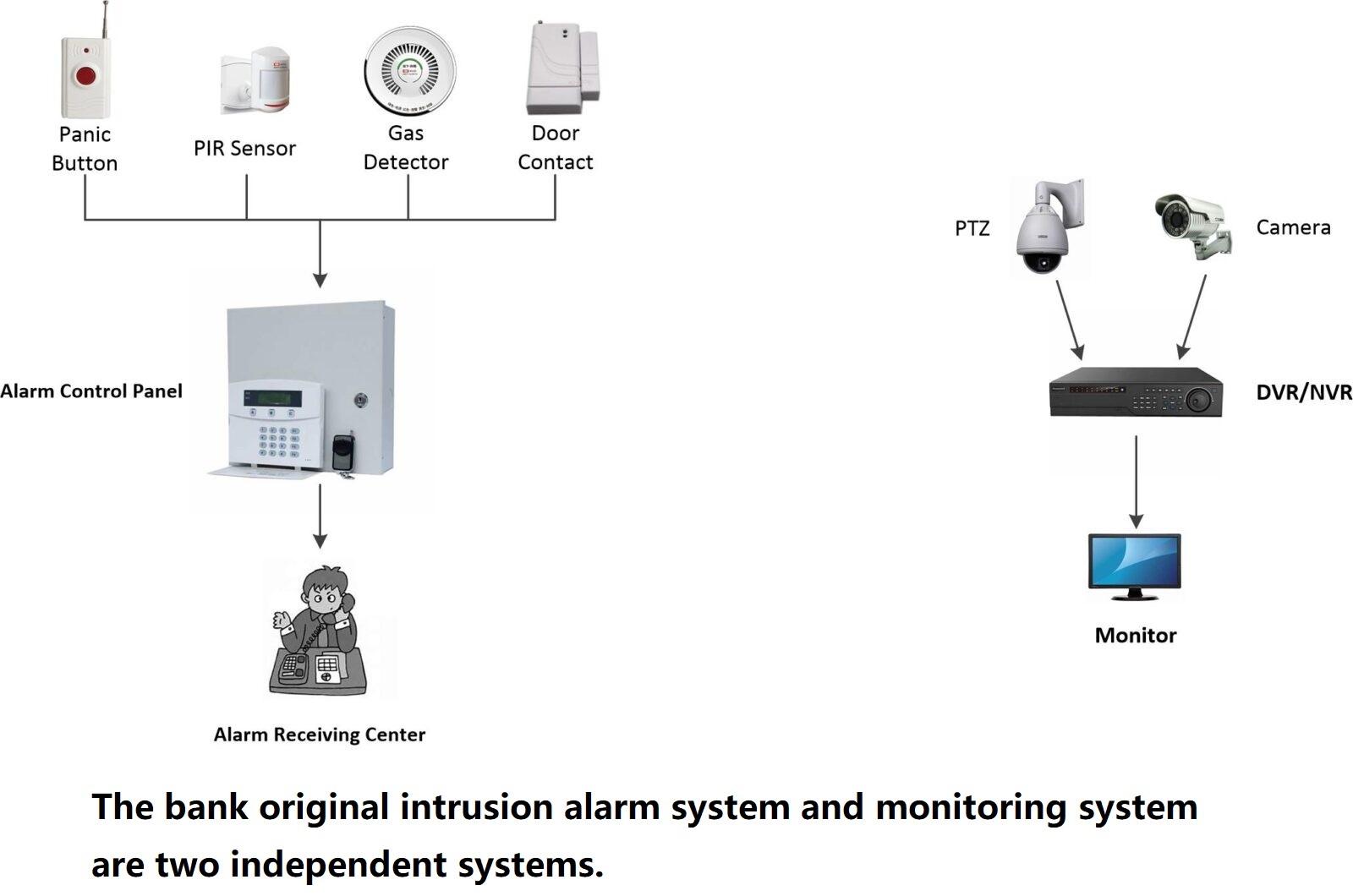
Many existing bank security environments were built incrementally: intrusion alarms, surveillance cameras, access control, and communication links were added branch by branch, often at different times and without a shared operating model. The result is a security environment that reacts to individual events rather than presenting a coordinated, organization-wide view. Upgrading such a system is not primarily a matter of replacing what already exists; it is a matter of connecting the detection, verification, monitoring, communication, and supporting protection functions that are already in place into one coordinated security environment.
This article explains what that integration involves at the system and operational level: how alarm events can be verified through video, how distributed branches can be monitored from a centralized security operations center (SOC) without eliminating local security functions, how communication paths can fail over to maintain alarm transmission, where AI-assisted filtering fits into this process, and how physical, cyber, and environmental protection remain connected layers within the same upgraded environment.
1. What an Integrated Upgrade Changes in an Existing Bank Security Environment
An integrated upgrade of an existing bank security system connects intrusion alarms, surveillance, access control, communications, centralized monitoring, cyber protection, and environmental detection into a coordinated operating environment. It does not replace these functions with a new architecture; it changes how they work together.
1.1 From Siloed Security Functions to a Coordinated Environment
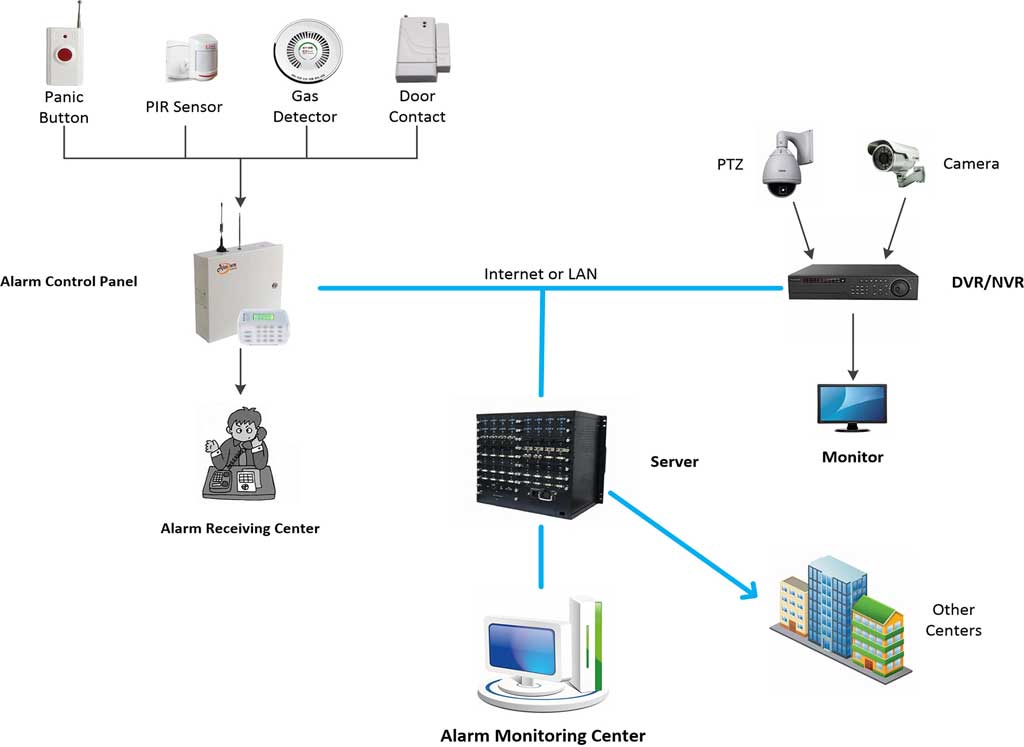
In a fragmented setup, an intrusion alarm, a camera system, and an access-control panel may each operate as separate, largely self-contained functions. An alarm event may not automatically bring up a relevant video feed; a branch may not automatically communicate its status to a central platform; access-control activity may remain locally logged rather than visible to centralized security operations. Integration addresses this by linking these functions so that a single security event—an alarm trigger, an access-control action, an environmental alert—can be understood in relation to the other systems around it, rather than in isolation.
This distinction matters because simply adding more devices to a branch does not resolve fragmentation. The upgrade objective is architectural: connecting what already exists so that information flows between systems and toward centralized visibility.
1.2 Distributed Branch Security with Centralized Monitoring
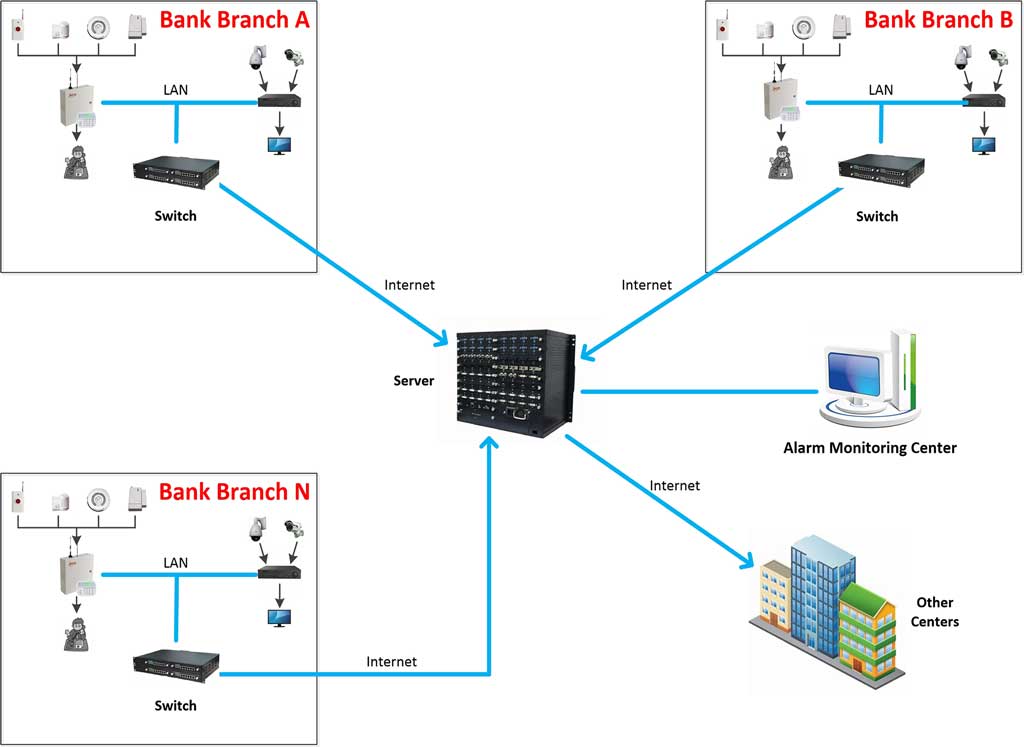
An integrated upgrade preserves the distributed-branch model—each branch continues to operate its own alarms, cameras, and access control—while adding a centralized layer that receives security events from multiple branches. Branch security systems communicate events to a centralized or cloud-connected platform, which gives a security operations center organization-wide visibility rather than a branch-by-branch view. The exact topology connecting branch systems to this centralized layer is not specified beyond this distributed-branch-to-centralized-monitoring relationship, and this article does not assume a specific cloud provider or network design.
2. How Alarm and Video Verification Connect Detection to Operator Response
Alarm/video verification is one of the highest-value mechanisms in an integrated upgrade because it directly addresses a recurring operational problem: alarms that cannot be assessed quickly generate unnecessary dispatches.
2.1 Alarm Event → Video Verification → Operator Assessment
When an intrusion alarm is integrated with corresponding video, an alarm event can bring up a live video pop-up from the relevant camera, along with incident recording, so that an operator can assess the situation before or during the response decision. The sequence is: alarm trigger → corresponding video feed/pop-up → operator verification → recorded evidence → response or escalation decision.
This relationship is intentionally described at the workflow level rather than the implementation level. The specific synchronization mechanism, integration protocol, camera technology, and any latency between the alarm and the video feed are not established, and this article does not assign a specific performance figure to that synchronization.
2.2 Using AI-Assisted Filtering Within the Verification Process
AI/ML-based filtering and behavioral analytics can operate inside this same alarm/video workflow, assisting in distinguishing potentially relevant security events from routine activity before or alongside operator review. AI in this context is an enabling function that supports the verification process—it is not the primary subject of the upgrade, and it does not replace operator verification.
The specific AI model, its accuracy, its degree of autonomy, or its processing architecture are not established. Where this article refers to AI-assisted filtering, it should be read as a supporting analytical capability within the broader monitoring process, not as a standalone detection guarantee.
2.3 What the Project-Specific False-Dispatch Evidence Shows
A described project reported a false-dispatch reduction of more than 70% following an alarm/video verification upgrade. This figure is presented as project-specific operational experience, not as a universal benchmark or a guaranteed outcome for any given deployment. The mechanism it illustrates—that alarm/video verification and AI-assisted filtering can help distinguish relevant events from false or non-critical alerts—is the retrievable insight; the specific percentage should not be generalized beyond the project it describes.
3. Centralized Monitoring for Multiple Bank Branches
Centralized monitoring is the architectural layer that gives an integrated upgrade its organization-wide visibility.
3.1 Branch Security Systems and the Central Security Platform
Distributed branch security systems can communicate security events—alarms, access-control activity, environmental alerts—to a central security platform or SOC. This gives operators a consolidated view across multiple branches instead of requiring separate monitoring for each location. Security platforms connected in this way also provide security information and controls to authorized remote operators, supporting monitoring and response actions from a centralized point.
3.2 Centralized Monitoring Without Replacing Local Branch Security
Centralization complements rather than replaces branch-level security functions. Local alarms, cameras, and access control continue to operate at the branch; the centralized layer adds visibility and coordinated response on top of these local functions rather than substituting for them. This distinction is a mandatory part of understanding the upgrade correctly: an integrated system is not a removal of local protection but an added layer of organizational awareness.
4. Communication Resilience When a Primary Alarm Path Fails
A security system that depends on a single communication path for alarm transmission carries a structural risk: if that path fails, alarm events may not reach the monitoring platform at all.
4.1 Primary and Backup Communication Paths
Multiple communication channels can provide alternative transmission paths for alarm signals. Failover is the mechanism by which communication switches from a primary channel to a backup channel when the primary path becomes unavailable, allowing alarm transmission to continue rather than stopping entirely at the point of failure.
4.2 Transmission Methods and the Limits of the Failover Model
TCP/IP, GPRS, 4G, 5G, and satellite communication (where necessary) are identified as transmission methods that can support this kind of communication resilience. What is not specified is the exact failover hierarchy: which channel is treated as primary versus backup in a given deployment, the priority logic used to trigger a switch, or any guaranteed delivery outcome. This article does not assign a redundancy level, a named signaling protocol, or a specific failover topology to the model; failover should be understood as a resilience mechanism rather than a fixed technical specification.
5. Supporting Protection Layers in an Integrated Bank Security Environment
An integrated upgrade also has to keep physical, cyber, and environmental protection connected to the same security environment, rather than allowing any one of them to become a separate, standalone concern.
| Protection Layer | Representative Controls | Connection to Central Monitoring |
|---|---|---|
| Physical / ATM | Biometric access control, anti-skimming measures, tamper-resistant casings, vibration sensors, smart locks/barriers | Access and tamper events remain visible to centralized security operations |
| Cyber-physical | Multi-factor authentication (MFA), encryption, intrusion detection systems (IDS) | Protects connected platforms, communications, and authorized remote operator access |
| Environmental | Smoke, heat, and gas detection; automated suppression as an additional response mechanism | Hazard information feeds into the central security environment and response process |
5.1 Physical and ATM Protection as a Complementary Layer
Upgrading the digital and monitoring side of a bank security system does not remove physical vulnerabilities. ATMs and access points remain subject to intrusion or compromise regardless of how well the monitoring architecture is integrated. The physical controls identified for this layer—biometric access control, anti-skimming measures, tamper-resistant casings, vibration sensing, and centrally monitored smart locks/barriers—function as a complementary layer connected to the broader security environment rather than as a separate ATM-security subject.
5.2 Cyber Protection for Connected Physical-Security Infrastructure
Once physical-security functions are connected to a centralized or cloud-connected platform, that connectivity introduces cyber risk: unauthorized access to the platform, its communications, or its data could affect the physical-security environment it supports. Multi-factor authentication, encryption, and intrusion detection systems are identified as controls that reduce unauthorized access and help detect network threats affecting connected security infrastructure. These controls are described specifically in relation to protecting connected physical-security systems; this article does not treat cybersecurity as an independent IT-security framework, and it does not specify particular algorithms, certifications, or implementation details.
5.3 Environmental Detection Within Central Security Monitoring
Fire and environmental hazards—smoke, heat, and gas—can occur independently of any intrusion event, and an integrated bank security environment accounts for this by allowing environmental sensors to feed hazard information into the same central security system used for intrusion and access monitoring. Automated suppression is described as an additional response mechanism within this layer. Environmental detection remains a supporting layer here: detailed fire-engineering doctrine and regulatory fire-safety requirements are outside the scope of this integration discussion.
6. How Integrated Monitoring Supports Verification, Escalation, and Evidence
Integration only produces operational value if it translates into a usable response workflow at the monitoring center.
6.1 Verification and Remote Security Actions
Within the described environment, operators are expected to monitor branch activity, verify alarm events—including through the video verification process described earlier—and carry out remote actions where the platform supports them. This is the point at which the technical integration of alarms, video, access control, and communications becomes an operational capability rather than a set of connected devices.
6.2 Recording, Notification, Escalation, and Evidence Review
Beyond verification, centralized operations support incident recording, two-way audio where available, guard notification, and escalation—including escalation to police where warranted. Recorded evidence supports later review of an incident. This article describes these functions at the operational level; it does not define detailed emergency-response procedures or a specific police-system integration protocol, both of which remain outside the available evidence.
7. What an Existing Bank Security Upgrade Must Preserve—and What Remains Unspecified
Taken together, the preceding sections describe an upgrade that preserves local branch security functions while adding centralized visibility, verified alarm/video response, resilient communication, AI-assisted filtering, and connected physical, cyber, and environmental protection. The core decision-level understanding is that integration changes how these functions work together, not what they fundamentally are.
7.1 Architecture and Implementation Details That Require System-Specific Definition
Several implementation-level details are not established by the available technical information and should not be assumed when applying this understanding to a specific system:
- The exact system architecture or topology connecting branch systems to centralized/cloud monitoring.
- The specific alarm signaling or integration protocols used between alarms, video, and central platforms.
- The exact cybersecurity implementation behind MFA, encryption, and IDS.
- The specific AI/ML model, capability, or accuracy behind event filtering.
- The exact failover hierarchy or channel-priority logic behind communication redundancy.
- Applicable regulatory or compliance requirements, which vary by jurisdiction and institution.
- Any performance metric beyond the project-specific false-dispatch reduction already described.
- Detailed installation, maintenance, and lifecycle requirements.
These points remain open by design: they depend on the specifics of a given bank’s existing infrastructure and are not part of the validated technical basis for this article.
8. FAQ
Q1: How can an existing bank security system be upgraded from fragmented protection toward an integrated environment?
By connecting existing alarms, video, access control, communications, centralized monitoring, cyber protection, and environmental detection into a coordinated operating environment, rather than replacing the underlying infrastructure. The exact architecture connecting these functions is system-specific and not defined here.
Q2: How does alarm/video verification help reduce false alarms and unnecessary dispatches?
An alarm event can bring up corresponding video for operator verification before a dispatch decision is made, and AI-assisted filtering can help distinguish relevant events within that process. A described project reported a false-dispatch reduction exceeding 70%, but this figure is project-specific and not a universal benchmark.
Q3: What is centralized monitoring in a multi-branch bank security environment?
It is the communication of branch-level security events to a centralized or cloud-connected platform, giving a security operations center organization-wide visibility. Local branch security functions continue to operate; centralization adds visibility rather than replacing them.
Q4: How do backup communication channels support bank alarm transmission when the primary channel fails?
Failover allows alarm transmission to switch to a backup communication channel—using methods such as TCP/IP, GPRS, 4G, 5G, or satellite—when the primary path becomes unavailable. The exact priority logic and failover hierarchy are not specified.
Q5: What role does AI surveillance play in an integrated bank security upgrade?
AI/ML-based filtering and behavioral analytics assist in identifying potentially relevant security events within the alarm/video/monitoring workflow. It is an enabling function within the broader architecture, not a standalone detection system, and no specific model or accuracy level is established.
Q6: How can connected physical-security infrastructure be protected from cyber threats?
Multi-factor authentication, encryption, and intrusion detection systems are identified controls that reduce unauthorized access and help detect network threats affecting connected security platforms. This protection is scoped to the connected physical-security environment rather than functioning as a standalone IT-security framework.
Q7: How should physical and ATM protection remain part of an integrated bank security upgrade?
Through controls such as biometric access control, anti-skimming measures, tamper-resistant casings, vibration sensors, and centrally monitored smart locks/barriers, connected to the broader security environment. Digital and monitoring upgrades do not remove physical vulnerabilities.
Q8: How can environmental hazards be incorporated into the bank security environment?
Smoke, heat, and gas detection can feed hazard information into the same central security system used for intrusion and access monitoring, with automated suppression as an additional response mechanism. Detailed fire-engineering guidance is outside this scope.
Q9: How does centralized security operations support incident verification and response?
Operators monitor branch activity, verify alarms (including through video), take remote actions where supported, and manage notification, escalation, and recording for later evidence review. Detailed emergency-response or police-integration procedures are not defined here.
9. Appendix: System Component Checklist Appendix
- System Manufacturer Portal: burglar alarm manufacturer
- Enterprise Management Hub: enterprise alarm monitoring system
- Overall Network Alarm Framework: network alarm system
- Network Alarm Solution Overview: network alarm monitoring system solution
- Application Scenarios: network alarm monitoring system application
- High-Security Vault Protection: network bank vault alarm monitoring system solution
- Perimeter Intrusion Defense: network perimeter alarm system solution
- Commercial & Residential Scenarios:
- Field Control Panel Hardware: alarm control panel
- Motion & Perimeter Sensors:
- Standard PIR: PIR motion sensor
- Wide Angle PIR: wide angle PIR motion sensor
- Door & Window Contacts: door contact
- Emergency Hold-Up Devices:
- Hardwired Panic Button: panic button
- Wireless Hold-Up Trigger: wireless panic button
- Visual & Audio Alarm Accessories:
- Strobe Visual Signaling: warning light
- Audio Voice Annunciator: motion sensor sound player
- Compact Multi-Path Systems: GSM WiFi alarm system
- Official Brand Homepage: Athenalarm Security Solution
