
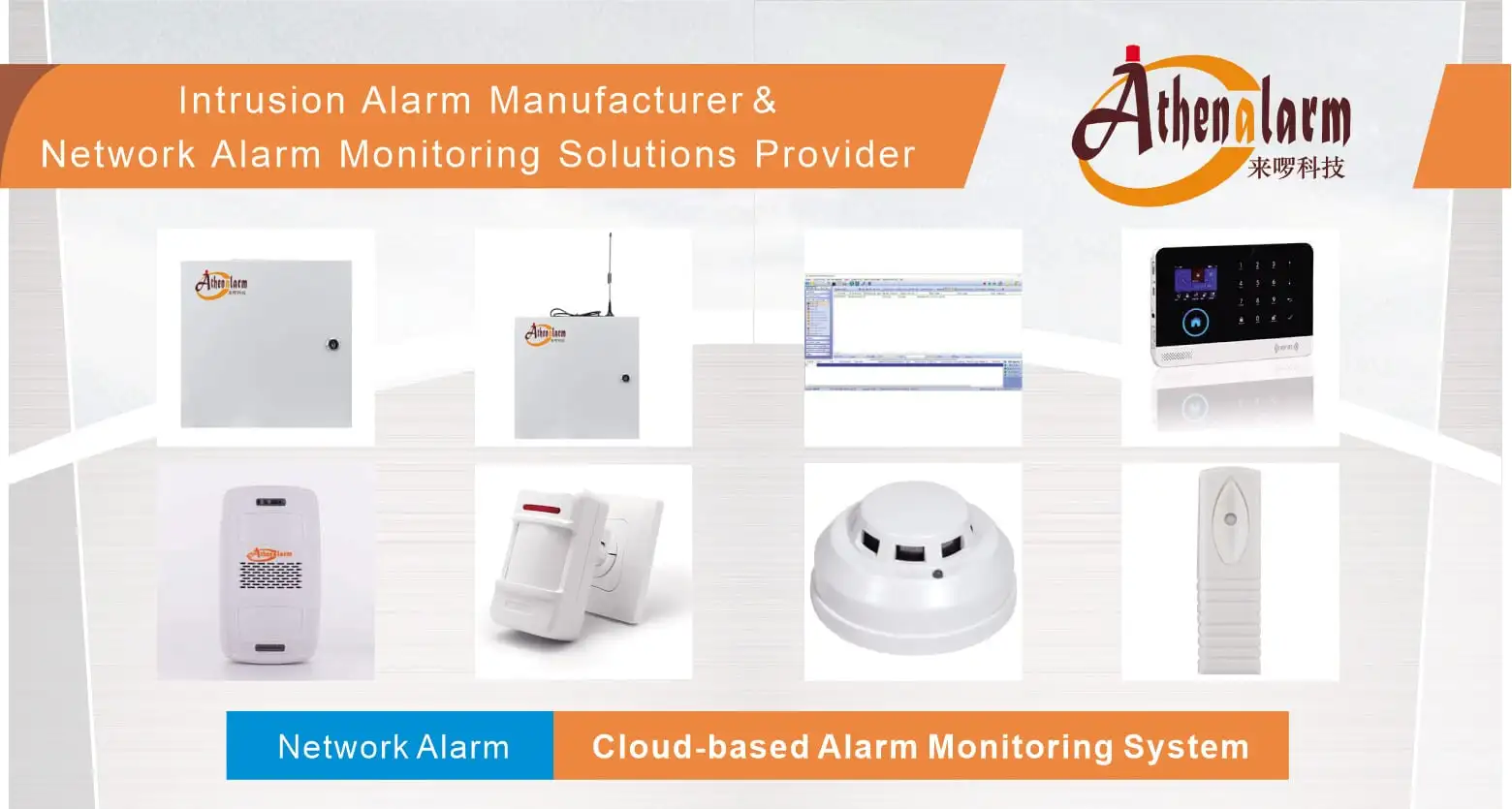
Anti-Theft Alarm System Deployment: Sector Applications and Technical Workflows
Introduction: Why One Alarm Architecture Cannot Fit Every Sector
A procurement team specifying an Anti-Theft Alarm System for a retail store, a bank branch, and a manufacturing plant will quickly discover that the same product category does not translate into the same deployment. A retailer needs theft detection at the point of exit and at checkout. A bank needs redundant communication paths and controlled access to vaults. A manufacturing site needs perimeter detection across open terrain and integration with production safety systems. The underlying entity — the Anti-Theft Alarm System — is consistent across all three cases, but the required detection method, verification depth, communication resilience, and integration scope are not.
This inconsistency creates a real operational problem: specifying an alarm system based on a generic feature list, rather than on the site’s risk profile, leads to either over-engineered deployments that inflate cost and maintenance burden, or under-engineered deployments that leave detection or verification gaps in exactly the areas where risk is highest. For security integrators, facility managers, and procurement teams, this is not an abstract concern — it directly affects capital planning, RFP language, installation scope, and long-term monitoring contracts.
The Anti-Theft Alarm System, at its core, is an event-detection and alerting infrastructure. It identifies unauthorized access or intrusion, generates an alarm event, and supports a path toward verification and response. What changes across sectors is not this core function, but the surrounding architecture: which sensors are deployed, how alarm events are verified before triggering a response, how communication is structured, and which external systems — CCTV, access control, POS, environmental sensors — the alarm system is expected to work alongside.
The remainder of this analysis works through that decision logic first, then applies it across six sectors: residential, financial, government/military, education, industrial, and retail. It closes with the cross-sector trade-offs, deployment lifecycle, and procurement considerations that connect these sector analyses into a single decision framework.
1. Why Anti-Theft Alarm System Requirements Change by Sector
1.1 Risk Profile Determines Security Architecture
The starting variable in any Anti-Theft Alarm System specification is not the technology catalog — it is the risk profile of the site. Risk profile is a function of three interacting factors: the protected assets (cash, personal property, sensitive data, production equipment, inventory), the physical environment (open campus, sealed vault area, large industrial perimeter, retail storefront), and the operational workflow that must continue uninterrupted (banking hours, 24/7 production, student movement between buildings, customer traffic).
A vault area and a dormitory hallway present entirely different detection problems even though both may use a similar underlying sensor technology. The vault area tolerates highly restrictive access because legitimate traffic is limited and scheduled. The dormitory hallway cannot tolerate the same restriction because continuous, unscheduled legitimate movement is the normal operating condition. This is why the architecture — not just the hardware — must be derived from the risk profile before any sensor selection occurs.
1.2 The Common Alarm Event Flow
Across sectors, the Anti-Theft Alarm System follows a consistent conceptual sequence. Sector differences appear in how each stage is implemented, not in whether the stage exists.
1.2.1 Detection and Alarm Generation
A sensor — PIR, microwave, glass-break, vibration, infrared beam, or RFID/EAS — identifies a condition consistent with unauthorized access or a theft-related event and generates an alarm event.
1.2.2 Communication and Alert Delivery
The alarm event is transmitted through a wired, wireless, or hybrid communication path toward a monitoring or management system. Depending on the deployment, this path may include cellular or 5G connectivity and, in higher-risk environments, redundant communication pathways.
1.2.3 Verification and Monitoring
Before or during response dispatch, the event may be corroborated through dual-sensor detection, video verification, or AI-based analytics — where these verification layers are present in the deployment.
1.2.4 Human or Automated Response
A monitoring center, on-site security personnel, or an automated mechanism (such as a lockdown routine) acts on the verified event.
1.3 Native Alarm Functions vs. Integrated Security Functions
One of the most common sources of procurement ambiguity is treating every function discussed alongside an Anti-Theft Alarm System as a native capability of the alarm system itself. In practice, many of the functions associated with sector deployments — biometric authentication, POS transaction analytics, CCTV footage review, machinery shutdown — belong to adjacent systems that the alarm system may integrate with, rather than functions the alarm system performs independently.
| Function | Alarm-System Role | External/Integrated Role |
|---|---|---|
| Intrusion detection | Core function | — |
| Alarm event generation | Core function | — |
| Video verification | Consumes verification context | Provided by CCTV/video system |
| Biometric authentication | May trigger or receive event context | Provided by access-control system |
| POS transaction context | May receive correlated event data | Provided by POS system |
| Environmental detection (fire/gas) | Depending on configuration | Often a separate environmental subsystem |
| Cloud-based multi-site oversight | Management/reporting layer | Provided by cloud management platform |
This boundary matters during procurement because it determines whether a stated requirement (for example, “biometric access control integration”) should be specified as part of the alarm-system contract or as a separate access-control procurement item with a defined interface to the alarm system.
2. Cross-Sector Criteria for Evaluating Anti-Theft Alarm System Deployment
2.1 Protected Assets and Threat Environment
The first evaluation criterion is what is being protected and from what type of threat: physical entry, coordinated theft, insider fraud, sabotage, or a combination. This determines whether detection needs to focus on perimeter breach, point-of-exit theft, controlled-area intrusion, or all three simultaneously.
2.2 Detection and Verification Requirements
2.2.1 PIR and Microwave Dual-Sensor Detection
Combining passive infrared and microwave detection modalities is one of the more common approaches to improving event confidence, because each sensor type responds to different physical stimuli, reducing the likelihood that a single environmental factor (temperature drift, small animals, HVAC airflow) triggers an alarm on its own.
2.2.2 Video Verification
Video verification adds a visual confirmation step before an event is escalated, which is particularly relevant where response dispatch has a real operational cost (security patrol, police callout, staff interruption).
2.2.3 AI Analytics
AI-based analytics, where deployed, support classification of detected events — distinguishing patterns consistent with legitimate activity from patterns consistent with intrusion. This is a supporting analytical layer rather than a replacement for sensor-level detection.
2.3 Communication and Monitoring Requirements
2.3.1 Wired and Wireless Communication
Wired communication paths are generally associated with signal stability in fixed installations; wireless paths offer installation flexibility, particularly in retrofit or leased environments where cabling is impractical.
2.3.2 Cellular / 5G Connectivity
Cellular and 5G connectivity extend alarm communication beyond fixed network infrastructure, which is relevant for remote or distributed sites.
2.3.3 Redundant Communication Pathways
In higher-risk environments — financial and government/military sectors in particular — dual communication pathways are used as a resilience approach so that a single communication path failure does not, by itself, prevent alarm delivery. The specific failover mechanism is deployment-dependent and should be defined during system design rather than assumed.
2.4 Integration Requirements
2.4.1 CCTV and Video Surveillance
Provides visual context and supports verification of alarm events.
2.4.2 Access Control and Biometric Systems
Manages and records authorized entry; may share event data with the alarm system in controlled-access environments such as vaults or dormitories.
2.4.3 POS and RFID/EAS Systems
Correlates transaction data or generates theft-related exit events at checkout and store-exit points.
2.4.4 Environmental and Operational Systems
Provides fire, gas, or vibration event data and, in industrial contexts, may interface with production equipment for automated shutdown — an application-level integration rather than a native alarm function.
2.5 Lifecycle and Operational Requirements
Every sector shares a lifecycle obligation: an alarm system is not complete at installation. It requires commissioning, training, ongoing monitoring, and maintenance to remain effective — a theme developed further in Section 10.
The table below summarizes how these criteria differ across the six sectors before the detailed analysis that follows.
| Sector | Primary Risk | Key Detection Need | Integration Need | Main Operational Constraint |
|---|---|---|---|---|
| Residential | Unauthorized entry | Entry-point detection | Smart-home/video | User accessibility |
| Financial | High-value asset loss, insider fraud | High-assurance detection | Access control, monitoring | Communication resilience |
| Government/Military | Sabotage, espionage | Tamper-resistant, high-security detection | Monitoring, security systems | Environmental/security constraints |
| Education | Property loss in open facilities | Zoned detection | Notification, monitoring | Accessibility |
| Industrial | Perimeter breach, production disruption | Perimeter/environmental detection | Operational systems | Site conditions |
| Retail | Theft/shrinkage | Exit-point and entry detection | POS/EAS/CCTV | Customer experience |
3. Residential Complexes: Accessibility and Smart-Environment Integration
3.1 Residential Risk and Protection Requirements
Residential deployments center on multiple entry points — windows, garages, balconies — combined with a strong expectation that the system does not interfere with daily household use. According to industry revenue reporting cited in the source material, residential applications accounted for more than 55% of global anti-theft alarm system revenue in 2022, reflecting the scale of this segment rather than a technical requirement distinct from other sectors.
3.2 Detection and Smart-Environment Functions
Entry-point sensors form the detection baseline. Beyond detection, residential deployments commonly layer in:
- Mobile application access for remote arming, disarming, and diagnostics
- Geo-fencing, which automates arming/disarming based on a user’s location, reducing reliance on manual operation
- Video verification, used here primarily to reduce false alarms by confirming visually whether a triggered sensor corresponds to an actual intrusion rather than a pet, visitor, or environmental factor
3.3 Residential Deployment Workflow
The residential workflow follows: site assessment of vulnerable entry points, selection between wired, wireless, or hybrid architecture based on the property’s construction and cabling access, professional installation and sensor configuration, resident training on system use and emergency protocols, and ongoing maintenance including cloud-based firmware updates and monitoring service where subscribed.
3.4 Residential Operational Trade-offs
The dominant trade-off in this sector is convenience versus intrusion-detection rigor. Aesthetic integration and minimal-friction interfaces are often prioritized by residents, but every added convenience feature (geo-fencing, voice control, pet-friendly sensitivity) is a deliberate trade against stricter detection sensitivity. Wired systems offer stability in new construction; wireless systems offer flexibility in existing structures without extensive rewiring.
4. Financial Institutions: High-Value Asset Protection and Communication Resilience
4.1 Financial-Sector Risk Profile
Banking environments face a dual threat surface: physical intrusion at vaults, teller areas, and ATMs, and insider-enabled fraud. This dual exposure is the primary reason financial-sector alarm architecture places greater emphasis on authentication and communication redundancy than most other sectors.
4.2 Detection and Controlled-Access Requirements
4.2.1 Vaults and High-Value Areas
Vault and teller-area protection typically combines intrusion detection with strict access logging.
4.2.2 ATM Protection
ATM-specific measures include tilt sensors, GPS-based tracking, and anti-drill defenses — detection methods tailored to physical attack methods specific to unattended cash-handling equipment.
4.2.3 Dual Authorization and Biometric Integration
Dual authorization procedures — requiring two authenticated individuals for sensitive actions — address insider-fraud risk. Biometric authentication (fingerprint, iris, facial recognition) is an access-control integration that may be linked to alarm-system event context rather than a native alarm function.
4.3 Communication and Monitoring Resilience
4.3.1 Dual Communication Pathways
Financial-sector deployments commonly specify dual communication pathways so that alarm-event delivery does not depend on a single transmission route.
4.3.2 Backup Power Considerations
Backup power supports continued operation of alarm and monitoring infrastructure during outages.
4.3.3 Central Monitoring
24/7 central monitoring centers receive alerts and coordinate response, often with direct links to law enforcement protocols.
4.4 Financial-Sector Integration and Compliance Context
4.4.1 Alarm and Surveillance Integration
Alarm events are frequently correlated with CCTV footage and, in some deployments, fraud-detection systems that flag suspicious transactions.
4.4.2 PCI-DSS and Other Applicable Frameworks
Financial institutions operate under frameworks such as PCI-DSS (payment data security) and Basel III (a banking capital and risk-management framework, not a technical alarm specification). These frameworks influence the operational context surrounding the alarm deployment rather than dictating a specific alarm-system technical configuration.
4.4.3 Why Compliance Requirements Must Be Jurisdiction-Checked
Because applicable requirements vary by jurisdiction, institution type, and contractual obligation, compliance mapping should be validated against the specific facility and regulator rather than treated as a fixed universal checklist.
4.5 Financial-Sector Operational Value
A well-specified alarm architecture in this sector reduces the likelihood of undetected physical intrusion and supports the audit trail institutions need for regulatory and insurance purposes.
5. Government and Military Facilities: High-Assurance Detection and Environmental Resilience
5.1 High-Security Risk Environment
Government and defense-related facilities face threats that include sophisticated bypass attempts, sabotage, and electronic jamming — a materially different threat model than commercial theft.
5.2 Detection, Tamper Protection, and Verification
5.2.1 High-Security Sensors
Sensors in this context are selected for resistance to bypass and tampering rather than general-purpose intrusion detection.
5.2.2 Tamper-Resistant Hardware
Tamper-resistant or tamper-proof enclosures protect the alarm hardware itself from physical interference.
5.2.3 Multi-Factor or Dual-Authorization Integration
Defense-lab scenarios may pair biometric authentication with RFID-based credentials as a dual-authentication approach, implemented at the access-control layer.
5.3 Communication Security and Environmental Resilience
5.3.1 Encrypted Communication
Encrypted communication protocols such as AES-256 are referenced in high-security deployments as a data-protection measure. This should not be interpreted as a guarantee that encryption alone prevents all forms of intrusion or jamming, nor that every Anti-Theft Alarm System in this sector uses an identical encryption implementation.
5.3.2 EMI/RF Interference Considerations
EMI/RF shielding addresses the risk of signal jamming or sabotage attempts against wireless alarm communication — a consideration specific to environments where such interference is a credible threat.
5.3.3 Monitoring and Failover Considerations
Dedicated command centers with continuous monitoring and failover monitoring capacity are typical in this sector, though the specific failover mechanism is deployment-dependent.
5.4 Standards and Compliance Must Be Deployment-Specific
References to Grade 3/4 certification and frameworks such as ISO, NIST, or NATO STANAG appear in this sector as context for the assurance level expected, not as universal certification requirements applicable to every government or military facility. The applicable standard depends on the specific facility classification, national regulations, and contractual mandate.
5.5 Maintenance and Authorized Operational Access
Maintenance in this sector is typically restricted to cleared personnel, reflecting the sensitivity of the protected environment and the need to control who can access alarm configuration and hardware.
6. Educational Institutions: Zoning Security Without Undermining Accessibility
6.1 Open-Campus Risk Profile
Educational facilities must remain open and accessible to students, staff, and visitors while still protecting dormitories, laboratories, libraries, and administrative areas — a structurally different constraint than a bank vault or industrial perimeter, where restricting access is the primary security tool.
6.2 Zoned Security for Different Facility Types
6.2.1 Dormitories
Dormitory zones require detection calibrated to continuous, unscheduled legitimate movement, making false-alarm control a practical priority rather than a secondary concern.
6.2.2 Laboratories
Laboratories holding sensitive equipment or materials may warrant more restrictive zoning than general academic buildings.
6.2.3 Libraries and Public Areas
Public-facing areas typically use lower-restriction detection focused on after-hours intrusion rather than daytime access control.
6.3 False-Alarm Reduction and Emergency Integration
6.3.1 Dual-Sensor Detection
PIR combined with microwave detection helps manage the false-alarm rate that open, high-traffic educational environments would otherwise generate.
6.3.2 Alarm Verification
Verification steps reduce unnecessary dispatch in zones with high incidental activity.
6.3.3 Emergency and Notification Systems
Alarm integration with PA systems and SMS alerts supports coordinated emergency notification across campus, connecting alarm events to broader life-safety communication.
6.4 Multi-Building and Multi-Campus Deployment
Multi-campus environments favor IP-based architecture for scalability, since managing zoned security across geographically distributed buildings through a single physical wiring scheme becomes impractical at scale.
6.5 Accessibility, Security, and Budget Trade-offs
The central lesson for this sector is that more restrictive security controls do not automatically produce better operational security if they interfere with the institution’s core function of open, continuous access. Budget management further constrains how uniformly advanced detection and verification technology can be deployed across every building type.
7. Industrial and Manufacturing Facilities: Perimeter Protection and Operational Continuity
7.1 Industrial Risk and Site-Environment Profile
Industrial sites combine large physical perimeters, variable terrain, and continuous production operations, creating a risk profile driven as much by site geography as by theft or sabotage intent.
7.2 Perimeter and Facility Detection
7.2.1 Infrared Beams
Infrared beam detection supports perimeter monitoring across open boundary lines.
7.2.2 Vibration Sensors
Vibration sensors and tripwires detect physical breach attempts at fencing or structural boundaries.
7.2.3 Perimeter and Entry-Point Protection
Combined perimeter methods reduce reliance on any single detection technology across an extended boundary.
7.3 Environmental and Operational Integration
7.3.1 Fire and Gas Sensing
Environmental sensors for fire and gas conditions are often deployed alongside intrusion detection in industrial settings, though these represent an adjacent monitoring function rather than core theft detection.
7.3.2 Vibration and Environmental Events
Vibration detection also serves a dual role in identifying both intrusion attempts and certain equipment-related anomalies.
7.3.3 Production Equipment Integration
In some deployments, breach detection is linked to automated production shutdowns — an application-specific integration that depends on the facility’s control-system architecture rather than a standard alarm-system feature.
7.4 Site Survey and Deployment Workflow
7.4.1 Terrain, Lighting, and Fencing
Geospatial survey work — assessing terrain, lighting conditions, and existing fencing — precedes system design in this sector more heavily than in most others, because detection reliability is directly affected by physical site conditions.
7.4.2 Wired, Wireless, and Hybrid Deployment
Hybrid wired/wireless architecture is common where remote areas of a large site cannot practically be wired, while core facility zones retain wired stability.
7.4.3 Remote Oversight
Centralized dashboards support oversight across dispersed industrial zones, including remote or solar-powered detection points in locations such as oil and gas sites.
7.5 Industrial Compliance and Operational Continuity
Frameworks such as OSHA and ISO 45001 relate to occupational safety management rather than functioning as alarm-system technical specifications; they are relevant context for how security operations intersect with worker-safety obligations, not a certification of the alarm hardware itself.
8. Retail and Commercial Enterprises: Loss Prevention and Customer Experience
8.1 Retail Risk Zones and Loss-Prevention Objectives
Retail risk concentrates at entry points, checkout areas, stockrooms, and delivery zones, with the operational objective of reducing shrinkage without disrupting customer flow or in-store experience.
8.2 Detection Technologies for Retail Environments
8.2.1 Glass-Break Detection
Storefront glass-break sensors address after-hours break-in risk.
8.2.2 Panic Buttons
Silent panic buttons allow staff to alert security or monitoring personnel during an active incident without escalating the situation visibly.
8.2.3 RFID/EAS-Based Theft Events
RFID and EAS smart tags generate an alarm event when unpaid merchandise passes through exit sensors, directly linking inventory-level detection to the alarm system.
8.3 POS and Surveillance Integration
8.3.1 POS-Related Event Context
Linking alarm events to POS transaction data helps distinguish legitimate transactions from suspicious activity, though this correlation depends on POS-system integration rather than being a native alarm-system function.
8.3.2 CCTV and Alarm Verification
CCTV integration provides visual confirmation of triggered EAS or entry-point alarms before escalation.
8.4 Store Operating Hours and Remote Management
Automated arming/disarming schedules aligned with store hours reduce false alarms generated by after-hours staff activity, while cloud-based remote access supports multi-location retail chains monitoring several stores from a central point.
8.5 Shrinkage Reduction and Business-Value Evaluation
The source material cites shrinkage reductions of up to 30% attributable to integrated alarm and loss-prevention systems in specific reported cases. This figure should be understood as a reported outcome from the source rather than a guaranteed result applicable to every retail deployment, since actual shrinkage reduction depends on store layout, staffing, and the specific combination of detection and verification technologies deployed.
9. Cross-Sector Engineering Trade-offs That Influence System Selection
Across all six sectors, the same set of engineering trade-offs recurs, though the acceptable balance point shifts by sector.
| Decision | Option A | Option B | Decision Driver |
|---|---|---|---|
| Deployment architecture | Wired | Wireless | Installation stability vs. flexibility |
| Detection approach | Single-modality | Dual-sensor | Simplicity vs. verification confidence |
| Management model | Local | Centralized/cloud | Single-site simplicity vs. multi-site oversight |
| Integration scope | Limited | Broad (CCTV/POS/access control) | Functional depth vs. architectural complexity |
| Security posture | Restrictive | Accessible | Risk containment vs. legitimate operational flow |
9.1 Wired Stability vs. Wireless Deployment Flexibility
Wired systems are generally more stable in fixed, purpose-built installations; wireless systems offer faster deployment in retrofit or leased environments, at the cost of dependency on wireless signal conditions.
9.2 Detection Sensitivity vs. False-Alarm Burden
Increasing detection sensitivity without corresponding verification layers tends to increase the false-alarm burden. Dual-sensor detection, video verification, and AI analytics function as mitigation layers that improve event confidence — they reduce, rather than eliminate, false-alarm occurrence.
9.3 Integration Capability vs. Architectural Complexity
Every additional integration — CCTV, access control, POS, environmental sensors — adds commissioning scope, testing requirements, and long-term maintenance dependency. Integration should be scoped to operational value rather than maximized by default.
9.4 Centralized Oversight vs. Distributed Operational Complexity
Centralized monitoring improves visibility across multi-site or multi-building environments but increases the coordination requirement between distributed detection points and a single management layer.
9.5 Security Controls vs. Accessibility
As demonstrated in the education sector, security controls that restrict legitimate movement can create operational friction that outweighs the marginal security gain, particularly in open-access environments.
9.6 Security Requirements vs. Cost Efficiency
Security architecture should be matched to actual assessed risk. Applying the same detection and verification depth used in a bank vault to a low-risk storage room increases cost without a proportional security benefit.
9.7 Sector Risk vs. Feature Over-Specification
The presence of an advanced capability — AI analytics, 5G connectivity, biometric integration — does not by itself indicate that the capability is required. Feature availability should follow from the sector risk assessment, not precede it.
10. Enterprise Anti-Theft Alarm System Deployment Lifecycle
Across all six sectors, deployment follows a recurring lifecycle. Treating installation as the endpoint of the project, rather than one stage within an ongoing operational lifecycle, is one of the most consistent sources of long-term system underperformance.
| Stage | Key Activities |
|---|---|
| 1. Site Assessment and Risk Mapping | Identify vulnerable entry points, protected assets, and site-specific environmental conditions |
| 2. System Selection and Architecture Definition | Choose wired, wireless, or hybrid architecture; define detection and verification depth |
| 3. Professional Installation | Certified deployment of sensors, alarm infrastructure, and communication paths |
| 4. Integration and Commissioning | Validate alarm-event flow and connections to CCTV, access control, POS, or environmental systems |
| 5. Staff Training and Operational Readiness | Train users/operators on system use and emergency response protocols |
| 6. Monitoring and Routine Operation | Ongoing central or remote monitoring of alarm events |
| 7. Maintenance, Updates, and Compliance Review | Scheduled inspections, firmware updates, and review against applicable compliance frameworks |
10.1 Commissioning Validation Steps
Commissioning should confirm three things before a deployment is considered operational: that alarm events reliably reach the monitoring layer, that integrated systems (CCTV, access control, POS) correctly correlate with alarm events, and that emergency response procedures have been tested rather than assumed.
11. Operational Risks That Can Reduce Anti-Theft Alarm System Effectiveness
Deployment quality alone does not guarantee sustained effectiveness. The following operational conditions can degrade performance over time, regardless of how well the initial architecture was specified.
| Risk | Root Cause | Operational Impact |
|---|---|---|
| Inadequate detection or verification | Insufficient sensor coverage or verification depth | Delayed or missed response |
| Alarm communication failure | Dependency on a single communication path | Alert not delivered to monitoring layer |
| False alarms and operator fatigue | Detection ambiguity without adequate verification | Increased response workload, reduced confidence in alerts |
| Integration failure | Lack of standardized interfaces between alarm and adjacent systems | Fragmented event handling |
| Environmental/EMI-RF interference | Site conditions affecting detection or wireless communication | Reduced detection or transmission reliability |
| Insufficient training | Lack of emergency drills or protocol familiarity | Incorrect or delayed operator response |
| Maintenance degradation | Deferred inspections, firmware updates, or monitoring service | Gradually increased failure probability |
These risks reinforce why maintenance and monitoring are treated as continuous operational obligations rather than optional post-installation activities, without implying that any single maintenance interval — such as quarterly inspection — is a universal requirement across every deployment.
12. Procurement Decision Framework for Sector-Specific Anti-Theft Alarm Systems
Before specifying an Anti-Theft Alarm System, procurement and security planning teams can apply the following sequence, which consolidates the sector and trade-off analysis above into an actionable checklist:
- Define the protected assets and physical environment specific to the facility.
- Map the sector-specific risk profile against the criteria in Section 2.
- Specify required detection and verification depth (single-sensor, dual-sensor, video verification, AI analytics) based on assessed risk rather than default maximum specification.
- Define communication requirements, including whether redundant pathways are warranted.
- Define integration boundaries explicitly — which functions are native to the alarm system and which depend on CCTV, access control, POS, or environmental subsystems.
- Identify applicable compliance frameworks for the specific jurisdiction and facility type, without assuming interchangeability between frameworks such as PCI-DSS, ISO, NIST, OSHA, or NATO-related standards.
- Define commissioning and acceptance testing criteria, including validation of the full alarm-event flow.
- Define ongoing maintenance, monitoring, and compliance-review responsibilities as part of the procurement contract rather than as an assumed default.
13. Future Technology Drivers in Anti-Theft Alarm System Deployment
The source material identifies several technology directions relevant to future deployments, though these should be read as emerging use cases rather than current universal capabilities of every Anti-Theft Alarm System.
- AI-based analytics — supporting more refined event classification and predictive alerting where deployed.
- 5G connectivity — supporting faster, more reliable alarm-event transmission in appropriately equipped deployments.
- IoT integration — extending alarm-system connectivity to a broader set of smart devices, particularly in residential and commercial contexts.
- Cloud-based management — enabling multi-site oversight from a centralized platform.
- Solar-powered deployments — supporting detection in remote industrial locations without reliable grid power access.
These directions extend the existing detection-communication-monitoring-response flow described in Section 1.2; they do not replace it.
14. FAQ
Q1. How do Anti-Theft Alarm Systems adapt to different sector risk profiles?
The adaptation occurs through the detection method, verification depth, communication resilience, and integration scope selected for the facility — not through a different core alarm function. A financial institution requires high-assurance detection and communication redundancy around vaults and ATMs, while an educational campus requires zoned detection that preserves open access. The underlying reason is that protected assets, physical environment, and operational workflow differ by sector, and these three factors drive the required architecture.
Q2. How do dual-sensor technologies and video verification reduce false alarms?
They reduce false alarms by requiring corroborating evidence before an event is treated as a confirmed intrusion, rather than relying on a single detection input. PIR and microwave sensors respond to different physical stimuli, so a factor that triggers one (such as airflow or a small animal) is less likely to also trigger the other. Video verification adds a visual confirmation step. These layers improve event confidence; they do not guarantee the complete elimination of false alarms, since detection ambiguity can never be fully removed from a physical environment.
Q3. What standard implementation lifecycle should enterprise facilities follow when deploying alarm systems?
The recurring lifecycle across sectors is: site assessment and risk mapping, system selection and architecture definition, professional installation, integration and commissioning, staff training, ongoing monitoring, and scheduled maintenance with compliance review. This sequence matters because an alarm system’s reliability depends as much on commissioning validation and continued maintenance as on the initial hardware selection.
Q4. Can modern Anti-Theft Alarm Systems integrate with existing operational and IT infrastructure?
Integration with CCTV, access control, POS, environmental sensors, and cloud management platforms is a common deployment pattern, typically using encrypted communication protocols such as AES-256 or TLS where supported. However, compatibility depends on the specific alarm-system architecture and the interfaces it exposes; not every integration listed here is available in every deployment, and the scope of integration should be defined during procurement rather than assumed as a default capability.
15. System Component Checklist Appendix
- Enterprise Alarm Platform Hub: network alarm system
- Integrated Bank Monitoring Platform: network bank alarm monitoring system solution
- Multi-Tenant Security Gateway: network community alarm system solution
- Commercial Hospitality Protection: network hotel alarm system solution
- Centralized Alarm Architecture: network alarm monitoring system solution
- Enterprise Operational Applications: network alarm monitoring system application
- Professional Burglar Alarm Infrastructure: burglar alarm hardware
- Certified OEM/ODM Manufacturing: burglar alarm manufacturer
- Intrusion Control Panel Unit: alarm control panel solution
- Primary Passive Infrared Sensor: PIR motion sensor
- Wide-Angle Area Coverage Detector: wide-angle PIR motion sensor
- Photoelectric Smoke Sensing Unit: photoelectric smoke detector
- Hazardous Gas Detection Module: gas detector
- Structural Breach & Vibration Sensor: digital vibration detector
- Entry-Point Perimeter Contact Switch: door contact sensor
- Hardwired Emergency Trigger: panic button
- Wireless Rapid Alert Trigger: wireless panic button
- Visual Strobe Indicator: strobe warning light
- Dual-Path Home Gateway: GSM WiFi alarm system
- Audio Voice Annunciator Module: motion sensor audio player
- Enterprise Security Portal: Athenalarm Security Solution Center
